• coaching of participants in Dr. David Noe's 'Ørberg Latin' program (info below);
|
Coaching of participants in Dr. David Noe's 'Ørberg Latin' program
|
|
|
In consultation with its director, I can provide 'coaching' for the excellent program "Learn Latin with Dr. David C. Noe". His fee-based course is complete in itself but some participants might find interacting with a 'coach' helpful toward making better use of Ørberg's text, Noe's recorded materials thereon, and their on-line time with him. Dr. Noe's discussions of his "Learn Latin" program are: General announcement, here; Program overview, here; and snippet, here.
Noe’s Latin program starts with a classic text, Ørberg's Lingua Latina, a work respected by teachers and learners for more than 50 years. Noe's recorded presentations on Ørberg are not simply videos of classroom lectures, but rather, 'reality shows' wherein participants actively engage the text under Noe’s direction which itself is given in Latin and English. Finally, in weekly office hours via Zoom participants can join him and other learners for live interaction, all of which Noe supplements with personal written feedback in the form of homework, quizzes, and tests.
The first Ørberg text, Familia Romana, is the only book required for all four modules of Noe's basic program. Those ordering it directly from Hackett Publishing will be given a discount code. Generally one needs a least a year, and usually more like one-and-a-half to two years, to complete all four modules of the program. The book gets a lot of use so consider buying a hardback copy. There are follow-up texts for Ørberg (Familia Romana is called "Vol. I" for a reason!), but by the time students are ready for later volumes they would no longer need program overviews from me.
There are many independent endorsements of Ørberg's Lingua Latina out there but those from Luke Ranieri (Fellow, Ancient Language Institute), here, and Dr. Nancy Llewellyn (Belmont Abbey College), here, seem especially insightful.
Noe’s Latin learning program is available to the general public. One need not be enrolled in a seated school or learning cooperative, let alone have access to a coach like me, to use it.
This program, sold in four separate modules, is complete in itself. One can simply sign up, buy the book, and dive in. Most learners do exactly that. Students join Noe’s program throughout the year so there is a spectrum of learners in terms of (beginner/intermediate) skill levels, ages.
|
Ørberg, Lingua Latina, vol I, Familia Romana
Dr. David Noe is a Classicist and ordained in the Orthodox Presbyterian Church. He and his wife home-school their four children. Résumé here.
|


| Additional Notes on Noe
|
The participants in Noe’s recorded lectures are “adults” but one needs to keep in mind that, when it comes to language studies, basically anyone out of single digit years is considered an “adult”. While maturity levels vary, of course, from the early teens to the early twenties the brain’s basic aptitude for language acquisition seems pretty much the same across those years. And no, no one is 'too old' to start Latin studies (long story omitted).
On its own, Noe’s system is self-paced. Learners may progress at whatever rate they wish. There is no cohort they need keep up with or be slowed down by. Alternatively, schools, learning cooperatives, or parents can adopt this book as their instructional text, have their students watch Noe's recorded discussions of each chapter and access his office hours for extra help if they wish, and then supplement (or not) Noe's program with whatever additional material they might choose (e. g., prayers, paradigm practice, conversational exercises, historical asides).
Note that participants purchase Noe's program directly from him, even if they are enrolled in a school or learning cooperative, and as a result they individually receive the "life-time access" benefit that Noe includes in his program. Directors of schools or learning co-ops can be in touch with Noe about possible group discounts for their members, but the program itself is marketed to individual students.
|
LPD is a fine resource from Noe for intermediate-to-advanced Latinists. Free.
|

| xxxxxxxxxxxxx |
Mon xxxxxxxxxxx |
Tue xxxxxxxxxxx |
Wed xxxxxxxxxxx |
Thr xxxxxxxxxxx |
Fri xxxxxxxxxxx |
Sat xxxxxxxxxxx |
Sun xxxxxxxxxxx |
| 10:00 - 10:30
|
|
|
|
|
|
| |
| 10:30 - 11:00
|
|
|
|
|
|
| |
| 11:00 - 11:30
|
|
|
|
|
|
| |
| 11:30 - 12:00
|
|
|
|
| |||
| 12:00 - 12:30
|
|
|
|
|
| ||
| 12:30 - 1:00
|
|
|
|
| |||
| 1:00 - 1:30
|
|
|
|
| |||
| 1:30 - 2:00
|
|
|
|
|
| ||
| 2:00 - 2:30
|
|
|
|
|
| ||
| 2:30 - 3:00
|
|
|
|
|
| ||
| 3:00 - 3:30
|
|
|
|
|
| ||
| 3:30 - 4:00
|
|
|
|
|
| ||
| 4:00 - 4:30
|
|
|
|
|
| ||
| 4:30 - 5:00
|
|
|
|
|
| ||
| 5:00 - 5:30
|
|
|
|
|
| ||
| 5:30 - 6:00
|
|
|
|
|
|
| |
| 6:00 - 6:30
|
|
|
|
|
|
| |
| 6:30 - 7:00
|
|
|
|
|
|
| |
| 7:00 - 7:30
|
|
|
|
|
|
| |
| 7:30 - 8:00
|
|
|
|
|
|
|
Time slots for tutoring and/or review sessions (whether face-to-face or electronic) are reserved in half-hour increments (~28 minutes of which we will actually use for learning). Students (especially older students wanting a longer session and/or families with multiple learners looking to save trips) may reserve sequential slots. Once reserved, time slots are set aside for an entire semester but if a student discontinues that slot immediately becomes available for someone else. Notify me by email about a desired time slot and I will confirm whether it is still available.
I am fine with folks arriving 10 minutes or so before sessions are scheduled to start. Come in, catch your breath, and get ready to work! Feel free to enter thru the garage door (especially in bad weather); if the garage door happens to be locked, then, yes, please use the front door. Please do not park in the circle driveway; there are 2-3 parking spaces available at the end of the main driveway. We do not have pets; occasionally we dog-sit for our kids but dogs are kept apart from students unless parents and kids agree otherwise.
from codexvivens4-7 18 aug 2025
Supplement. Book IV, here.
Supplement. Book IV, Part 1, Title 1, Chapter 2, here.
Supplement. Book IV, Part 1, Title 1, Chapter 5, here.
Supplement. Book IV, Part 1, Title 2, Chapter 1, here.
Supplement. Book IV, Part 1, Title 2, Chapter 2, here.
Supplement. Book IV, Part 1, Title 2, Chapter 5, here.
Supplement. Book IV, Part 1, Title 3, Chapter 1, here.
Supplement. Book IV, Part 1, Title 3, Chapter 1, Article 1, here.
Supplement. Book IV, Part 1, Title 3, Chapter 1, Article 2, here.
Supplement. Book IV, Part 1, Title 3, Chapter 1, Article 3, here.
Supplement. Book IV, Part 1, Title 3, Chapter 1, Article 4, here.
Supplement. Book IV, Part 1, Title 4, Chapter 3, here.
Supplement. Book IV, Part 1, Title 5, Chapter 1, here.
Supplement. Book IV, Part 1, Title 6, Chapter 2, Article 1, here.
Supplement. Book IV, Part 1, Title 6, Chapter 2, Article 4, here.
Supplement. Book IV, Part 1, Title 7, Chapter 9, Article 1, here.
Supplement. Book IV, Part 2, here.
Supplement. Book IV, Part 2, Title 1, here.
Supplement. Book IV, Part 2, Title 3, here.
Supplement. Book IV, Part 2, Title 3, Chapter 1, here.
Supplement. Book IV, Part 2, Title 3, Chapter 2, here.
Supplement. Book IV, Part 2, Title 5, here.
Supplement. Book IV, Part 2, Title 5, Chapter 1, here.
Supplement. Book IV, Part 2, Title 5, Chapter 2, here.
Supplement. Book IV, Part 3, here.
Supplement. Book IV, Part 3, Title 1, Chapter 2, here.
Supplement. Book IV, Part 3, Title 1, Chapter 3, here.
Supplement. Book IV, Part 3, Title 1, Chapter 4, here.
Supplement. Book IV, Part 3, Title 2, here.
Supplement. Book IV, Part 3, Title 2, Chapter 1, here.
Supplement. Book VII, Part 1, Title 2, here.
Supplement. Book VII, Part 1, Title 2, Chapter 1, Article 1, here.
Supplement. Book VII, Part 1, Title 3, here.
Supplement. Book VII, Part 1, Title 3, Chapter 1, here.
Supplement. Book VII, Part 1, Title 3, Chapter 2, here.
Supplement. Book VII, Part 1, Title 3, Chapter 3, here.
Supplement. Book VII, Part 1, Title 3, Chapter 4, here.
Supplement. Book VII, Part 1, Title 3, Chapter 5, here.
Supplement. Book VII, Part 1, Title 4, here.
Supplement. Book VII, Part 1, Title 4, Chapter 1, here.
Supplement. Book VII, Part 1, Title 5, here.
Supplement. Book VII, Part 1, Title 1, Chapter 2, here.
Supplement. Book VII, Part 2, here.
Supplement. Book VII, Part 2, Section 1, Title 1, Chapter 2, here.
Supplement. Book VII, Part 2, Section 1, Title 4, here.
Supplement. Book VII, Part 2, Section 1, Title 4, Chapter 2, here.
Supplement. Book VII, Part 2, Section 1, Title 4, Chapter 2, Article 1, here.
Supplement. Book VII, Part 2, Section 1, Title 4, Chapter 2, Article 2, here.
Supplement. Book VII, Part 2, Section 1, Title 4, Chapter 3, Article 2, here.
Supplement. Book VII, Part 2, Section 1, Title 4, Chapter 5, here.
Supplement. Book VII, Part 2, Section 1, Title 5, here.
Supplement. Book VII, Part 2, Section 1, Title 5, Chapter 2, here.
Supplement. Book VII, Part 2, Section 1, Title 6, here.
Supplement. Book VII, Part 2, Section 1, Title 8, here.
Supplement. Book VII, Part 2, Section 1, Title 8, Chapter 2, here.
Supplement. Book VII, Part 2, Section 1, Title 9, Chapter 1, here.
Supplement. Book VII, Part 2, Section 1, Title 10, here.
Supplement. Book VII, Part 2, Section 1, Title 11, here.
Supplement. Book VII, Part 2, Section 2, here.
Supplement. Book VII, Part 3, here.
Supplement. Book VII, Part 3, Title 3, here.
Supplement. Book VII, Part 4, Chapter 2, here.
from codex vivens 1-3 )aug 12 2025:
Supplement. Book I, Title 1, here.
Supplement. Book I, Title 3, here.
Supplement. Book I, Title 5, here.
Supplement. Book I, Title 6, Chapter 1, here.
Supplement. Book I, Title 9, Chapter 1, here.
Supplement. Book I, Title 9, Chapter 1, Article 1, here.
Supplement. Book I, Title 9, Chapter 1, Article 2, here.
Supplement. Book I, Title 9, Chapter 1, Article 3, here.
Supplement. Book I, Title 9, Chapter 1, Article 4, here.
Supplement. Book I, Title 9, Chapter 2, here.
Supplement. Book I, Title 9, Chapter 2, Article 2, here.
Supplement. Book I, Title 10, here.
Supplement. Book I, Title 11, here.
Supplement. Book II, here.
Supplement. Book II, Part 1, Title 3, Chapter 1, here.
Supplement. Book II, Part 1, Title 3, Chapter 3, here.
Supplement. Book II, Part 1, Title 5, Chapter 3, here.
Supplement. Book II, Part 2, Section 2, here.
Book II, Part 2, Section 2, Title 1, Chapter 3, here.
Book II, Part 2, Section 2, Title 2, here.
Book II, Part 2, Section 2, Title 3, here.
Supplement. Book II, Part 2, Section 2, Title 3, Chapter 2, Article 2, here.
Supplement. Book II, Part 2, Section 2, Title 3, Chapter 8, here.
Supplement. Book II, Part 2, Section 2, Title 3, Chapter 7, Article 1, here.
Book II, Part 3, Section 1, Title 2, here.
Book II, Part 3, Section 1, Title 2, Chapter 2, here.
Supplement. Book II, Part 3, Section 1, Title 2, Chapter 3, here.
Book II, Part 3, Section 1, Title 2, Chapter 3, Article 1, here.
Book II, Part 3, Section 1, Title 2, Chapter 3, Article 3, here.
Supplement. Book II, Part 3, Section 1, Title 2, Chapter 5, here.
Supplement. Book II, Part 3, Section 1, Title 2, Chapter 6, Article 3, here.
Supplement. Book III, Title 2, here.
Supplement. Book III, Title 3, here.
▲ Special topic. Conferences of major superiors, here.
ith radically different provisions. Cites: CCEO 1071, and Title XXVI, Chapter 1, Article 1, here.
Edmund Cardinal Szoka Chair
Sacred Heart Major Seminary (Detroit)
|
Sacri .
CCEO 1372. § 1. Admissa petitione
Vicarius iudicialis vel iudex ab ipso designatus potest praetermissis sollemnibus ordinarii processus, sed citatis partibus et cum interventu defensoris vinculi matrimonii nullitatem sententia declarare, si ex documento, quod nulli contradictioni vel exceptioni est obnoxium, certo constat de exsistentia impedimenti dirimentis vel de defectu formae celebrationis matrimonii iure praescriptae, dummodo pari certitudine pateat dispensationem datam non esse, aut de defectu validi mandati procuratoris.
§ 2. Si vero agitur de eo, qui formam celebrationis matrimonii iure praescriptam servare debuit, sed matrimonium attentavit coram officiali civili vel ministro acatholico, sufficit investigatio praematrimonialis, de qua in can. 784, ad comprobandum eius statum liberum.
|
Mitis et misericors .
Mitis et misericors 1374. Recepta petitione ad normam can. 1362 proposita, Episcopus eparchialis vel Vicarius iudicialis vel Iudex designatus potest, praetermissis sollemnitatibus ordinarii processus sed citatis partibus et cum interventu defensoris vinculi, matrimonii nullitatem sententia declarare, si ex documento, quod nulli contradictioni vel exceptioni sit obnoxium, certo constet de exsistentia impedimenti dirimentis vel de defectu legitimae formae, dummodo pari certitudine pateat dispensationem datam non esse, aut de defectu validi mandati procuratoris.
|
Miscellaneous
Up to four additional categories for a given provision are listed on an as-needed basis, namely, Papal (or Papal Abbreviated), Dicasterial, Particular, and Note(s).
Papal. Identifies papal modifications of the Code (typically by motu proprio or apostolic constitution) and are almost always followed by an official citation. A Summary is offered where possible and canons actually listed in the document are listed as Cites.
Papal (abbr). A 'papal abbreviated' citation style is used when a papal document expressly impacts more than one canon and it would be tedious to offer a full citation every time. The abbreviated citation addresses only the impact of the document on the canon in question but it links to the fuller descriptions of the document at Peters wbp, Post-promulgation textual modifications to codified canon law, here.
Dicasterial. Identifies dicasterial modifications of, applications of, or notable commentary on, a provision of the Code. A Summary is offered where possible and canons actually given in the document are listed as Cites.
Particular. Identifies important arch/diocesan and/or religious institute exercises in canon law. A Summary is offered where possible and canons actually given in the document are listed as Cites.
Most private treatments of law are presented on the Supplement page, here, but will include: (Scholarly) Monograph(s). Doctoral dissertation(s) (Licentiate / Master) thesis/es. Contribution(s). Note(s).
Finally, all links worked when I installed them. Some institutions, however, seem to tinker frequently with their links rendering useless many that I had posted at one time and, while I remove them from time to time I can no longer try to restore them.
▲ Special topic: The 'recognitio' of the Holy See, here.
Licentiate Courses: Teaching Office, Synod of Bishops, Particular Church;
Canon Law Facebook, inactive, here.
 Canonistics
distinguishes between "private" law impacting persons in a society and
"public" law impacting institutions in a society. With marginally more
consequence canon law further distinguishes between "internal" (public) law
impacting canonical structures within the Church and "external" (public) law
impacting legal relations between the Church and civil entities, chiefly
States, leaving one to suggest that 'internal private law' seems concerned
with realm of morality and conscience while 'external private law' governs
observable conduct and behavior. Canon 3 speaks primarily, then, to the external public law of the Catholic
Church. Moreover, most international agreements between "the Church" and
various states or political entities are actually struck between the
Apostolic See or the Holy See (not the Vatican City State) and
respective states or entities. See also CIC 0747.
Canonistics
distinguishes between "private" law impacting persons in a society and
"public" law impacting institutions in a society. With marginally more
consequence canon law further distinguishes between "internal" (public) law
impacting canonical structures within the Church and "external" (public) law
impacting legal relations between the Church and civil entities, chiefly
States, leaving one to suggest that 'internal private law' seems concerned
with realm of morality and conscience while 'external private law' governs
observable conduct and behavior. Canon 3 speaks primarily, then, to the external public law of the Catholic
Church. Moreover, most international agreements between "the Church" and
various states or political entities are actually struck between the
Apostolic See or the Holy See (not the Vatican City State) and
respective states or entities. See also CIC 0747.
Canonistics
distinguishes between "private" law impacting persons in a society and
"public" law impacting institutions in a society. With marginally more
consequence canon law further distinguishes between "internal" (public) law
impacting canonical structures within the Church and "external" (public) law
impacting legal relations between the Church and civil entities, chiefly
States, leaving one to suggest that 'internal private law' seems concerned
with realm of morality and conscience while 'external private law' governs
observable conduct and behavior. Canon 3 speaks primarily, then, to the external public law of the Catholic
Church. Moreover, most international agreements between "the Church" and
various states or political entities are actually struck between the
Apostolic See or the Holy See (not the Vatican City State) and
respective states or entities. See also CIC 0747.
Parallel(s). For § 1: = For § 2: = For § 3: = For § 4: = For 1°: = For 2°: = For 3°: = For 4°: =
| Blog articles republished
For other blog posts, go here.
. . . . . . . . . . . . Blog Articles . . . . . . . . . . . . Blog Articles . . . . . . . . . . . Blog Articles . . . . . . . . . . . . Blog Articles . . . . . . . . . . . . . Blog Articles . . . . . . . . . . . . Blog Articles . . . . . . . . . . . . Blog Articles . . . . . . . . . . . Blog Articles . . . . . . . . . . . . Blog Articles . . . . . . . . . . . . Blog Articles . . . . . . . . . . . Blog Articles . . . . . . . . . . . Blog Articles . . . . . . . . . . .
Blog Articles . . | It's not fair but does he deserve it?, Catholic World Report Dispatch (7 Feb 2019), here.
On excommunicating Andrew Cuomo for heresy, Catholic World Report Dispatch (30 Jan 2019), here.
Canon 915's moment has arrived, Catholic World Report Dispatch (25 Jan 2019), here.
Thoughts on ecclesiastical consequences for Gov. Cuomo's pro-abortion acts, Catholic World Report Dispatch (24 Jan 2019), here.
About that funeral Mass homily, some points, Catholic World Report Dispatch (17 Dec 2018) here, and God bless Fr. LaCuesta, Catholic World Report Dispatch (17 Dec 2018), here.
Excommunicated Catholics are still Catholic, Catholic World Report Dispatch (20 Nov 2018), here.
A note on the other kind of schism, Catholic World Report Dispatch (7 Nov 2018), here.
The cerberus of clergy sexual misconduct: a canonical overview, Catholic World Report Dispatch (10 Oct 2018), here.
Now it is not the time to "turn down the temperature", Catholic World Report Features (5 Sep 2018), here.
A theory for the canonical prosecution of an 'Uncle Ted' type prelate, Catholic World Report Dispatch (31 Aug 2018), here.
The death penalty debate and the Church's magisterium, Catholic World Report Dispatch (16 Aug 2018), here.
Canon law, 'consensual adult relationships', and chastity, Catholic World Report Dispatch (11 Aug 2018), here.
Revoking honorary degrees: a semi-canonical thought on a non-canonical issue, Catholic World Report Dispatch (2 Aug 2018), here.
Ecclesiae Sponsae Imago punts on one problem, fixes another, and greatly worsens a third, Catholic World Report Dispatch (5 Jul 2018), here; reprinted in Smart Companion India 9:9 (Sep 2018) 12-14.
Cdl. Schonborn foresees ordained women. Should we care?, Lifesite News (12 Apr 2018), here.
Why Dr. Rebecca Luckett's abortion essay is the 'same old same-old', Catholic World Report Dispatch (20 Mar 2018), here.
My one concern about the 'Sharing in the Joy of Love' pastoral plan, Catholic World Report Dispatch (5 Mar 2018), here.
An important week for Eucharistic discipline--or lack thereof, Catholic World Report Dispatch (23 Feb 2018), here.
The Bloody 14 and the question of excommunication, Catholic World Report Dispatch (31 Jan 2018), here.
Sometimes one side is simply right and the other is simply wrong, Catholic World Report Dispatch (26 Jan 2018), here.
Thoughts on a mid-air marriage, Catholic World Report Dispatch (18 Jan 2018), here.
Is the 'Petrine Privilege' an exception to Church teaching on the indissolubility of marriage?, Catholic World Report Dispatch (16 Jan 2018), here.
Is the 'Pauline Privilege' an exception to Church teaching on the indissolubility of marriage?, Catholic World Report Dispatch (10 Jan 2018), here. Canon 17 does not let us undercut Canon 915: a response to Stephen Walford, Catholic World Report Dispatch (5 Jan 2018), here.
Three notes on the Kazakhstan 'Profession of the Immutable Truths about Sacramental Marriage, Catholic World Report Dispatch (2 Jan 2018), here.
Comments on Prof. Robert de Mattai's response about Amoris laetitia, canon law, and heresy, Catholic World Report Dispatch (20 Dec 2017), here.
Some remarks on the Robert de Mattai interview, Catholic World Report Dispatch (13 Dec 2017), here. Massimo Faggioli's many errors regarding canon law and Francis' letter to the Argentine bishops, (8 Dec 2017), here.I agree, most theologians need more training in canon law (at least before they propound on it), Catholic World Report Dispatch (8 Dec 2017), here.On the appearance of the pope's letter to the Argentine bishops in the Acta Apostolicae Sedis, in The American Catholic (4 Dec 2017), here; Catholic World Report Dispatch (4 Dec 2017) here; American Life League (8 Dec 2017), here.Canon 844 is not a snag on which Canon 915 might unravel, Catholic World Report Dispatch (30 Nov 2017), here.My response to Boudway's response to canon law and marriage norms, Catholic World Report Dispatch (27 Oct 2017), here.Sententia communis? Just 'sententia communis'?, Catholic World Report Dispatch (26 Oct 2017), here.What Boudway gets wrong about indissoluble marriages, Catholic World Report Dispatch (25 Oct 2017), here.Good stories tell the whole story, Catholic World Report Dispatch (20 Oct 2017), here.
On 'conservative Catholics' and the papacy, Catholic World Report Dispatch (20 Oct 2017), here A few thoughts on Pope Francis’ remarks on the centenary of codified canon law, Catholic World Report Dispatch (10 Oct 2017), here.
Disregarding the divinely-rooted Canon 915 portends serious consequences, Catholic World Report Dispatch (9 Oct 2017), here.
A corrective to some of Prof. Buttiglione's recent assertions about canon law, Catholic World Report Dispatch (6 Oct 2017), here.
On arguments that may, and sometimes must be, made, Catholic World Report Dispatch (5 Oct 2017), here.
Fr. James Martin and accusations of heresy, Catholic World Report Dispatch (2 Oct 2017), here.
Francis is not pope? Call me unpersuaded, Catholic World Report Dispatch (28 Sep 2017), here.
That's not right, that's not even wrong, Catholic World Report Dispatch (21 Sep 2017), here; also, Catholic Education Resource Center (24 Sep 2017), here.
Notes for Australian Catholics regarding the 'same-sex marriage' postal vote, Catholic World Report Dispatch (20 Sep 2017), here.
On Fr. James Martin's book and canonical approval, Catholic World Report Dispatch (16 Sep 2017), here.
Are we reading the same Code?, Catholic World Report Dispatch (14 Sep 2017), here.
'Same-sex marriage' and 'same-sex unions' are not the same things, Catholic World Report Dispatch (13 Sep 2017), here.
On 'Christians' and the 'greatest Christians', Catholic World Report Dispatch (5 Sep 2017), here; also, Christifidelis 35/6 (23 sep 2017), 5.
The Catholic Church recognizes most of the world's 'civil marriages', Catholic World Report Dispatch (2 Sep 2017), here.
Liturgy, papal infallibility, and terminology, Catholic World Report Dispatch (25 Aug 2017), here.
Pope Francis' Buenos Aires letter posted on Vatican website. Now what?, Catholic World Report Dispatch (24 Aug 2017), here.
Archbishop Fernandez's apparent confusion over excommunication and canon law, Catholic World Report Dispatch (23 Aug 2017), here.
On Fr. Nichols' recent remarks on the papacy and canon law, Catholic World Report Dispatch (19 Aug 2017), here.
Come over here and say that, Catholic World Report Dispatch (11 Aug 2017), here.
Canon Law and that 'Humanae vitae' rumor, Catholic World Report Dispatch (11 Jul 2017), here.
Divorce and the Duties of Catholic Lawyers, Catholic World Report Dispatch (8 Jul 2017), here.
Understanding Bishop Paprocki's norms on 'same-sex marriage', Catholic World Report Dispatch (23 Jun 2017), here.
Bishop McGrath's lacking letter on sacramental service, Catholic World Report Dispatch (23 Jun 2017), here.
Canonical observations concerning the Diocese of Ahiara, Catholic World Report Dispatch (12 Jun 2017), here.
Questions in the wake of Cdl. Coccopalmerio's comments on Anglican orders, Catholic World Report Dispatch (10 May 2017), here.
Fake canon law goes on goin' on, Catholic World Report Dispatch (22 Apr 2017), here.
Sever 'canon law' from 'pastoral practice' and lots of things make sense, Catholic World Report Dispatch (14 Apr 2017) here.
Could a pope be in schism?, Catholic World Report Dispatch (4 Mar 2017), here.
A small but important point is at risk, Catholic World Report Dispatch (24 Feb 2017), here.
I am a lawyer not a mind-reader, Catholic World Report Dispatch (24 Feb 2017), here.
Canon 277 § 5 and the Chinese negotiations, Catholic World Report Dispatch (19 Feb 2017), here.
'Sexual relations' and 'conjugal relations' differ categorically, Catholic World Report Dispatch (16 Feb 2017), here.
Cardinal Coccoplamerio's blow upon a bruise, Catholic World Report Dispatch (14 Feb 2017,) here.
Restrictions on absolution are not so easily placed, Catholic World Report Dispatch (9 Feb 2017), here.
Compared to Malta the German bishops seem restrained, Catholic World Report Dispatch (2 Feb 2017), here.
When, please, were 'adulterers' actually 'excommunicated'?, Catholic World Report Dispatch (31 Jan 2017), here.
Do footnotes count?, Catholic World Report Dispatch (28 Jan 2017), here.
Maybe 'adjusting' Canon 915, Catholic World Report Dispatch (27 Jan 2017), here.
Three ways to not deal with Canon 915, Catholic World Report Dispatch (24 Jan 2017), here.
Discussing law with people who don't know what it actually says, Catholic World Report Dispatch (16 Jan 2017) here.
The Maltese directive makes answering the 'dubia' urgent, Catholic World Report Dispatch (15 Jan 2017), here.
The Maltese disaster, Catholic World Report Dispatch (13 Jan 2017) here; EWTN Great Britain (14 Jan 2017), here.
Is Keller's essay really the way Amoris should be read?, Catholic World Report Dispatch (7 Jan 2017), here; revised as "Conscience can't be the final arbiter on who gets Communion", Crux (9 Jan 2017), here.
A canonical primer on popes and heresy, Catholic World Report Dispatch (16 Dec 2016), here; EWTN Great Britain (20 Dec 2016), here.
Three thoughts on AEA letter, Catholic World Report Dispatch (14 Dec 2016) here; EWTN Great Britain (16 Dec 2016), here.
Cardinals in the Church have rights too, Catholic World Report Dispatch (29 Nov 2016), here; EWTN Great Britain (29 Nov 2016), here; Christifidelis 35/1 (31 Jan 2017) 1, 3.
Taking a page from the proportionalist playbook, Catholic World Report Dispatch (20 Oct 2016), here.
Yes, religious women 'marrying' each other is against canon law, Catholic World Report Dispatch (16 Oct 2016), here.
Time to head of confusion in Canada, Catholic World Report Dispatch (4 Oct 2016), here.
About the Catholic effect of Catholic baptism, Catholic World Report Dispatch (23 Sep 2016, here.
On the Buenos Aires directive, Catholic World Report Dispatch (13 Sep 2016) here; Christifideles 34/7 (11 nov 2016) 3.
If even Protestants think it's time, Catholic World Report Dispatch (12 Aug 2016), here.
Some canonical thoughts on VP Biden's recent deed, Catholic World Report Dispatch (3 Aug 2016), here.
Papal comments on cohabitation and civil marriage suggest a direction, Catholic World Report Dispatch (18 Jun 2016), here.
Pope Francis, marriage, and the missing middle term, Catholic World Report Dispatch (17 Jun 2016), here.
A Few notes on journalistic points made today, Catholic World Report Dispatch (17 Jun 2016), here.
Instruction, not insults, Catholic World Report Dispatch (17 Jun 2016), here.
The great majority of Christian marriages are valid, Catholic World Report Dispatch (16 Jun 2016), here.
Yes, the Eucharist is 'powerful medicine', which means..., Catholic World Report Dispatch (13 Apr 2016), here.
The slow decline of the Ordinary Magisterium, Catholic World Report Dispatch (11 Apr 2016), here.
The law before Amoris is the law after, Catholic World Report Dispatch (10 Apr 2016), here; reposted at Crux On-Line (11 Apr 2016) here; reprinted in Inside the Vatican (Jun-Jul 2016) 32-33.
First thoughts on the English version of Pope Francis' Amoris laetitia, Catholic World Report Dispatch (8 Apr 2016), here.
Canon law has never been the 'frame of reference' for the Church, Christifidelis 33/7 (29 nov 2015) 3.
Who is satisfied with Mitis Iudex?, Catholic World Report Dispatch (13 Sep 2015), here.
A first and second look at Mitis Iudex, Catholic World Report Dispatch (9 Sep 2015), here; reprinted as 'Canonical Basics: Mitis Iudex', Christifidelis 33/6 (4 Nov 2015) 3-4.
Pope Francis on reconciliation for abortion, Crisis On-Line (3 Sep 2015), here.
|
| Blog articles republished
For other blog posts, go here.
. . . . . . . . . . . . Blog Articles . . . . . . . . . . . . Blog Articles . . . . . . . . . . . Blog Articles . . . . . . . . . . . . Blog Articles . . . . . . . . . . . . . Blog Articles . . . . . . . . . . . . Blog Articles . . . . . . . . . . . . Blog Articles . . . . . . . . . . . Blog Articles . . . . . . . . . . . . Blog Articles . . . . . . . . . . . . Blog Articles . . . . . . . . . . . Blog Articles . . . . . . . . . . . Blog Articles . . . . . . . . . . .
Blog Articles . . | It's not fair but does he deserve it?, Catholic World Report Dispatch (7 Feb 2019), here.
On excommunicating Andrew Cuomo for heresy, Catholic World Report Dispatch (30 Jan 2019), here.
Canon 915's moment has arrived, Catholic World Report Dispatch (25 Jan 2019), here.
Thoughts on ecclesiastical consequences for Gov. Cuomo's pro-abortion acts, Catholic World Report Dispatch (24 Jan 2019), here.
About that funeral Mass homily, some points, Catholic World Report Dispatch (17 Dec 2018) here, and God bless Fr. LaCuesta, Catholic World Report Dispatch (17 Dec 2018), here.
Excommunicated Catholics are still Catholic, Catholic World Report Dispatch (20 Nov 2018), here.
A note on the other kind of schism, Catholic World Report Dispatch (7 Nov 2018), here.
The cerberus of clergy sexual misconduct: a canonical overview, Catholic World Report Dispatch (10 Oct 2018), here.
Now it is not the time to "turn down the temperature", Catholic World Report Features (5 Sep 2018), here.
A theory for the canonical prosecution of an 'Uncle Ted' type prelate, Catholic World Report Dispatch (31 Aug 2018), here.
The death penalty debate and the Church's magisterium, Catholic World Report Dispatch (16 Aug 2018), here.
Canon law, 'consensual adult relationships', and chastity, Catholic World Report Dispatch (11 Aug 2018), here.
Revoking honorary degrees: a semi-canonical thought on a non-canonical issue, Catholic World Report Dispatch (2 Aug 2018), here.
Ecclesiae Sponsae Imago punts on one problem, fixes another, and greatly worsens a third, Catholic World Report Dispatch (5 Jul 2018), here; reprinted in Smart Companion India 9:9 (Sep 2018) 12-14.
Cdl. Schonborn foresees ordained women. Should we care?, Lifesite News (12 Apr 2018), here.
Why Dr. Rebecca Luckett's abortion essay is the 'same old same-old', Catholic World Report Dispatch (20 Mar 2018), here.
My one concern about the 'Sharing in the Joy of Love' pastoral plan, Catholic World Report Dispatch (5 Mar 2018), here.
An important week for Eucharistic discipline--or lack thereof, Catholic World Report Dispatch (23 Feb 2018), here.
The Bloody 14 and the question of excommunication, Catholic World Report Dispatch (31 Jan 2018), here.
Sometimes one side is simply right and the other is simply wrong, Catholic World Report Dispatch (26 Jan 2018), here.
Thoughts on a mid-air marriage, Catholic World Report Dispatch (18 Jan 2018), here.
Is the 'Petrine Privilege' an exception to Church teaching on the indissolubility of marriage?, Catholic World Report Dispatch (16 Jan 2018), here.
Is the 'Pauline Privilege' an exception to Church teaching on the indissolubility of marriage?, Catholic World Report Dispatch (10 Jan 2018), here. Canon 17 does not let us undercut Canon 915: a response to Stephen Walford, Catholic World Report Dispatch (5 Jan 2018), here.
Three notes on the Kazakhstan 'Profession of the Immutable Truths about Sacramental Marriage, Catholic World Report Dispatch (2 Jan 2018), here.
Comments on Prof. Robert de Mattai's response about Amoris laetitia, canon law, and heresy, Catholic World Report Dispatch (20 Dec 2017), here.
Some remarks on the Robert de Mattai interview, Catholic World Report Dispatch (13 Dec 2017), here. Massimo Faggioli's many errors regarding canon law and Francis' letter to the Argentine bishops, (8 Dec 2017), here.I agree, most theologians need more training in canon law (at least before they propound on it), Catholic World Report Dispatch (8 Dec 2017), here.On the appearance of the pope's letter to the Argentine bishops in the Acta Apostolicae Sedis, in The American Catholic (4 Dec 2017), here; Catholic World Report Dispatch (4 Dec 2017) here; American Life League (8 Dec 2017), here.Canon 844 is not a snag on which Canon 915 might unravel, Catholic World Report Dispatch (30 Nov 2017), here.My response to Boudway's response to canon law and marriage norms, Catholic World Report Dispatch (27 Oct 2017), here.Sententia communis? Just 'sententia communis'?, Catholic World Report Dispatch (26 Oct 2017), here.What Boudway gets wrong about indissoluble marriages, Catholic World Report Dispatch (25 Oct 2017), here.Good stories tell the whole story, Catholic World Report Dispatch (20 Oct 2017), here.
On 'conservative Catholics' and the papacy, Catholic World Report Dispatch (20 Oct 2017), here A few thoughts on Pope Francis’ remarks on the centenary of codified canon law, Catholic World Report Dispatch (10 Oct 2017), here.
Disregarding the divinely-rooted Canon 915 portends serious consequences, Catholic World Report Dispatch (9 Oct 2017), here.
A corrective to some of Prof. Buttiglione's recent assertions about canon law, Catholic World Report Dispatch (6 Oct 2017), here.
On arguments that may, and sometimes must be, made, Catholic World Report Dispatch (5 Oct 2017), here.
Fr. James Martin and accusations of heresy, Catholic World Report Dispatch (2 Oct 2017), here.
Francis is not pope? Call me unpersuaded, Catholic World Report Dispatch (28 Sep 2017), here.
That's not right, that's not even wrong, Catholic World Report Dispatch (21 Sep 2017), here; also, Catholic Education Resource Center (24 Sep 2017), here.
Notes for Australian Catholics regarding the 'same-sex marriage' postal vote, Catholic World Report Dispatch (20 Sep 2017), here.
On Fr. James Martin's book and canonical approval, Catholic World Report Dispatch (16 Sep 2017), here.
Are we reading the same Code?, Catholic World Report Dispatch (14 Sep 2017), here.
'Same-sex marriage' and 'same-sex unions' are not the same things, Catholic World Report Dispatch (13 Sep 2017), here.
On 'Christians' and the 'greatest Christians', Catholic World Report Dispatch (5 Sep 2017), here; also, Christifidelis 35/6 (23 sep 2017), 5.
The Catholic Church recognizes most of the world's 'civil marriages', Catholic World Report Dispatch (2 Sep 2017), here.
Liturgy, papal infallibility, and terminology, Catholic World Report Dispatch (25 Aug 2017), here.
Pope Francis' Buenos Aires letter posted on Vatican website. Now what?, Catholic World Report Dispatch (24 Aug 2017), here.
Archbishop Fernandez's apparent confusion over excommunication and canon law, Catholic World Report Dispatch (23 Aug 2017), here.
On Fr. Nichols' recent remarks on the papacy and canon law, Catholic World Report Dispatch (19 Aug 2017), here.
Come over here and say that, Catholic World Report Dispatch (11 Aug 2017), here.
Canon Law and that 'Humanae vitae' rumor, Catholic World Report Dispatch (11 Jul 2017), here.
Divorce and the Duties of Catholic Lawyers, Catholic World Report Dispatch (8 Jul 2017), here.
Understanding Bishop Paprocki's norms on 'same-sex marriage', Catholic World Report Dispatch (23 Jun 2017), here.
Bishop McGrath's lacking letter on sacramental service, Catholic World Report Dispatch (23 Jun 2017), here.
Canonical observations concerning the Diocese of Ahiara, Catholic World Report Dispatch (12 Jun 2017), here.
Questions in the wake of Cdl. Coccopalmerio's comments on Anglican orders, Catholic World Report Dispatch (10 May 2017), here.
Fake canon law goes on goin' on, Catholic World Report Dispatch (22 Apr 2017), here.
Sever 'canon law' from 'pastoral practice' and lots of things make sense, Catholic World Report Dispatch (14 Apr 2017) here.
Could a pope be in schism?, Catholic World Report Dispatch (4 Mar 2017), here.
A small but important point is at risk, Catholic World Report Dispatch (24 Feb 2017), here.
I am a lawyer not a mind-reader, Catholic World Report Dispatch (24 Feb 2017), here.
Canon 277 § 5 and the Chinese negotiations, Catholic World Report Dispatch (19 Feb 2017), here.
'Sexual relations' and 'conjugal relations' differ categorically, Catholic World Report Dispatch (16 Feb 2017), here.
Cardinal Coccoplamerio's blow upon a bruise, Catholic World Report Dispatch (14 Feb 2017,) here.
Restrictions on absolution are not so easily placed, Catholic World Report Dispatch (9 Feb 2017), here.
Compared to Malta the German bishops seem restrained, Catholic World Report Dispatch (2 Feb 2017), here.
When, please, were 'adulterers' actually 'excommunicated'?, Catholic World Report Dispatch (31 Jan 2017), here.
Do footnotes count?, Catholic World Report Dispatch (28 Jan 2017), here.
Maybe 'adjusting' Canon 915, Catholic World Report Dispatch (27 Jan 2017), here.
Three ways to not deal with Canon 915, Catholic World Report Dispatch (24 Jan 2017), here.
Discussing law with people who don't know what it actually says, Catholic World Report Dispatch (16 Jan 2017) here.
The Maltese directive makes answering the 'dubia' urgent, Catholic World Report Dispatch (15 Jan 2017), here.
The Maltese disaster, Catholic World Report Dispatch (13 Jan 2017) here; EWTN Great Britain (14 Jan 2017), here.
Is Keller's essay really the way Amoris should be read?, Catholic World Report Dispatch (7 Jan 2017), here; revised as "Conscience can't be the final arbiter on who gets Communion", Crux (9 Jan 2017), here.
A canonical primer on popes and heresy, Catholic World Report Dispatch (16 Dec 2016), here; EWTN Great Britain (20 Dec 2016), here.
Three thoughts on AEA letter, Catholic World Report Dispatch (14 Dec 2016) here; EWTN Great Britain (16 Dec 2016), here.
Cardinals in the Church have rights too, Catholic World Report Dispatch (29 Nov 2016), here; EWTN Great Britain (29 Nov 2016), here; Christifidelis 35/1 (31 Jan 2017) 1, 3.
Taking a page from the proportionalist playbook, Catholic World Report Dispatch (20 Oct 2016), here.
Yes, religious women 'marrying' each other is against canon law, Catholic World Report Dispatch (16 Oct 2016), here.
Time to head of confusion in Canada, Catholic World Report Dispatch (4 Oct 2016), here.
About the Catholic effect of Catholic baptism, Catholic World Report Dispatch (23 Sep 2016, here.
On the Buenos Aires directive, Catholic World Report Dispatch (13 Sep 2016) here; Christifideles 34/7 (11 nov 2016) 3.
If even Protestants think it's time, Catholic World Report Dispatch (12 Aug 2016), here.
Some canonical thoughts on VP Biden's recent deed, Catholic World Report Dispatch (3 Aug 2016), here.
Papal comments on cohabitation and civil marriage suggest a direction, Catholic World Report Dispatch (18 Jun 2016), here.
Pope Francis, marriage, and the missing middle term, Catholic World Report Dispatch (17 Jun 2016), here.
A Few notes on journalistic points made today, Catholic World Report Dispatch (17 Jun 2016), here.
Instruction, not insults, Catholic World Report Dispatch (17 Jun 2016), here.
The great majority of Christian marriages are valid, Catholic World Report Dispatch (16 Jun 2016), here.
Yes, the Eucharist is 'powerful medicine', which means..., Catholic World Report Dispatch (13 Apr 2016), here.
The slow decline of the Ordinary Magisterium, Catholic World Report Dispatch (11 Apr 2016), here.
The law before Amoris is the law after, Catholic World Report Dispatch (10 Apr 2016), here; reposted at Crux On-Line (11 Apr 2016) here; reprinted in Inside the Vatican (Jun-Jul 2016) 32-33.
First thoughts on the English version of Pope Francis' Amoris laetitia, Catholic World Report Dispatch (8 Apr 2016), here.
Canon law has never been the 'frame of reference' for the Church, Christifidelis 33/7 (29 nov 2015) 3.
Who is satisfied with Mitis Iudex?, Catholic World Report Dispatch (13 Sep 2015), here.
A first and second look at Mitis Iudex, Catholic World Report Dispatch (9 Sep 2015), here; reprinted as 'Canonical Basics: Mitis Iudex', Christifidelis 33/6 (4 Nov 2015) 3-4.
Pope Francis on reconciliation for abortion, Crisis On-Line (3 Sep 2015), here.
|
Parallel(s). For § 1: = For § 2: = For § 3: = For § 4: = For 1: = For 2: = For 3: = For 4: =
Apparatus materials, here.
eastern code, Arabic (pdf)
1983 CIC 1055.
1983 CIC 1056. The essential properties of marriage are unity and indissolubility, which in Christian marriage obtain a special firmness by reason of the sacrament.
1983 CIC 1057. § 1. The consent of the parties, legitimately manifested between persons qualified by law, makes marriage; no human power is able to supply this consent.
§ 2. Matrimonial consent is an act of the will by which a man and a woman mutually give and accept each other through an irrevocable covenant in order to establish marriage.
1983 CIC 1058. All persons who are not prohibited by law can contract marriage.
1983 CIC 1059. Even if only one party is Catholic, the marriage of Catholics is governed not only by divine law but also by canon law, without prejudice to the competence of civil authority concerning the merely civil effects of the same marriage.
1983 CIC 1060. Marriage possesses the favor of law; therefore, in a case of doubt, the validity of a marriage must be upheld until the contrary is proven.
1983 CIC 1061. § 1. A valid marriage between the baptized is called “ratum tantum” [only ratified] if it has not been consummated; it is called “ratum et consummatum” [ratified and consummated] if the spouses have performed between themselves in a human fashion a conjugal act which is suitable in itself for the procreation of offspring, to which marriage is ordered by its nature and by which the spouses become one flesh.
§ 2. After a marriage has been celebrated, if the spouses have lived together consummation is presumed until the contrary is proven.
§ 3. An invalid marriage is called putative if at least one party celebrated it in good faith, until both parties become certain of its nullity.
1983 CIC 1062. § 1. A promise of marriage, whether unilateral or bilateral, which is called an engagement, is governed by the particular law established by the conference of bishops, after it has considered any existing customs and civil laws.
§ 2. A promise to marry does not give rise to an action to seek the celebration of marriage; an action to repair damages, however, does arise if warranted.
PASTORAL CARE AND THOSE THINGS WHICH MUST PRECEDE THE CELEBRATION OF MARRIAGE
1983 CIC 1063. Pastors of souls are obliged to take care that their ecclesiastical community offers the Christian faithful the assistance by which the matrimonial state is preserved in a Christian spirit and advances in perfection. This assistance must be offered especially by:
1° preaching, catechesis adapted to minors, youth, and adults, and even the use of instruments of social communication, by which the Christian faithful are instructed about the meaning of Christian marriage and about the function of Christian spouses and parents;
2° personal preparation to enter marriage, which disposes the spouses to the holiness and duties of their new state;
3° a fruitful liturgical celebration of marriage which is to show that the spouses signify and share in the mystery of the unity and fruitful love between Christ and the Church;
4° help offered to those who are married, so that faithfully preserving and protecting the conjugal covenant, they daily come to lead holier and fuller lives in their family.
1983 CIC 1064. It is for the local ordinary to take care that such assistance is organized fit-tingly, after he has also heard men and women proven by experience and expertise if it seems opportune.
1983 CIC 1065. § 1. Catholics who have not yet received the sacrament of confirmation are to receive it before they are admitted to marriage if it can be done without grave inconvenience.
§ 2. To receive the sacrament of marriage fruitfully, spouses are urged especially to approach the sacraments of penance and of the Most Holy Eucharist.
1983 CIC 1066. Before a marriage is celebrated, it must be evident that nothing stands in the way of its valid and licit celebration.
1983 CIC 1067. The conference of bishops is to establish norms about the examination of spouses and about the marriage banns or other opportune means to accomplish the investigations necessary before marriage. After these norms have been diligently observed, the pastor can proceed to assist at the marriage.
1983 CIC 1068. In danger of death and if other proofs cannot be obtained, the aYrmation of the contracting parties, even sworn if the case warrants it, that they are baptized and are prevented by no impediment is sufficient unless there are indications to the contrary.
1983 CIC 1069. All the faithful are obliged to reveal any impediments they know about to the pastor or local ordinary before the celebration of the marriage.
1983 CIC 1070. If someone other than the pastor who is to assist at marriage has conducted the investigations, the person is to notify the pastor about the results as soon as possible through an authentic document.
1983 CIC 1071. § 1. Except in a case of necessity, a person is not to assist without the permission of the local ordinary at:
1° a marriage of transients;
2° a marriage which cannot be recognized or celebrated according to the norm of civil law;
3° a marriage of a person who is bound by natural obligations toward another party or children arising from a previous union;
4° a marriage of a person who has notoriously rejected the Catholic faith;
5° a marriage of a person who is under a censure;
6° a marriage of a minor child when the parents are unaware or reasonably opposed;
7° a marriage to be entered into through a proxy as mentioned in can. 1105.
§ 2. The local ordinary is not to grant permission to assist at the marriage of a person who has notoriously rejected the Catholic faith unless the norms mentioned in can. 1125 have been observed with necessary adaptation.
1983 CIC 1072. Pastors of souls are to take care to dissuade youth from the celebration of marriage before the age at which a person usually enters marriage according to the accepted practices of the region.
DIRIMENT IMPEDIMENTS IN GENERAL
1983 CIC 1073. A diriment impediment renders a person unqualified to contract marriage validly.
1983 CIC 1074. An impediment which can be proven in the external forum is considered to be public; otherwise it is occult.
1983 CIC 1075. § 1. It is only for the supreme authority of the Church to declare authentically when divine law prohibits or nullifies marriage.
§ 2. Only the supreme authority has the right to establish other impediments for the baptized.
1983 CIC 107
1983CIC1055. § 1. The matrimonial covenant, by which a man and a woman establish between themselves a partnership of the whole of life and which is ordered by its nature to the good of the spouses and the procreation and education of offspring, has been raised by Christ the Lord to the dignity of a sacrament between the baptized. § 2. For this reason, a valid matrimonial contract cannot exist between the baptized without it being by that fact a sacrament.
| To work for the proper implementation of canon law is to play an extraordinarily constructive role in continuing the redemptive mission of Christ. Pope John Paul II |
|
23 dec 2024 |
|
|
|
|
1983 Codex Originalis
|

| Overview
|
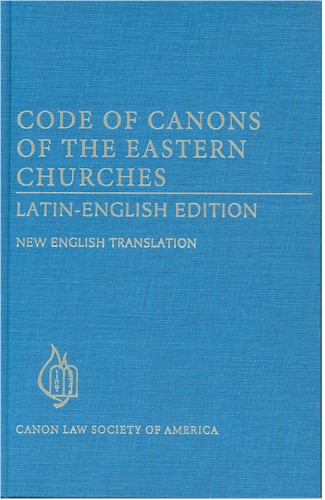
Codex Canonum Ecclesiarum Orientalium Currens Eastern Code of Canon Law, current Latin Text This page is subject to updating as needed. |
| Most recent updates |
• Francis (reg. 2013-), m.p. Iam pridem (16 apr 2023), AAS 115 (2023) 484-485 ▪ Italian here. Summary: Modification of four canons on hierarchical authority. Cites: CCEO 0066, 0102, 0149, 0183.
|
| Quick Links
|
Title I Basic rights and duties
Title
II Churches 'sui iuris' & rites
Title III
Supreme authority
Title IV Patriarchal churches
Title V Major archepis. churches
Title VI Metropolitan churches
Title VII Eparchies, bishops
Title
VIII Exarchies, exarchs
Title
IX Assemblies of hierarchs
Title
X Clerics
Title XI
Laity
Title XII Monks and religious
Title
XIII Associations
Title XIV Evangelization
Title XV Magisterium |
cc. 0001 - 0006 cc. 0007 - 0026 cc. 0027 - 0041 cc. 0042 - 0054 cc. 0055 - 0150 cc. 0151 - 0154 cc. 0155 - 1076 cc. 0177 - 0310 cc. 0311 - 0321 cc. 0322 cc. 0323 - 0398 cc. 0399 - 0409 cc. 0410 - 0572 cc. 0573 - 0583 cc. 0584 - 0594 cc. 0595 - 0666 |
Title XVI Worship, sacraments Title XVII Full communion Title XVIII Ecumenism Title XIX Persons, juridic acts Title XX Offices Title XXI Power of governance Title XXII Recourse Title XXIII Temporal goods Title XXIV Trials in general Title XXV Contentious trials Title XXVI Special procedures Title XXVII Penal sanctions Title XXVIII Penal process Title XXIX Law, custom, admin. Title XXX Prescription, time Appendix. Canones bis modificati. |
cc. 0667 - 0895 cc. 0896 - 0901 cc. 0902 - 0908 cc. 0909 - 0935 cc. 0936 - 0978 cc. 0979 - 0995 cc. 0996 - 1006 cc. 1007 - 1054 cc. 1055 - 1184 cc. 1185 - 1356 cc. 1357 - 1400 cc. 1401 - 1467 cc. 1468 - 1487 cc. 1488 - 1539 cc. 1540 - 1546 |
|
User
notes |
(1) The Vatican's version of the
current Eastern Code is available
here.
Caveat lector. (2) In the primary canon number below, the abbreviation
"Can." has been replaced by "CCEO". (3) The maddening commas inserted between
a canon number and a section number of that canon, and between a canon or
section number and a 'sub' number of that provision, have been removed but
Oxford commas have been added to numeric citations for clarity. (4) Some
header formatting (e.g.,
bolding, italics) has been applied to facilitate use. |
1. scope of the Pio-Benedictine Code. Latine.
2. generally, Code does not regulate liturgical matters. Latine.
3. concordats and treatises are not affected by the Code. Latine.
4. generally, acquired rights and privileges remain in place. Latine.
5. impact of Code on universal, particular, and other customs. Latine.
6. impact of Code on earlier laws. Latine.
7. scope of terms "Apostolic See" and "Holy See". Latine.
2404. abuse of ecclesiastical power. Latine.
2405. theft, destruction, etc. of certain curial documents. Latine.
2406. theft, destruction, etc. of other ecclesiastical documents. Latine.
2407. coffering bribes or inducements to ecclesiastical officials. Latine.
2408. unjustly increasing taxes or requiring excess payment. Latine.
2409. vicar capitulary issuing dimissorial letters. Latine.
2410. superiors disregarding norms on bishop of ordination. Latine.
2411. superiors disregarding norms on admission or profession. Latine.
2412. superiors disregarding norms on dowries and admission. Latine.
2413. superiors disregarding norms on official visitations. Latine.
2414. superiors disregarding norms on access to confessors.
Book I, Title 2. Custom, cc. 25-30.
1917
CIC 0025. custom has no
force of law without consent of ecclesiastical authority.
Latine.
1917 CIC 0026. a community capable of receiving a law can introduce a custom. Latine.
1917 CIC 0027. limitations on scope of custom. Latine.
1917 CIC 0028. custom beyond law observed with intent to bind obtains force of law in 40 years. Latine.
1917 CIC 0029. "Custom is the best interpreter of law". Latine.
1917 CIC 0030. perduration of certain customs. Latine.
Book I, Title
3. Computation of time, cc. 31-35.
1917 CIC 0031. authorizes following provisions for computation of time. Latine.
1917 CIC 0032. definition of day, week, month, and year.
Latine.
1917 CIC 0033. generally, civilian time suffices but some private acts may be calculated otherwise. Latine.
1917 CIC 0034. directions on calculation of time. Latine.
1917 CIC 0035. notion of 'useful time' and 'continuous time'. Latine.
Book I, Title
4. Rescripts, cc. 36-62.
1917
CIC 0036.
wide eligibility to
seek rescript.
Latine.
1917
CIC 0037.
rescripts can be
sought for others.
Latine.
1917
CIC 0038.
rescripts take
effect when issued or when executed.
Latine.
1917
CIC 0039. generally,
limiting words in
rescripts do not affect validity.
Latine.
1917
CIC 0040.
rescripts
understood as having been based on truthful petitions.
Latine.
1917 CIC 0041. necessity of truthfulness at time of issuance or execution of rescript. Latine.
1917 CIC 0042. impact of subreption or obreption on force of rescript. Latine.
1917
CIC 0043.
impact of prior
denial by one dicastery on ability of another to issue rescript.
Latine.
1917 CIC 0044. impact of prior denial by one ecclesiastical authority on ability of another to issue rescript. Latine.
1917
CIC 0045.
truthfulness required for rescripts issued motu proprio.
Latine.
1917 CIC 0046. effectiveness of certain motu proprio rescripts depends on derogating language. Latine.
1917 CIC 0047. generally, rescripts with harmless errors are not invalidated by same. Latine.
1917 CIC 0048. reconciling conflicts between rescripts bases on scope and time of issuance. Latine.
1917 CIC 0049. rescripts to be understood according to terms and not extended to other cases. Latine.
1917 CIC 0050. most rescripts warrant wide interpretations. Latine.
1917 CIC 0051. generally, rescripts of Holy See require mere presentation. Latine.
1917 CIC 0052. generally, rescripts may be represented at any time. Latine.
1917 CIC 0053. generally, executors act invalidly prior to notification of rescript. Latine.
1917 CIC 0054. most rescripts to be executed promptly unless circumstances urge delay. Latine.
1917 CIC 0055. misapplication prescript can invalidate executor's actions. Latine.
1917 CIC 0056. possibility of executor substituting another for his performance. Latine.
1917 CIC 0057. generally, rescript execution can be entrusted to executor's successors in office. Latine.
1917
CIC 0058. generally,
rescripts can be executed by successors in office to executor.
Latine.
1917 CIC 0059. executors can repair own error & note on fees. Latine.
1917 CIC 0060. impact of revocation by superior a/o contrary law. Latine.
1917 CIC 0061. generally, vacancy in Apostolic See or local see does not impact receipt. Latine.
1917 CIC 0062. rescripts that contain privilege a/o dispensation subject to additional laws. Latine.
Book I, Title 5. Privileges, cc. 63-79.
1917
CIC 0063. acquisition of
privilege by grant, communication, custom, and prescription.
Latine.
1917
CIC 0064. notion and
operation of 'communication' of privilege.
Latine.
1917 CIC 0065. 'accessory' privileges vary according to their 'principle'. Latine.
1917 CIC 0066. some habitual faculties are considered outside the law. Latine.
1917
CIC 0067. privileges are
evaluated according to their tenor.
Latine.
1917
CIC 0068. generally,
privileges assessed strictly but always beneficially.
Latine.
1917
CIC 0069. generally,
holders of
privileges are not bound to use them.
Latine.
1917 CIC 0070. generally, privileges are considered perpetual. Latine.
1917 CIC 0071. revocation of privilege by general law. Latine.
1917 CIC 0072. types of and limitations on cessation of privileges. Latine.
1917 CIC 0073. generally, privilege survive expiration of grantor's authority. Latine.
1917
CIC 0074. personal
privileges follow the person.
Latine.
1917 CIC 0075. cessation of real privilege and possible revival of local privileges. Latine.
1917 CIC 0076. generally, non-burdensome privileges do not cease by non-use. Latine.
1917 CIC 0077. cessation of privilege base on time, circumstance, or exhaustion. Latine.
1917 CIC 0078. abuse of privilege justifies revocation. Latine.
1917 CIC 0079. oral privileges from Holy See operate internally but require proof in external forum. Latine.
Book I, Title 6. Dispensation, cc. 80-86.
1917 CIC 0080. definition and outline of authority to dispense. Latine.
1917 CIC 0081. severe restrictions on power of ordinaries below Roman Pontiff to dispense. Latine.
1917 CIC 0082. limited scope of bishop's and ordinary's authority to dispense. Latine.
1917 CIC 0083. generally, pastors cannot dispense from law. Latine.
1917 CIC 0084. just and reasonable cause required for dispensation but doubt about same suffices. Latine.
1917 CIC 0085. dispensations and faculties for dispensing are subject to strict interpretation. Latine.
1917 CIC 0086. cessation of successive dispensations and upon cessation of motivating cause. Latine.
Book II. Persons, cc. 87-725.
[ Preliminary canons, cc. 87-107. ]
1917 CIC 0087. conferral of right on persons in the Church by baptism. Latine.
1917 CIC 0088. definitions of adults, minors, and infants, both male and female. Latine.
1917 CIC 0089. exercise of rights by minors and adults. Latine.
1917 CIC 0090. place or origin for children and neophytes. Latine.
1917 CIC 0091. definition of resident, tenant, traveler, and wanderer. Latine.
1917 CIC 0092. acquisition of various types of quasi/domicile. Latine.
1917 CIC 0093. quasi/domicile of wives and children. Latine.
1917 CIC 0094. how quasi/domicile impacts acquisition of ordinary.
Latine.
1917 CIC 0095. quasi/domicile is lost by leaving without intention to return. Latine.
1917 CIC 0096. calculation of consanguinity by degrees and lines. Latine.
1917 CIC 0097. affinity arises from marriage. Latine.
1917 CIC 0098. generally, rite is determined by baptism and later changes are few. Latine.
1917 CIC 0099. personal can be physical or moral. Latine.
1917 CIC 0100. Church and Apostolic See are moral persons by divine law, others by establishment. Latine.
1917 CIC 0101. governance of moral persons by majority vote. Latine.
1917 CIC 0102. extinguishment of moral persons. Latine.
1917 CIC 0103. extrinsic force invalidates acts, dolus renders them rescindable.
Latine.
1917 CIC 0104. effects of error on acts and contracts. Latine.
1917 CIC 0105. consultation and consent in group decision-making Latine.
1917 CIC 0106. calculation of precedence.
Latine.
1917 CIC 0107. Church consists of clergy and laity, some of whom are religious. Latine.
Book II, Part 1. Clerics, cc. 0108-0486.
Book II, Part 1, Section 1. Clerics in general, cc. 0108-0214.
[ Preliminary canons, cc. 0108-0110. ]
1917 CIC 0108. definition of cleric.
Latine.
1917 CIC 0109. entrance in hierarchy archived solely by ordination.
Latine.
1917 CIC 0110. definition of prelate. Latine.
Book II, Part 1, Section 1, Title 1. Ascription of clerics to dioceses, cc. 0111-0117.
1917 CIC 0111. incarnation is required for all clergy and occurs at tonsure. Latine.
1917 CIC 0112. possible later change of excardination and incardination. Latine.
1917 CIC 0113. restriction on lower prelate's ability to grant change of incardination. Latine.
1917 CIC 0114. change of incardination by operation of law. Latine.
1917 CIC 0115. later religious profession achieves incardination. Latine.
1917 CIC 0116. restrictions on grant and effectiveness of excardination.
Latine.
1917 CIC 0117. ordinary's ability to grant incardination to clergy. Latine.
Book II, Part 1, Section 1, Title 2. Rights and privileges of clerics, cc. 0118-0123.
1917 CIC 0118. only clerics obtain power of orders or jurisdiction.
Latine.
1917 CIC 0119. faithful owe clerics reverence and commit sacrilege by damaging them. Latine.
1917 CIC 0120. clerics enjoy qualified privilege of the forum.
Latine.
1917 CIC 0121. clergy are immune to military service and other alien civil duties.
Latine.
1917 CIC 0122. clerics must promptly pay their own debts but not to the point of poverty. Latine.
1917 CIC 0123. clerics privilege may be be renounced but can be lost. Latine.
Book II, Part 1, Section 1, Title 3. Obligations of clerics, cc. 0124-0144.
1917 CIC 0124. clerics must be holier than lay persons.
Latine.
1917 CIC 0125. ordinary's shall require frequent confession and exercises of devotion by clerics. Latine.
1917 CIC 0126. clerics must make an retreat at least every three years. Latine.
1917 CIC 0127. clerics, especially presbyters, must show reverence and obedience to their ordinary. Latine.
1917 CIC 0128. clerics are to fulfill tasks given them by the ordinary. Latine.
1917 CIC 0129. clerics shall continue sound studies after presbyteral ordination. Latine.
1917 CIC 0130. junior clergy shall take annual exams and assignments can take results into account. Latine.
1917 CIC 0131. clergy education conferences to be frequent and attendance is required. Latine.
1917 CIC 0132. relationship between marriage and clerics state. Latine.
1917 CIC 0133. regulations for clerics' relationship with women. Latine.
1917 CIC 0134. common life among clergy to be encouraged and preserved where possible. Latine.
1917 CIC 0135. clerics' obligation to recite all canonical hours daily. Latine.
1917 CIC 0136. dress and deportment of clerics. Latine.
1917 CIC 0137. clerics prohibited form posting bonds without permission of ordinary. Latine.
1917 CIC 0138. restrictions on clerics regarding indecent things and certain entertainments. Latine.
1917 CIC 0139. restrictions on clerics regarding various things alien to the clerical state. Latine.
1917 CIC 0140. clerics must avoid scandal by attendance at public shows. Latine.
1917 CIC 0141. generally, clerics to avoid volunteering for military service. Latine.
1917 CIC 0142. clerics prohibited form engaging in trade or business. Latine.
1917 CIC 0143. clerics not to be absent from diocese for notable periods without
permission.
Latine.
1917 CIC 0144. clerics absent with permission can still be recalled or dis-invited. Latine.
Book II, Part 1, Section 1, Title 4. Ecclesiastical office, cc. 0145-0151.
[ Preliminary canons, cc. 0145-0146. ]
1917 CIC 0145. definition of ecclesiastical office. Latine.
1917 CIC 0146. invocation of Canon 1409 for offices attached to benefices. Latine.
Book II, Part 1, Section 1, Title 4, Chapter 1. Provision of ecclesiastical office, cc. 0147-0151.
1917 CIC 0147. ecclesiastical office obtained only by 'provision'.
Latine.
1917 CIC 0148. office obtained by free conferral, confirmation, or election. Latine.
1917 CIC 0149. candidate for office not to be confirmed without evaluation. Latine.
1917 CIC 0150. attempts to provide for occupied office, and promise of office, are void. Latine.
1917 CIC 0151. illicitly retained office can be provided for. Latine.
Book II, Part 1, Section 1, Title 4, Chapter 1, Article 1. Free conferral, cc. 0152-159.
1917 CIC 0152. generally, diocesan bishops freely confer offices in their dioceses. Latine.
1917 CIC 0153. requisites for the provision of office. Latine.
1917 CIC 0154. offices with full care of souls. Latine.
1917 CIC 0155. grave cause required to defer provision of offices with full care of souls. Latine.
1917 CIC 0156. incompatible offices should not be conferred on an individual. Latine.
1917 CIC 0157. restrictions on appointment of relatives of former holder. Latine.
1917 CIC 0158. conferral of office by subordinate of higher authority. Latine.
1917 CIC 0159. provision of office to be made in writing. Latine.
Book II, Part 1, Section 1, Title 4, Chapter 1, Article 2. Election, cc. 0160-178.
1917 CIC 0160. election of Roman Pontiff. introduction to general provisions on election. Latine.
1917 CIC 0161.
election for office should take place within three
months of notice of vacancy.
Latine.
1917 CIC 0162. convocation of electors, consequences for failure to convoke. Latine.
1917 CIC 0163. generally, elector must be physically present to cast vote. Latine.
1917 CIC 0164. no one may cast more than one ballot per vote. Latine.
1917 CIC 0165. non-member of group acting as elector invalidates election. Latine.
1917 CIC 0166. impeded election is invalid. Latine.
1917 CIC 0167. who is unqualified to vote and consequences of his voting nonetheless. Latine.
1917 CIC 0168. elector present in house but ill can vote. Latine.
1917 CIC 0169. conditions for validity of vote. Latine.
1917 CIC 0170. No one can vote for himself. Latine.
1917 CIC 0171.
role of teller.
Latine.
1917 CIC 0172. conditions for voting by compromise. Latine.
1917 CIC 0173. revocation of compromise agreements. Latine.
1917 CIC 0174. generally, one elected by securing requisite number of votes and must be announced. Latine.
1917 CIC 0175. prompt notice of results and acceptance or refusal of election. Latine.
1917 CIC 0176. consequences of refusal of election. Latine.
1917 CIC 0177. norms for seeking confirmation of election to office. Latine.
1917 CIC 0178. factors that require appointment to elective office to go to superior. Latine.
Book II, Part 1, Section 1, Title 4, Chapter 1, Article 3. Postulation, cc. 0179-182.
1917 CIC 0179. postulation is a method of voting for one impeded from serving. Latine.
1917 CIC 0180. super-majority of votes required for postulation. Latine.
1917 CIC 0181. postulation to be presented to competent authority within eight days of voting. Latine.
1917 CIC 0182. consequences of rejection or acceptance of postulation. Latine.
Book II, Part 1, Section 1, Title 4, Chapter 2. Loss of ecclesiastical offices, cc. 0183-0195.
1917 CIC 0183. six ways office can be lost. Latine.
1917 CIC 0184. basic provision on loss of office. Latine.
1917 CIC 0185. factors invalidating resignation. Latine.
1917 CIC 0186. written communication required for certain kinds of loss of office. Latine.
1917 CIC 0187. basic provision on resignation. Latine.
1917 CIC 0188. removal by operation of law. Latine.
1917 CIC 0189. requirements for resignation. Latine.
1917 CIC 0190. just or proportionate cause required for resignation. Latine.
1917 CIC 0191. resignation is final but office can be reacquired. Latine.
1917 CIC 0192. removal by law or decree & restrictions on removal from some offices. Latine.
1917 CIC 0193. authority and process for making transfer. Latine.
1917 CIC 0194.
prior office becomes vacant upon possession of latter office.
Latine.
1917 CIC 0195. electors or postulators cannot transfer cleric to another office. Latine.
Book II, Part 1, Section 1, Title 5. Ordinary and delegated power, cc. 0196-0210.
1917 CIC 0196. jurisdiction, or governance, applies to the external and internal fora. Latine.
1917 CIC 0197. ordinary and delegated, proper and vicarious power of government. Latine.
1917 CIC 0198. definition of ordinary and local ordinary. Latine.
1917 CIC 0199. delegation of executive power. Latine.
1917 CIC 0200.
ordinary executive power to be interpreted
broadly, other power narrowly.
Latine.
1917 CIC 0201. personal and territorial limitation on power of jurisdiction. Latine.
1917 CIC 0202. impacts of certain acts on internal and external fora.
Latine.
1917 CIC 0203. factors resulting in invalid acts by a delegate. Latine.
1917 CIC 0204. operations of higher and lower holders of executive power. Latine.
1917 CIC 0205. operation of executive power by several individuals or group. Latine.
1917 CIC 0206. holders of executive power successively delegated observe priority in time. Latine.
1917 CIC 0207. cessation of various delegated powers. Latine.
1917 CIC 0208. cessation of ordinary power upon loss of office. Latine.
1917 CIC 0209. supplying of executive power in cases of error or doubt of law. Latine.
1917 CIC 0210. generally, power of orders cannot be passed to another recipient. Latine.
Book II,
Part 1,
Section 1, Title 6. Reduction to the lay state, cc. 0211-214.
1917 CIC 0211. cleric reduction to the lay state.
Latine.
1917 CIC 0212. return of cleric to clerical state after return to the lay state.
Latine.
1917 CIC 0213. consequences of return to lay state.
Latine.
1917 CIC 0214. return to lay by cleric who was coerced into clerical state. Latine.
Book II, Part 1, Section 2. Clerics in specific, cc. 0215-0486.
[ Preliminary canons, cc. 215-217. ]
1917 CIC 0215. ecclesiastical provinces, etc, established by supreme authority of Church.
Latine.
1917 CIC 0216. division of diocese into territorial or linguistic parishes, & quasi-parishes. Latine.
1917 CIC 0217. generally, vicariates are required in dioceses. Latine.
Book II, Part 1, Section 2, Title 7. Supreme power and participants therein, cc. 0211-214.
Book II, Part 1, Section 2, Title 7, Chapter 1. Roman Pontiff, cc. 0218-221.
1917 CIC 0218. delineation of papal power. Latine.
1917 CIC 0219. Roman Pontiff receives powers upon accepting legitimate election. Latine.
1917 CIC 0220. 'great cases' are matters reserved to Roman Pontiff. Latine.
1917 CIC 0221. resignation by pope requires no acceptance. Latine.
Book II, Part 1, Section 2, Title 7, Chapter 2. Ecumenical Council, cc. 0222-0229.
1917 CIC 0222. Roman Pontiff convokes and presides over ecumenical council. Latine.
1917 CIC 0223. who must be called to
ecumenical council.
Latine.
1917 CIC 0224. duties of and limitations on procurators for one impeded from council.
Latine.
1917 CIC 0225. restrictions of council attendees' ability to leave council.
Latine.
1917 CIC 0226. council father can add questions to agenda if approved by president. Latine.
1917 CIC 0227. decrees of council require confirmation by Roman Pontiff for effect. Latine.
1917 CIC 0228. ecumenical council has supreme power over Church & no appeal lies. Latine.
1917 CIC 0229. death of Roman Pontiff interrupts council until next pope might continue it. Latine.
Book II, Part 1, Section 2, Title 7, Chapter 3. Cardinals of the H. R. C, cc. 0230-0241.
1917 CIC 0230. description of office of cardinal. Latine.
1917 CIC 0231. orders within college of cardinals. Latine.
1917 CIC 0232. eligibility to be named cardinal. Latine.
1917 CIC 0233. authority of Roman Pontiff over selection and announcement of cardinals. Latine.
1917 CIC 0234. non-curial cardinals must swear to appear before pope within one year. Latine.
1917 CIC 0235. generally, those raised to cardinal lose other ecclesiastical benefits. Latine.
1917 CIC 0236. transfer within ranks of cardinals. Latine.
1917 CIC 0237. dean of the college of cardinals. Latine.
1917 CIC 0238. curial cardinals to reside in Rome. Latine.
1917 CIC 0239. privileges of cardinals. Latine.
1917 CIC 0240. cardinals authority within suburbicarian and titular sees. Latine.
1917 CIC 0241. during vacancy of the Apostolic See cardinals have authority under particular law. Latine.
Book II, Part 1, Section 2, Title 7, Chapter 4. Roman curia, cc. 0242-0245.
1917 CIC 0242. description of the Roman Curia. Latine.
1917 CIC 0243. Roman curia directed by Roman Pontiff & its secrecy obligation. Latine.
1917 CIC 0244. dependence of curia on supervision of Roman Pontiff. Latine.
1917 CIC 0245. committee of cardinals to decide inter-curial controversies. Latine.
Book II, Part 1, Section 2, Title 7, Chapter 4, Article 1. Sacred Congregations, cc. 0246-0257.
1917 CIC 0246. direction of congregations.
Latine.
1917 CIC 0247. Cong. of Holy Office. Latine.
1917 CIC 0248. Cong. of Consistory. Latine.
1917 CIC 0249. Cong. of Sacraments.
Latine.
1917 CIC 0250. Cong. of Council.
Latine.
1917 CIC 0251. Cong.
for religious matters.
Latine.
1917 CIC 0252. Cong.
for Propagation of the Faith.
Latine.
1917 CIC 0253. Cong.
for Sacred Rites.
Latine.
1917 CIC 0254. Cong.
for Ceremonies.
Latine.
1917 CIC 0255. Cong.
for extraordinary affairs.
Latine.
1917 CIC 0256. Cong.
for Seminaries and Universities.
Latine.
1917 CIC 0257. Cong.
for Oriental Church.
Latine.
Book II, Part 1, Section 2, Title 7, Chapter 4, Article 2. Tribunals of the Roman curia, cc. 0258-0264.
1917 CIC 0258.
Sacred
Penitentiary.
Latine.
1917 CIC 0259.
Roman Rota
and Apostolic Signatura.
Latine.
1917 CIC 0260.
Apostolic
Chancery.
Latine.
1917 CIC 0261.
Apostolic
Datary.
Latine.
1917 CIC 0262.
Apostolic
Camera.
Latine.
1917 CIC 0263.
Secretary of
State in three parts.
Latine.
1917 CIC 0264.
secretary
for Briefs to Princes and Latin Letters.
Latine.
Book II, Part 1, Section 2, Title 7, Chapter 5. Legates of the Roman Pontiff, cc. 0265-0270.
1917 CIC 0265. right of Roman Pontiff to send legates into the world.
Latine.
1917 CIC 0266. cardinals representing the pope have authority limited to that
representation.
Latine.
1917 CIC 0267. principal functions of papal legates.
Latine.
1917 CIC 0268. duration of authority of papal legates.
Latine.
1917 CIC 0269. rights of and restrictions on papal legates in regard to bishops.
Latine.
1917 CIC 0270. bishops who serves as apostolic legates derive no special rights.
Latine.
Book II, Part 1, Section 2, Title 7, Chapter 6. Patriarchs, Primates, and Metropolitans, cc. 0271-0280.
1917 CIC 0271. (in the West) the title of 'patriarch' or 'primate' are honorific only.
Latine.
1917 CIC 0272. definition of metropolitan.
Latine.
1917 CIC 0273. metropolitan
has same authority in own diocese as do other bishops in theirs.
Latine.
1917 CIC 0274. authority of metropolitan in suffragan diocese.
Latine.
1917 CIC 0275. claiming the pallium.
Latine.
1917 CIC 0276. placing acts before imposition of pallium is illicit.
Latine.
1917 CIC 0277. use of the pallium.
Latine.
1917 CIC 0278. new pallium required upon transfer to another see.
Latine.
1917 CIC 0279.
pallium
not be to be given away but buried with metropolitan.
Latine.
1917 CIC 0280.
generally,
precedence is patriarch, primate, archbishop, bishop.
Latine.
Book II, Part 1, Section 2, Title 7, Chapter 7. Plenary and provincial councils, cc. 0281-0292.
1917 CIC 0281. definition of a plenary council.
Latine.
1917 CIC 0282. attendance at plenary council.
Latine.
1917 CIC 0283. provincial council to be celebrated at least every 20 years.
Latine.
1917 CIC 0284. role of senior suffragan in council if metropolitan impeded.
Latine.
1917 CIC 0285. bishop 'of no one' should selected metropolitan and attach selves to same.
Latine.
1917 CIC 0286. types of participants in provincial council.
Latine.
1917 CIC 0287. attendance at provincial council and use of proxies.
Latine.
1917 CIC 0288. president of council determines order of the council.
Latine.
1917 CIC 0289. attendees at councils require permission to leave council.
Latine.
1917 CIC 0290. concerns of the council and care to be taken in investigating them.
Latine.
1917 CIC 0291. submission of acts to Holy See and promulgation.
Latine.
1917 CIC 0292.
metropolitan
to organize quinquennial meeting of province bishops.
Latine.
Book II, Part 1, Section 2, Title 7, Chapter 8. Vicars and Prefects Apostolic, cc. 0293-0311.
1917 CIC 0293. apostolic vicariates, prefectures, administration and assumption of power
therein.
Latine.
1917 CIC 0294. authority within vicariates, prefectures, and administrations.
Latine.
1917 CIC 0295. vicars and prefects must verify clerical credentials.
Latine.
1917 CIC 0296. vicars and prefects may conduct visitations.
Latine.
1917 CIC 0297. vicars and prefects may require religious to care for souls.
Latine.
1917 CIC 0298. resolution of conflicts between religious and vicars and prefects.
Latine.
1917 CIC 0299. vicars obligated to ‘ad limina’ visit.
Latine.
1917 CIC 0300. vicars and prefects to report status to Holy See.
Latine.
1917 CIC 0301. vicars and prefects bound to residence and visitations.
Latine.
1917 CIC 0302. vicars and prefects to establish council of advisors.
Latine.
1917 CIC 0303. urges
annual gathering of missionaries for discussion.
Latine.
1917 CIC 0304. vicars and prefects obligations toward records and assemblies.
Latine.
1917 CIC 0305. vicars and prefects to foster indigenous vocations.
Latine.
1917 CIC 0306. vicars and prefects obligated to offer Mass for people.
Latine.
1917 CIC 0307. vicars and prefects and assignment of missionaries.
Latine.
1917 CIC 0308. privileges and insignia of vicars and prefects.
Latine.
1917 CIC 0309. appointment and role of pro-vicars and pro-prefects.
Latine.
1917 CIC 0310. notification of Holy See when above assume authority.
Latine.
1917 CIC 0311.
vicar or prefect
remains in place till relieved.
Latine.
Book II, Part 1, Section 2, Title 7, Chapter 9. Apostolic Administrators, cc. 0312-0318.
1917 CIC 0312. Roman Pontiff appoints apostolic administrator to diocese for grave cause.
Latine.
1917 CIC 0313. apostolic administrator assumption of power in diocese.
Latine.
1917 CIC 0314. authority of apostolic administrators is in law and letters.
Latine.
1917 CIC 0315. rights and duties of apostolic administrators.
Latine.
1917 CIC 0316. apostolic administrators relation to occupied see.
Latine.
1917 CIC 0317. apostolic administrators in occupied but troubled see.
Latine.
1917 CIC 0318. cessation of jurisdiction of apostolic administrators.
Latine.
Book II,
Part 1,
Section 2, Title 7,
Chapter 10. Inferior prelates, cc. 0319-0328.
1917 CIC 0319. notion of abbots or prelates ‘of no one’.
Latine.
1917 CIC 0320. these
abbots or prelates appointed by Roman Pontiff.
Latine.
1917 CIC 0321. election of certain abbots or prelates.
Latine.
1917 CIC 0322. abbots or prelates have no authority prior to possession.
Latine.
1917 CIC 0323. authority of various abbots or prelates.
Latine.
1917 CIC 0324. religious chapters governed by own laws.
Latine.
1917 CIC 0325. insignia of these abbots or prelates.
Latine.
1917 CIC 0326. election of consultors in absence of chapter.
Latine.
1917 CIC 0327. filling vacancies in these abbacies and prelatures.
Latine.
1917 CIC 0328. rules
for Householders of Roman Pontiff.
Latine.
Book II, Part 1, Section 2, Title 8. Episcopal power and participants therein, cc. 0329-486.
Book II, Part 1, Section 2, Title 8, Chapter 1. Bishops, cc. 0329-0349. l
1917 CIC 0329. definition of bishop and appointment by Roman Pontiff.
Latine.
1917 CIC 0330.
suitability
must be demonstrated before becoming bishop.
Latine.
1917 CIC 0331. requisite qualities for bishop.
Latine.
1917 CIC 0332. reservation to Roman Pontiff of appointment to bishops & oath of fidelity to Holy See.
Latine.
1917 CIC 0333. generally, three months to be consecrated and four to go to diocese.
Latine.
1917 CIC 0334. authority of residential bishops begins only upon taking possession of
diocese.
Latine.
1917 CIC 0335. scope of bishop's authority and manner of promulgation.
Latine.
1917 CIC 0336. bishop to be vigilant about ecclesiastical laws & honor his preaching
duties.
Latine.
1917 CIC 0337. bishop has right to perform pontifical functions in diocese.
Latine.
1917 CIC 0338. bishop's obligation of residence.
Latine.
1917
CIC 0339. bishop's obligation of
residence.
Latine.
1917 CIC 0340. quinquennial report.
Latine.
1917 CIC 0341. the 'ad limina' visit.
Latine.
1917 CIC 0342. satisfaction of
the 'ad limina' visit.
Latine.
1917 CIC 0343. episcopal visitation of diocese.
Latine.
1917 CIC 0344. bishop has right of visitation regarding sacred places and religious.
Latine.
1917 CIC 0345. bishop visitor
to proceed paternally, recourse against him is in devolution.
Latine.
1917 CIC 0346. bishop's visitation to be completed in a way burdensome to others.
Latine.
1917 CIC 0347.
generally, bishop takes precedence in his own diocese.
Latine.
1917 CIC 0348.
titular
bishop has no authority but should offer Mass for diocese.
Latine.
1917 CIC 0349.
rights of
bishop at provision and possession of diocese.
Latine.
Book II, Part 1, Section 2, Title 8, Chapter 2. Coadjutor and auxiliary bishops, cc. 0350-0355.
1917 CIC 0350. description of auxiliaries, their special faculties, and coadjutors. Latine.
1917 CIC 0351. authority of coadjutors and and coordination of their work.
Latine.
1917 CIC 0352.
scope of
coadjutor’s authority.
Latine.
1917 CIC 0353. process for coadjutor taking office.
Latine.
1917 CIC 0354. residence requirement for coadjutor.
Latine.
1917 CIC 0355. process for coadjutor taking over diocese. status of auxiliary during vacant
see.
Latine.
Book II, Part 1, Section 2, Title 8, Chapter 3. Diocesan synod, cc. 0356-0362.
1917 CIC 0356. scope of diocesan synod and requirement of decennial convocation. Latine.
1917 CIC 0357. generally bishop convokes and presides over synod, is to be held in
cathedral.
Latine.
1917 CIC 0358. mandatory and optional invitees to synod.
Latine.
1917 CIC 0359. enforcement of required attendance.
Latine.
1917 CIC 0360.
bishop may
appoint ‘commission’ to prepare for synod.
Latine.
1917 CIC 0361. free
discussion of proposed questions.
Latine.
1917 CIC 0362.
only the diocesan bishop legislates at a diocesan
synod.
Latine.
Book II, Part 1, Section 2, Title 8, Chapter 4. Diocesan curia, cc. 0363-0390.
[ Preliminary canons, cc. 363-0365. ]
1917 CIC 0363. description of diocesan curia.
Latine.
1917 CIC 0364. appointments to curia and obligations of members.
Latine.
1917 CIC 0365. distinction between judicial and administrative roles in curia.
Latine.
Book II, Part 1, Section 2, Title 8, Chapter 4, Article 1. Vicar general, cc. 0366-0371.
1917 CIC 0366. vicar general.
Latine.
1917 CIC 0367. qualifications of a vicar general.
Latine.
1917 CIC 0368.
authority of vicar general.
Latine.
1917 CIC 0369. obligation of vicar general to work with bishop and for bishop.
Latine.
1917 CIC 0370. precedence and privileges to be accorded vicar general. Latine.
1917 CIC 0371. authority of vicar general tied to that of bishop. Latine.
Book II, Part 1, Section 2, Title 8, Chapter 4, Article 2. Chancellor, notaries, and episcopal archives, cc. 0372-0384.
1917 CIC 0372. chancellor and vice-chancellor.
Latine.
1917 CIC 0373. notaries, their qualifications, and duration in office. Latine.
1917 CIC 0374. duties of notary. Latine.
Note(s). In the Peters
translation of the Pio-Benedictine Code (2001) the following provision of
Canon 374 was inadvertently omitted: "§
2. A notary cannot conscribe acts outside the territory of the Bishop by
whom he was appointed or concerning matters other than those for which he
was legitimately constituted."
1917 CIC 0375. establishment of diocesan archives.
Latine.
1917 CIC 0376. preparation and preservation of diocesan documents. Latine.
1917 CIC 0377. archives security and possession of key. Latine.
1917 CIC 0378. procedures for removal of documents from archives. Latine.
1917 CIC 0379. secret or separate archives.
Latine.
1917 CIC 0380.
bishop to
designate priest to hold 'bishop's box' key during vacancy of see.
Latine.
1917 CIC 0381.
possession of 'bishop’s box' key if see impeded.
Latine.
1917 CIC 0382. seal of 'bishop's box' not to be removed except in urgent necessity. Latine.
1917 CIC 0383. records of documents pertaining to church in diocese.
Latine.
1917 CIC 0384. access to documents in diocese not held in secrecy. Latine.
Book II, Part 1, Section 2, Title 8, Chapter 4, Article 3. Synodal examiners and pastor consultors, cc. 0385-0390.
1917 CIC 0385. synodal examiners and pastor consultors to be constituted by bishop with synod
approval.
Latine.
1917 CIC 0386. method for replacing examiner and consultors who do not complete terms.
Latine.
1917 CIC 0387. terms of office for examiners and consultors. Latine.
1917 CIC 0388. for grave cause bishop can remove examiners and consultors with advice of chapter. Latine.
1917 CIC 0389. main responsibilities of examiners.
Latine.
1917 CIC 0390. clerics can hold office of examiner and consultor but not in same case. Latine.
Book II, Part 1, Section 2, Title 8, Chapter 5. Chapters of canons, cc. 0391-0422.
1917 CIC 0391.
definition of two kinds of cathedral chapters.
Latine.
1917 CIC 0392. authority of Apostolic See over cathedral chapters. Latine.
1917 CIC 0393. make up a chapter of canons.
Latine.
1917 CIC 0394. organization of chapters by prebends or the whole.
Latine.
1917 CIC 0395. distribution of chapter benefits under various conditions.
Latine.
1917 CIC 0396. naming dignitaries reserved to Apostolic See, preference for theologian and and canonists. Latine.
1917 CIC 0397. liturgical and sacramental preferences of dignitaries. Latine.
1917 CIC 0398. preference for establishing canon theologians and canon penitentiaries. Latine.
1917 CIC 0399. qualifications for and restrictions on canon theologians and penitentiaries. Latine.
1917 CIC 0400. preaching duties of canon theologians. Latine.
1917 CIC 0401.
canon penitentiary.
Latine.
1917 CIC 0402. chapter's relations with parishes. Latine.
1917 CIC 0403. conferral of canonries falls to bishop. Latine.
1917 CIC 0404. qualities of those to be appointed to canonries. Latine.
1917 CIC 0405. consequences of taking possession of benefice.
Latine.
1917 CIC 0406. bishops can appoint honorary canons. Latine.
1917 CIC 0407. use of privileges by honorary canons.
Latine.
1917 CIC 0408. order of precedence among chapters. Latine.
1917 CIC 0409. liturgical vestiture of chapter members. Latine.
1917 CIC 0410. requirement of and bishop's authority over chapter statutes. Latine.
1917 CIC 0411. meetings of and right to speak in chapter meetings. Latine.
1917 CIC 0412. liturgical duties of chapter members toward bishops. Latine.
1917 CIC 0413. divine office by chapter to be celebrated in choir. Latine.
1917 CIC 0414. duties of choral benefice are either daily or by turns. Latine.
1917 CIC 0415. place of chapter within a parish.
Latine.
1917 CIC 0416. altar service in chapter to be regulated.
Latine.
1917 CIC 0417. conventual Masses and stipends in chapter. Latine.
1917 CIC 0418. mandated presence canons and beneficiaries in chapter. Latine.
1917 CIC 0419. celebration of and supply for Masses in chapter. Latine.
1917 CIC 0420. excuses from choir attendance.
Latine.
1917 CIC 0421. excuses from choir that allow for participation in fruits.
Latine.
1917 CIC 0422. status of jubilations in choir service. Latine.
Book II, Part 1, Section 2, Title 8, Chapter 6. Diocesan consultors, cc. 0423-0428.
1917 CIC 0423. diocesan consultors to be appointed
where no chapter of canons.
Latine.
1917 CIC 0424. bishop appoints priests to diocesan consultors.
Latine.
1917 CIC 0425. number and proximity of diocesan consultors. Latine.
1917 CIC 0426. terms for diocesan consultors. Latine.
1917 CIC 0427. diocesan consultors follow role of chapter of canons. Latine.
1917 CIC 0428. process for removal of consultors. Latine.
Book II, Part 1, Section 2, Title 8, Chapter 7. Impeded or vacant see and the vicar capitulary, cc. 0429-0444.
1917 CIC 0429. status and governance of an impede see. Latine.
1917 CIC 0430. conditions resulting in an impeded see and basic governance by vgg. Latine.
1917 CIC 0431. other mechanism for governed of vacant see.
Latine.
1917 CIC 0432. role of cathedral chapter during vacant see. Latine.
1917 CIC 0433. role of vicar capitulary during vacant see.
Latine.
1917 CIC 0434. qualifications of a vicar capitulary. Latine.
1917 CIC 0435. authority of vicar capitulary and cathedral chapter during vacant see. Latine.
1917 CIC 0436. "With the see vacant nothing is to be innovated."
Latine.
1917 CIC 0437.
Chapter retains no
jurisdiction over vicar capitulary.
Latine.
1917 CIC 0438. assume of power by vicar capitulary. Latine.
1917 CIC 0439. Canon 370 on vicar general applies to vicar capitulary. Latine.
1917 CIC 0440. vicar capitulary bound by obligation of residence of a Mass for the people. Latine.
1917 CIC 0441. payment for vicar capitulary and preservation of episcopal fruits. Latine.
1917 CIC 0442.
econome subject to authority
of vicar capitulary.
Latine.
1917 CIC 0443. removal of vicar capitulary or his cessation from office. Latine.
1917 CIC 0444. new bishop to require accounting from chapter during vacancy. Latine.
Book II, Part 1, Section 2, Title 8, Chapter 8. Vicars forane, cc. 0445-0450.
1917 CIC 0445. a vicar forane is appointed by bishop to govern a vicariate. Latine.
1917 CIC 0446. vicar forane must be a priest and is removal at will of bishop. Latine.
1917 CIC 0447. duties of a vicar forane. Latine.
1917 CIC 0448. vicar forane to convoke priests of vicariate and reside in or near his territory. Latine.
1917 CIC 0449. vicar forane to render annual report on vicariate to ordinary. Latine.
1917 CIC 0450. the vicar forane has the vicariate seal and takes precedence in his vicariate. Latine.
Book II, Part 1, Section 2, Title 8, Chapter 9. Pastors, cc. 0451-0470.
1917 CIC 0451. Characteristics of pastor, quasi-pastor, and parochial vicar. Latine.
1917 CIC 0452. authorization for and function of moral person and pastor. Latine.
1917 CIC 0453. qualifications for pastor. Latine.
1917 CIC 0454. aspects of removable and irremovable pastors. Latine.
1917 CIC 0455. appointment of pastor. Latine.
1917 CIC 0456. religious superiors present candidates for religious parish pastorates. Latine.
1917 CIC 0457. local ordinary appoints quasi-pastors from his own clergy. Latine.
1917 CIC 0458. generally, local ordinary provides for vacant parishes. Latine.
458 is referenced in
Canons 155, 1432.
1917 CIC 0459. selection of best candidates for pastorates, and concursus. Latine.
1917 CIC 0460. one pastor, one parish. one parish, one pastor. Latine.
1917 CIC 0461. pastor obtains care of souls from time of possession.
Latine.
1917 CIC 0462. functions reserved to pastor. Latine.
1917 CIC 0463. pastor's fees and payments. Latine.
1917 CIC 0464. generally, pastor provides for all in parish but religious houses can be exempted. Latine.
1917 CIC 0465. pastor's obligation of residence and provision for absence. Latine.
1917 CIC 0466. obligation of offering Mass for the people entrusted to him. Latine.
1917 CIC 0467. pastor's spiritual care for his parish. Latine.
1917 CIC 0468. pastor's care for sick and dying of the parish. Latine.
1917 CIC 0469. pastor's care faith and moral in schools and duty to organize good works. Latine.
.
1917 CIC 0470. parish record-keeping. Latine.
Book II, Part 1, Section 2, Title 8, Chapter 10. Parochial vicars, cc. 0471-0478.
1917 CIC 0471. care of souls parish attached to religious houses and similar persons. Latine.
1917 CIC 0472. appointment of econome to vacant parish. Latine.
1917 CIC 0473. responsibilities of econome. Latine.
1917 CIC 0474. generally, a vicar substitute holds the place of a pastor. Latine.
1917 CIC 0475. generally, vicar econome holds the place of pastor till new pastor arrives. Latine.
1917 CIC 0476. appointment and duties of vicar cooperator. Latine.
1917 CIC 0477. removal of certain parochial vicars. Latine.
1917 CIC 0478. precedence among various vicars. Latine.
Book II,
Part 1,
Section 2, Title 8,
Chapter 11. Rectors of churches, cc. 0479-0486.
1917 CIC 0479. rector is a priest in charge of a church that is not parish or chapter. Latine.
1917 CIC 0480. appointment of rectors.
Latine.
1917 CIC 0481. rectors cannot perform parochial functions.
Latine.
1917 CIC 0482. rectors can perform liturgical
functions.
Latine.
1917 CIC 0483. rectors can be directed by ordinary to provide pastoral services to
faithful.
Latine.
1917 CIC 0484. rector's authorization required for others to celebrate sacred functions in
church.
Latine.
1917 CIC 0485.
responsibilities of rector.
Latine.
1917 CIC 0486. removal of rector for a just cause. Latine.
Book II, Part 2. Religious, cc. 0487-0681.
[ Preliminary canons, cc. 487-491. ]
1917 CIC 0487. definition of religious life and its place in the Church. Latine.
1917 CIC 0488. basic terminology of religious life. Latine.
1917 CIC 0489. Rules and constitutions consistent with the Code are retained, others are abrogated. Latine.
1917 CIC 0490. generally, rules establish for men apply to women and vice versa.
Latine.
1917 CIC 0491. rules of precedence for situations involving religious. Latine.
Book II, Part 2, Title 9. Erection and suppression of religious institutes, provinces, and houses, cc. 0492-0498. //
Book II, Part 2, Title 10. Governance of religious institutes, cc. 0492-0498.
Book II, Part 2, Title 10, Chapter 1, Superiors and chapters, cc. 0499-0517.
Book II, Part 2, Title 10, Chapter 2, Confessors and chaplains, cc. 0518-0530.
Book II, Part 2, Title 10, Chapter 3, Temporal goods of religious and administration, cc. 0531-0537.
533 is referenced in Canons 512, 535, 618, 631.
is referenced in Canon.
534 512, 618, 2347.
535 512, 618, 631.
For § 4: =
1917 CIC 0537. restrictions on gifts from goods of the house. Latine.
0640.
Book II, Part 2, Title 11, Chapter 3. Admission into a religious institute, cc. 0538-0586.
Monograph.
• Basil Frisón (Spanish/American Claretian, 1912-2004), Selection and Incorporation of Candidates for the Religious Life, (Bruce, 1962) 186 pp.
Dissertation.
• Robert Flinn (American religious, 1929-1995), Admission to incorporation into the states of perfection, (Gregorian doctoral diss. 1763, 1965) 147 pp (part). Monograph, Admission to Vows: recent directives and trends, (Divine Word, 1965) 157 pp. Flinn biograph.
[ Preliminary canon, c. 0538. ]
1917 CIC 0538. right of admittance into religious life. Latine.
0597 § 1.
Book II, Part 2, Title 11, Chapter 1. Postulancy, cc. 0539-0541.
For § 1: = = : =
1917 CIC 0539. postulancy required before admittance. Latine.
: 0597 § 2. F
539 542.
1917 CIC 0540. manner of postulancy. Latine.
540 542.
1917 CIC 0541. retreat and general confession required before novitiate. Latine.
541 542.
Book II, Part 2, Title 11, Chapter 2. Novitiate, cc. 0542-0571.
Book II, Part 2, Title 11, Chapter 2, Article 1. Requirements for admission into novitiate, cc. 0542-0552.
For § 1: = = : =
542 is
referenced in Canons 555, 677, 2411.
544
2411.
549 is
referenced in Canons 533, 2412.
551 is
referenced in Canons 635, 2412.
552 2412.
Book II, Part 2, Title 11, Chapter 2, Article 2. Formation of novices, cc. 0553-0571.
For § 1: = = : =
554 587.
555 572.
559 588.
0651.
0652.
0652.
565 is referenced in Canons 509, 562.
569 is referenced in
Canons 580, 583.
570 is referenced in
Canons 551, 635.
571
2411.
573 572.
574 is referenced in
Canons 572, 578, 634, 964.
580 594.
is referenced in Canon.
582 is referenced in Canons 594, 628.
584 is referenced in Canons 188, 1484.
585 115, 641.
Dissertation.
• Silvestro Galasso (= Franciscan, =), De cleri collationibus (can. 131, 591), (Antonianum diss. 4, 1940) xxii-224 pp. bis.
0662.
595 588.
0669.
0667.
667 604.
601 2342.
0667.
0667.
0605.
609 1171.
0678.
614 1553.
0615.
Monograph.
• Joseph O’Brien (American Jesuit, 1898- =), The Exemption of Religious in Church Law, (Bruce, 1943) 307 pp.
Scholarly contribution.
Dissertation.
Licentiate
thesis.
618 512.
0619.
621 is referenced in Canons 6065, 1503.
622 is referenced in Canons 606. 1503.
623 is referenced in Canons 606, 1503.
0705.
628 627.
633 681.
0684.
634 is referenced in Canons 574, 681.
635 681.
0685.
0688. 0689.
637 575.
0686. 0691.
0687.
693 is referenced in Canons 112, 643, 648.
642 is referenced in Canons 648, 672.
=
643 is referenced in Canons 647, 652.
645 681.
646 is referenced in Canons 654, 670, 2385.
647 is referenced in Canons 575, 648, 650.
0693. 0701.
1917 CIC 0649.
0696. 0697.
0698. 0699. 0700. =
650 651.
0703.
653 668.
655 501.
658 659.
0697.
0697.
0697.
0697.
663 667.
664 is referenced in Canons 665, 667.
665 667.
0700.
666 667.
0703.
668 654.
Book II, Part 2, Title 16, Chapter 4. Religious dismissed from perpetual vows, cc. 0669-0672.
: =
=
670 671.
: =
=
Book II, Part 2, Title 17. Societies living in common without vows, cc. 0673-0681.
: =
=
1917 CIC 0674.
=
0734. 0738.
1917 CIC 0676.
: =
= : =
0735.
078. 0736.
0737. 0739.
For § 1: =
=
0737.
Book II, Part 3. Laity, cc. 0682-0725.
[ Preliminary canons, cc. 682-683. ]
0213.
Book II, Part 3, Title 18. Associations of the faithful in general, cc. 684-699.
Monograph.
•
Georges Vromant (Belgian Missionhurst, 1879
For § 1: = = : =
0298.
0298.
Book II, Part 3, Title 19. Associations of the faithful in specific, cc. 0700-0725.
[ Preliminary canons, cc. 0700-0725. ]
1917 CIC 0700. third orders, confraternities, and pious unions. Latine.
1917 CIC 0701.
precedence
among pious unions.
Latine.
Book II, Part 3, Title 19, Chapter 1. Third order seculars, cc. 0702-0706.
1917 CIC 0702. notion of third orders and their sodalities. Latine.
1917 CIC 0703. eligibility for membership in third orders. Latine.
1917 CIC 0704. inconsistency of religious vows and third order membership. Latine.
1917 CIC 0705. generally, membership in third orders exclusive. Latine.
1917 CIC 0706. eligibility of tertiaries for public processions. Latine.
Book II, Part 3, Title 19, Chapter 2. Confraternities and pious unions, cc. 0707-0719.
1917 CIC 0707.
pious union
and confraternity.
Latine.
1917 CIC 0708. establish and nature of union and confraternity. Latine.
1917 CIC 0709. male deportment and benefit to women in union a/o confraternity. Latine.
1917 CIC 0710.
title and
designation of union and confraternity.
Latine.
1917 CIC 0711.
plurality of unions and confraternities to be avoided.
Latine.
1917 CIC 0712.
restriction on
union and confraternity in church or oratories.
Latine.
1917 CIC 0713. participation of religious in union and confraternity. Latine.
1917 CIC 0714.
restrictions
on change of habit or insignia.
Latine.
1917 CIC 0715.
supervision by
ordinary of union and confraternity.
Latine.
1917 CIC 0716.
union and
confraternity functions and parish activities.
Latine.
1917 CIC 0717.
union and
confraternity liturgical functions.
Latine.
1917 CIC 0718.
presence of
union and confraternity in procession.
Latine.
1917 CIC 0719.
transfer of
union and confraternity from see to see.
Latine.
Book II, Part 3, Title 19, Chapter 3. Archconfraternities and primary unions, cc. 0720-0725.
1917 CIC 0720.
notion of
archsodality and archconfraternity.
Latine.
1917 CIC 0721. capacity of archsodality and archconfraternity to aggregate. Latine.
1917 CIC 0722.
communication
of favors in aggregation.
Latine.
1917 CIC 0723.
requisites for
valid aggregation.
Latine.
1917 CIC 0724.
transfer of
sees reserved to Holy See.
Latine.
1917 CIC 0725. titles of aggregates conferred only by Holy See. Latine.
Book III. Things, cc. 726-1551.
[ Preliminary canons, cc. 0726-0730. ]
1917 CIC 0726. the Church uses spiritual, temporal, and mixed things in her mission. Latine.
1917 CIC 0727. simony
under divine and canon law.
Latine.
1917 CIC 0728. simony
lies in the agreement.
Latine.
1917 CIC 0729. simony
voids most contacts entered into with it.
Latine.
1917 CIC 0730. distinguishing simony from gifts on the occasion of spiritual acts. Latine.
Book III, Part 1. Sacraments, cc. 0731-1153.
[ Preliminary canons, cc. 0731-0736. ]
1917 CIC 0731. sacraments are celebrated with care and are forbidden to heretics a/o
schematics.
Latine.
1917 CIC 0732. baptism, confirmation, order confer a seal and conditional conferral in case
of doubt.
Latine.
1917 CIC 0733. liturgical books to be followed in celebrating sacraments in various rites.
Latine.
1917 CIC 0734. blessing needed for holy oils and additions to them.
Latine.
1917 CIC 0735. pastor's acquisition and retention of holy oils.
Latine.
1917 CIC 0736. minister shall seek nothing for sacraments beyond what is authorized. Latine.
Book III, Part 1, Title 1. Baptism, cc. 0737-0779.
[ Preliminary canon, c. 0737. ]
1917 CIC 0737. baptism is necessary for salvation and is 'solemn' or 'private'. Latine.
Book III, Part 1, Title 1, Chapter 1. Minister of baptism, cc. 0738-0744.
1917 CIC 0738. the ordinary minister of solemn baptism is a priest. Latine.
1917 CIC 0739. generally baptism is not to be conferred by one outside of his own
territory.
Latine.
1917 CIC 0740. in non-parish settings
right to baptize determined by local statutes or custom.
Latine.
1917 CIC 0741. the extraordinary minister of solemn baptism is a deacon. Latine.
1917 CIC 0742. rank of ministerial preferences for conferral of baptism.
Latine.
1917 CIC 0743. pastors to instruct faithful on correct way to baptize in necessity. Latine.
1917 CIC 0744. generally baptism of adults to be deferred to ordinary.
Latine.
Book III, Part 1, Title 1, Chapter 2. Subject of baptism, cc. 0745-0754.
: =
=
0868.
: =
= : =
: =
=
: =
= : =
For § 4: =
Book III, Part 1, Title 1, Chapter 3. Rites and ceremonies of baptism, cc. 0755-0761.
: =
= : =
1917 CIC 0757.
: =
= : =
0854.
0855.
Book III, Part 1, Title 1, Chapter 4. Sponsors for baptism, cc. 0762-0769.
Book III, Part 1, Title 1, Chapter 5. Time and place for conferring baptism, cc. 0770-0776.
1917 CIC 0770. infants should be baptized as soon as possible.
Latine.
1917 CIC 0771. private baptism in urgent necessity may be administered any time, anywhere.
Latine.
1917 CIC 0772. solemn baptism can be conferred any time but is most fitting on Easter or
Pentecost.
Latine.
1917 CIC 0773. proper place of baptism church or oratory.
Latine.
1917
CIC 0774. every
parish should have baptismal font but some other locations are acceptable.
Latine.
1917
CIC 0775. in
necessity baptism to be conferred even in church without font.
Latine.
1917
CIC 0776. generally
baptism not be conferred in private homes.
Latine.
Book III, Part 1, Title 1, Chapter 6. Recording and proving baptism cc. 0777-0779.
1917 CIC 0777. basic entries in baptismal register. Latine.
1917 CIC 0778. actual minister of baptism to alert pastor of place of baptism. Latine.
1917 CIC 0779. possible proof of unrecorded baptism. Latine.
Book III, Part 1, Title 2. Confirmation, cc. 0777-0800.
[ Preliminary canons, cc. 0780-0781. ]
1917 CIC 0780. basic matter and form required for confirmation. Latine.
1917 CIC 0781. oil of confirmation to be consecrated by bishop & conferral is by hand. Latine.
Book III, Part 1, Title 2, Chapter 1. Minister of confirmation, cc. 0782-0785.
1917 CIC 0782. ministers of confirmation in various situations. Latine.
1917 CIC 0783. bishop licitly administers baptism in his own terriroty and in others' with permission. Latine.
1917 CIC 0784. generally, priest with faculties confirms persons in his territory. Latine.
1917 CIC 0785. when bishop a/o priest bound by obligation of confirming. Latine.
Book III, Part 1, Title 2, Chapter 2. Subject of confirmation, cc. 0786-0789.
1917 CIC 0786. conditions for valid and licit reception of Confirmation. Latine.
1917 CIC 0787. necessity of Confirmation. Latine.
1917 CIC 0788. age for Confirmation. Latine.
1917 CIC 0789. participation in rites wherein many are confirmed. Latine.
Book III, Part 1, Title 2, Chapter 3. Time and place for conferring confirmation, cc. 0790-0792.
1917 CIC 0790. time of Confirmation. Latine.
1917 CIC 0791. place of Confirmation. Latine.
1917 CIC 0792. minister of Confirmation. Latine.
Book III, Part 1, Title 2, Chapter 4. Sponsors for confirmation, cc. 0793-0797.
1917 CIC 0793. sponsors for confirmation are recommended. Latine.
1917 CIC 0794. generally, one sponsor presents one to be confirmed, who in turn has one sponsor. Latine.
1917 CIC 0795. requirements to be sponsor validly. Latine.
1917 CIC 0796. requirements to be sponsor licitly. Latine.
1917 CIC 0797. special relationship arises between sponsor and one confirmed. Latine.
Book III, Part 1, Title 2, Chapter 5. Recording and proving confirmation, cc. 0793-0800.
1917 CIC 0798. location and notification of recordations. Latine.
1917 CIC 0799. minister of sacrament must notify pastor of the place. Latine.
1917 CIC 0800. proof of Confirmation. Latine.
Book III, Part 1, Title 3. The Most Holy Eucharist, cc. 0801-0869.
[ Preliminary canon, c. 0801. ]
1917 CIC 0801. definition of the holy Eucharist. Latine.
Book III, Part 1, Title 3, Chapter 1. Sacrifice of the Mass, cc. 0802-0844.
Book III, Part 1, Title 3, Chapter 1, Article 1. Priest celebrating Mass, cc. 0802-0813.
Book III, Part 1, Title 3, Chapter 1, Article 2. Rites and ceremonies of the Mass, cc. 0814-0819.
Book III, Part 1, Title 3, Chapter 1, Article 3. Time and place for Mass, cc. 0820-0823.
Book III, Part 1, Title 3, Chapter 1, Article 4. Offerings or stipends Mass, cc. 0824-0844.
Book III, Part 1, Title 3, Chapter 2. Most Holy Sacrament of the Eucharist, cc. 0845-0869.
Book III, Part 1, Title 3, Chapter 2, Article 1. Minister of holy Communion, cc. 0845-0852.
=
851 733.
1917 CIC 0852.
0925.
Book III, Part 1, Title 3, Chapter 2, Article 2. Subject of holy Communion, cc. 0853-0866.
For § 1: = = : =
§ 4 into: = =
1917 CIC 0855.
858 857.
1917 CIC 0859.
§ 4 into: =
1917 CIC 0860.
866 733.
Book III, Part 1, Title 3, Chapter 2, Article 3. Time and place for distribution of holy Communion, cc. 0867-0869.
For § 1: = = : =
§ 4 into: = =
1917 CIC 0868.
0932.
0932.
869 846.
Book III, Part 1, Title 4. Penance, cc. 0870-0936.
[ Preliminary canon, c. 0870. ]
1917 CIC 0870. description of Confession. Latine.
0959.
Book III, Part 1, Title 4, Chapter 1. Minister of penance, cc. 0871-0892.
1917 CIC 0871. minister of penance is only a priest.
Latine.
1917 CIC 0872. a priest must also have jurisdiction by law or delegation.
Latine.
1917 CIC 0873. faculties attached to office.
Latine.
1917 CIC 0874. grant of faculties by ordinary.
Latine.
1917 CIC 0875. faculties for religious over religious.
Latine.
1917 CIC 0876. priests require special faculties for confession of religious women.
Latine.
1917 CIC 0877. faculties to be granted only to found suitable, even by examination.
Latine.
1917 CIC 0878. restrictions on faculties are allowed but applied cautiously.
Latine.
1917 CIC 0879. faculties for confession must be granted expressly either in writing or
orally.
Latine.
1917 CIC 0880. revocation or suspension of faculties for confession.
Latine.
1917 CIC 0881. faculties for confession apply to all persons in territory and all subjects
anywhere.
Latine.
1917 CIC 0882. all priests have faculties for confession when penitent is in danger of
death.
Latine.
1917 CIC 0883. faculties for confession at sea.
Latine.
1917 CIC 0884. generally, absolution of an accomplice in a sin of turpitude is invalid.
Latine.
1917 CIC 0885. generally, prayers beyond those required for absolution should not be
omitted.
Latine.
1917 CIC 0886. generally absolution to be conferred on penitent seeking absolution.
Latine.
1917 CIC 0887. appropriate penance to be assigned and must be performed by penitent
personally.
Latine.
1917 CIC 0888. character and conduct of confessor in confessional.
Latine.
1917 CIC 0889. confessors and interpreters bound by seal of confession.
Latine.
1917 CIC 0890. general prohibition against use of knowledge gained in confessional.
Latine.
1917 CIC 0891. restrictions on those in authority against hearing confession subordinates.
Latine.
1917 CIC 0892. basic obligation on pastors and priests to hear confession.
Latine.
Book III, Part 1, Title 4, Chapter 2. Reservation of sins, cc. 0893-0900.
1917 CIC 0893. notion of 'reservation of sin'.
Latine.
1917 CIC 0894. only sin reserved to Holy See is false denunciation.
Latine.
1917 CIC 0895. restrictions on reservations of sin by ordinary.
Latine.
1917 CIC 0896.
restrictions on reservations of sin by superior.
Latine.
1917 CIC 0897. numerical limitation on reservation of sins.
Latine.
1917 CIC 0898. sin reserved to Holy See or with a censure by law cannot be reserved to ordinary.
Latine.
1917 CIC 0899. notice of and faculties to absolve reserved sin.
Latine.
1917 CIC 0900. instances where reservation is without force.
Latine.
Book III, Part 1, Title 4, Chapter 3. Subject of penance, cc. 0901-0907.
1917 CIC 0901. those in mortal sin bound to integral confusion mortal sin(s). Latine.
1917 CIC 0902. matter of confession. Latine.
1917 CIC 0903. use of interpreter allowed for confession. Latine.
1917 CIC 0904. penitents bound to denounce priests who commit delict of solicitation.
Latine.
1917 CIC 0905. faithful may choose confessor of any [ritual Church].
Latine.
1917 CIC 0906. faithful bound to confess sins at least once per year.
Latine.
1917 CIC 0907. sacrilegious or intentionally null confession does not satisfy precept. Latine.
Book III, Part 1, Title 4, Chapter 4. Place of hearing confessions, cc. 0908-0910.
1917 CIC 0908. place of hearing confession.
Latine.
1917 CIC 0909. location and design of confessional for use by women.
Latine.
1917 CIC 0910. restrictions on place of hearing confession of woman. Latine.
Book III, Part 1, Title 4, Chapter 5. Indulgences, cc. 0911-0936.
Book III, Part 1, Title 4, Chapter 5, Article 1. Granting indulgences, cc. 0911-0924.
1917 CIC 0911. definition of and exhortation to seek indulgences. Latine.
1917 CIC 0912. authority to grant indulgences. Latine.
1917 CIC 0913. granting of indulgence by lower authority.
Latine.
1917 CIC 0914. bishop's authority to confer papal blessing with indulgence. Latine.
1917 CIC 0915. religious conferring papal blessing. Latine.
1917 CIC 0916. establishment of indulgenced altar. Latine.
1917 CIC 0917. special provision for All Souls Day. Latine.
1917 CIC 0918. identification of a privileged altar.
Latine.
1917 CIC 0919. publication of indulgences.
Latine.
1917 CIC 0920. submission of indulgence conferral to Sacred Penitentiary.
Latine.
1917 CIC 0921. special provisions for indulgences on certain other holy days.
Latine.
1917 CIC 0922. indulgences attached to certain observances are transferred with the
observance.
Latine.
1917 CIC 0923. indulgences for certain days can be acquired beginning at noon the previous
day.
Latine.
1917 CIC 0924. implication of church destruction for church-related indulgence. Latine.
Book III, Part 1, Title 4, Chapter 5, Article 2. Acquiring indulgences, cc. 0925-0935.
1917 CIC 0925. basic requirements to obtain indulgence.
Latine.
1917 CIC 0926. plenary indulgence can be acquired partially based on disposition.
Latine.
1917 CIC 0927. generally, subjects of grantor and travelers in his territory can gain
indulgence.
Latine.
1917 CIC 0928. plenary indulgence limited to once per day but partial as often as work
done.
Latine.
1917 CIC 0929. generally religious can satisfy visit requirement in their own chapel.
Latine.
1917 CIC 0930. indulgence cannot be acquired for other living people. Latine.
1917 CIC 0931. timing of confession and holy Communion for indulgences. Latine.
1917 CIC 0932. generally, performance of works already required do not suffice for
indulgence.
Latine.
1917 CIC 0933. generally, performance of a work applies only one indulgence.
Latine.
1917 CIC 0934. satisfaction of prayers attached to indulgences.
Latine.
1917 CIC 0935. authority of confessors to commute certain required works.
Latine.
1917 CIC 0936. acquisition of indulgence by mutes. Latine.
Book III, Part 1, Title 5. Extreme unction, cc. 0937-0947.
[ Preliminary canon, c. 937. ]
1917 CIC 0937. matter and form for unction. Latine.
Book III, Part 1, Title 5, Chapter 1. Minister of extreme unction, cc. 0938-0949.
1917 CIC 0938. minister of unction.
1917 CIC 0939. obligation in justice a/o charity to administer unction.
Book III, Part 1, Title 5, Chapter 2. Subject of extreme unction, cc. 0940-0944.
1917 CIC 0940. unction to be administered to faithful above age reason in certain dangers
of death.
Latine.
1917 CIC 0941. in case of doubt unction to be administered under condition. Latine.
1917 CIC 0942. unction not administered to manifest sinners except in doubt and under
condition.
Latine.
1917 CIC 0943. unction to be administered if desire for it expressed and not revoked it. Latine.
1917 CIC 0944. unction not to be neglected. Latine.
Book III, Part 1, Title 5, Chapter 3. Rites and ceremonies of extreme unction, cc. 0945-0947.
1917 CIC 0945. olive oil required blessed by bishop or priest with apostolic indult. Latine.
1917 CIC 0946. pastor's custody of oil of the sick. Latine.
1917 CIC 0947. manner of anointing of the sick. Latine.
Book III, Part 1, Title 6. Orders, cc. 0945-1011.
[ Preliminary canons, cc. 0948-0950. ]
1917 CIC 0948. ordination distinguishes cleric form laity for governance and divine cult. Latine.
1917 CIC 0949. distinguishing major orders from minor. Latine.
1917 CIC 0950. scope of technical terms on orders. Latine.
Book III, Part 1, Title 6, Chapter 1. Minister of ordination, cc. 0951-0967.
1917 CIC 0955. dispensation from irregularities for holy orders. Latine.
1015.
: =
= : =
1021.
1022
1023.
965 2410.
967 2410.
Book III, Part 1, Title 6, Chapter 2. Subject of ordination, cc. 0968-0982.
[ Preliminary canons, cc. 0968-0972. ]
972 is referenced in Canons 683, 1370.
Book III, Part 1, Title 6, Chapter 2, Article 1. Requirements in the subject of ordination, cc. 0973-0982.
1031.
975 976.
1917 CIC 0976.
976 933.
1917 CIC 0977.
orders to be administered by steps.
1917 CIC 0978.
interstitial
times to be set and observed.
979 981.
1917 CIC 0979. secular canonical title is usually title of benefice.
1917 CIC 0980. bishop obligated to confer title or equivalent,
1917 CIC 0981.
title
can be conferred for ‘service to diocese’.
Dissertation.
• Gérard Couture (≈, ≈), Les conditions juridiques des prêtres ordonnés au titre de service du diocèse, (Laval diss, 1947) xvi-206 pp.
1917 CIC 0982.
religious
canonical title is usually title of poverty.
Book III, Part 1, Title 6, Chapter 2, Article 2. Irregularities and other impediments, cc. 0983-0991.
1040.
1917 CIC 0984.
For 1°: = For 2°: = For 3°: = For 4°: =
984 2294.
For 1°: = For 2°: = For 3°: = For 4°: =
985 is referenced in Canons 986, 990, 2409.
1917 CIC 0986.
For 1°: = For 2°: = For 3°: = For 4°: =
987 2294.
1045.
1917 CIC 0989.
1046.
1917 CIC 0990.
: = =
990 991.
: = = : = For § 4: =
Book III, Part 1, Title 6, Chapter 3. Things that must precede ordination, cc. 0992-1001.
1036.
1917 CIC 0993.
For 1°: = For 2°: = For 3°: = For 4°: =
993 2373.
994 is referenced in Canons 960, 962, 2373.
: =
=
: =
= : =
1917 CIC 0997.
: =
=
1917 CIC 0998. announcement of names of those to be ordained.
1043
1917 CIC 1000. designated pastor investigates background candidates.
: =
= : =
Book III, Part 1, Title 6, Chapter 4. Rites and ceremonies of ordination, cc. 1002-1005.
1917 CIC 1002. minister conferring orders must follow prescribed rites. Latine.
1009.
1002 1064.
1917 CIC 1003. Mass of ordination must be celebrated by minister of ordination.
Latine.
1917 CIC 1004. Eastern Christians seeking Western orders to comply with Western order.
Latine.
1917 CIC 1005. ordinands to receive holy Communion at ordination Mass.
Latine.
Book III, Part 1, Title 6, Chapter 5. Time and place of ordination, cc. 1006-1009.
1917 CIC 1006. preference for certain days for certain ordinations. Latine.
1010. For § 1: = = : = For § 4: = For § 5: =
1006 966.
1917 CIC 1007. supplying of ordination rites can be done secretly. Latine.
1917 CIC 1008. restrictions on solemnities for bishop outside of his territory.
Latine.
1011.
1917 CIC 1009. preference for cathedral, with congregation, for most ordinations.
Latine.
1011.
For § 1: =
= : =
Book III, Part 1, Title 6, Chapter 6. Recording and proving ordination, cc. 1010-1011.
1917 CIC 1010. documentation and certification of ordination. Latine.
1053 § 1.
1983 CIC 1053 § 2.
1917 CIC 1011. recordation of ordination in baptismal certificate. Latine.
1054.
Book III, Part 1, Title 7. Marriage, cc. 1012-1143.
[ Preliminary canons, cc. 1012-1018. ]
§ 1. Christ the Lord raised the very marriage contract to the dignity of a sacrament among the baptized.
§ 2. Therefore among the baptized there can be no valid contract of marriage without its also being a sacrament.
1917 CIC 1013. ends and essential properties of marriage. Latine.
1917 CIC 1015. consummation of marriage. Latine.
1917 CIC 1016. domain of canon and civil law. Latine.
1917 CIC 1017. promise of marriage (engagement). Latine.
1917 CIC 1018. general pastoral preparation for wedding and marriage. Latine.
Book III, Part 1, Title 7, Chapter 1. Things that must precede marriage, especially banns, cc. 1019-1034.
1917 CIC 1019. prior verification that nothing obstructs the valid and licit celebration of a marriage. Latine.
1917 CIC 1020. pre-wedding investigation of status of parties. Latine.
1917 CIC 1021. proof of baptism and encouragement of confirmation. Latine.
1917 CIC 1022. engaged couples to be publicly announced. Latine.
1917 CIC 1023. obligation of the banns. Latine.
1917 CIC 1024. general publication of the banns. Latine.
1917 CIC 1025. alternative publications of the banns. Latine.
1917 CIC 1026. restriction on publication so the banns. Latine.
1917 CIC 1027. Christian faithful obliged to reveal marriage impediments. Latine.
1917 CIC 1028. dispensation from the banns. Latine.
1917 CIC 1029. one who conducts pre-wedding investigation to notify pastor of results. Latine.
1917 CIC 1030. deadlines between banns and weddings rites. Latine.
1917 CIC 1031. procedures upon discovery of problems during banns. Latine.
1917 CIC 1032. general pastor not to assist at marriage vagrants without permission of ordinary. Latine.
1917 CIC 1033. pastor to instruct parties on marriage and encourage reception of holy Communion. Latine.
1917 CIC 1034. pastor to dissuade youth from marrying. Latine.
Book III, Part 1, Title 7, Chapter 2. Impediments in general, cc. 1035-1057.
1917 CIC 1035. all not prohibited by law can contract marriage. Latine.
1917 CIC 1036. distinguishing 'impeding' from 'diriment' impediment. Latine.
1917 CIC 1037. distinguishing 'public' from 'occult' impediment. Latine.
1917 CIC 1038. only supreme authority of Church can declare matrimonial impediments or prohibitions. Latine.
1917 CIC 1039. prohibition ('vetitum') of marriage. Latine.
1917 CIC 1040. generally abrogation, derogation, a/o dispensation from impediments reserved to Holy See. Latine.
1917 CIC 1041. customs introducing new or negating current impediments are reprobated. Latine.
1917 CIC 1042. listing impediments of minor and major grade. Latine.
1917 CIC 1043. ordinary's authority to give dispensations in danger of death. Latine.
1917 CIC 1044. pastor's authority to give dispensations in danger of death. Latine.
1917 CIC 1045. last-minute ('omnia parata') dispensations. Latine.
1917 CIC 1046. notification concerning external forum dispensation. Latine.
1917 CIC 1047. notation of some internal forum dispensation to be noted to in secret archives. Latine.
1917 CIC 1048. ordinaries to refrain from dispensation if petition ahs been sent to Holy See. Latine.
1917 CIC 1049. dispensing from certain impediments. Latine.
1917 CIC 1050. procedure for dispensing when impediments are of various sorts. Latine.
1917 CIC 1051. possible legitimation of children in wake of dispensations. Latine.
1917 CIC 1052. generally, errors of degree do not defeat dispensations granted. Latine.
1917 CIC 1053. special dispensations cases of presumed death and 'crime'. Latine.
1917 CIC 1054. generally dispensations from minor degree impediments effective. Latine.
1917 CIC 1055. dispensation from certain public impediments. Latine.
1917 CIC 1056. generally, fees associated with dispensation prohibited. Latine.
1917 CIC 1057. dispensations by power of Holy See must recite granting indult. Latine.
Book III, Part 1, Title 7, Chapter 3. Impeding impediments, cc. 1058-1066.
1917 CIC 1058. simple vows of virginity, perfect chastity, etc, simply impeded marriage. Latine.
1917 CIC 1059. civil laws of adoption might work to simply impede marriage. Latine.
1917 CIC 1060. severe prohibition against mixed marriage. Latine.
1917 CIC 1061. dispensation from the impeding impediment of mixed religion. Latine.
1917 CIC 1062. Catholic spouses bound to prudently seek conversion of non-Catholic spouse. Latine.
1917 CIC 1063. prohibition of double religious wedding ceremony. Latine.
1917 CIC 1064. ordinaries and pastors to discourage mixed marriages. Latine.
1917 CIC 1065. marriage of one who has notoriously rejected the Faith. Latine.
1917 CIC 1066. marriage of one under censure or a public sinner. Latine.
Book III, Part 1, Title 7, Chapter 4. Diriment impediments, cc. 1067-1080.
1917 CIC 1067. nonage as an impediment to marriage.
1917 CIC 1068. impotence a/o sterility as an impediment to marriage.
1917 CIC 1070. disparity of cult as an impediment to marriage.
1917 CIC 1071. norms for mixed marriage apply to disparity of cult marriages as well.
1917 CIC 1072. orders as an impediment to marriage.
1917 CIC 1073. solemn vows as an impediment to marriage.
1917 CIC 1074. abduction or violent retention of a woman as an impediment to marriage.
1917 CIC 1075. crime (crimen) as an impediment to marriage.
1917 CIC 1076. consanguinity as an impediment to marriage.
1917 CIC 1077. affinity as an impediment to marriage.
1917 CIC 1078. public propriety as an impediment to marriage.
1917 CIC 1079. only spiritual relationship arising from baptism invalidities marriage. Latine.
1917 CIC 1080. adoption as an impediment to marriage.
Book III, Part 1, Title 7, Chapter 5. Consent to marriage, cc. 1081-1093.
1917 CIC 1081. manifested consent by capable parties makes marriage & notion of consent. Latine.
1917 CIC 1082. knowledge required for marriage. Latine.
1917 CIC 1083. error of person and marriage. Latine.
1917 CIC 1084. generally, error about unity, indissolubility, or sacramentality of marriage does not invalidate. Latine.
1917 CIC 1085. Knowledge or opinion of nullity does not necessarily invalidate marriage. Latine.
1917 CIC 1086. simulation of consent to marriage. Latine.
1917 CIC 1087. force and fear in regard to marriage. Latine.
1917 CIC 1088. personal or procurator presence required & generally spoken words to be used. Latine.
1917 CIC 1089. marriage can be contracted through proxies. Latine.
1917 CIC 1090. use of interpreters at wedding. Latine.
1917 CIC 1091. assisting at wedding contracted through interpreters or procurators. Latine.
1917 CIC 1092. conditional consent to marriage. Latine.
1917 CIC 1093. consent presumed effective notwithstanding impediments and defect of form. Latine.
Book III, Part 1, Title 7, Chapter 6. Matrimonial form, cc. 1094-1103.
1917 CIC 1094. near-exceptionless imposition of canonical form for marriage on Catholics. Latine.
1917 CIC 1095. authority to assist at marriage. Latine.
1917 CIC 1096. conditions for granting authority to assist validly at marriage. Latine.
1917 CIC 1097. conditions for granting authority to assist licitly at marriage. Latine.
1917 CIC 1098.
extraordinary form of marriage.
Latine.
1917 CIC 1099.
subjects of canonical form for marriage & form for mixed marriages.
Latine.
1917 CIC 1100. liturgical books to be observed in marrying.
1917 CIC 1101. nuptial blessing. Latine.
1917 CIC 1102. mixed marriage investigations and prohibitions of sacred rites. Latine.
1917 CIC 1103. recordation of marriage. Latine.
Book III, Part 1, Title 7, Chapter 7. Marriage of conscience, cc. 1104-1107.
1917 CIC 1104. authority of local ordinary to permit secret marriage. Latine.
1917 CIC 1105. implications of permission for secret marriage. Latine.
1917 CIC 1106. conditions excusing from maintaining secrecy of marriage. Latine.
1917 CIC 1107. recordation of secret marriage. Latine.
Book III, Part 1, Title 7, Chapter 8. Time and place for celebration of marriage, cc. 1108-1109.
1917 CIC 1108. § 1. Marriage can be contracted at any time of the year. § 2. The solemn blessing of marriage, however, is prohibited from the first [Sunday] of Advent to the day of the Birth of the Lord, inclusive, and from Ash [Wednesday] until Easter [Sunday], inclusive. § 3. Ordinaries of places can, however, with due regard for the liturgical law, also permit [solemn blessings] within the aforesaid times for just cause, having warned the spouses to abstain from too much pomp. Latine.
1917 CIC 1109. § 1. Marriage between catholics is to be celebrated in the parish church; it cannot be celebrated in another church or oratory, whether public or semi-public, without the permission of the Ordinary of the place or the pastor. § 2. Marriage can be permitted to be celebrated in a private building by the Ordinary of the place only in some extraordinary case where there must always be a just and reasonable cause; but the Ordinary is not to permit [weddings] in churches or oratories of Seminaries or of women religious unless there is urgent necessity and due precautions are observed. § 3. Marriage between a catholic and a non-catholic party shall take place outside a church; but if the Ordinary prudently judges that this cannot be done without more serious problems arising, it is left to his prudent judgment to dispense from this, nevertheless, with due regard for the prescription of Canon 1102 § 2. Latine.
Book III, Part 1, Title 7, Chapter 9. Effects of marriage, cc. 1110-1117.
1917 CIC 1110. a perpetual and exclusive bonds arises from marriage. Latine.
1917 CIC 1111. spouses have equal rights and duties in marriage. Latine.
1917 CIC 1112. generally, wife shares in the status of her husband.
Latine.
1917 CIC 1113. parents are gravely bound to see to the raising of their children.
Latine.
1917 CIC 1114. determination of legitimacy. Latine.
1917 CIC 1115. criteria for presuming paternity.
Latine.
1917 CIC 1116. legitimation of children by parental marriage.
Latine.
1917 CIC 1117. generally, children legitimate by parental marriage equal to legitimate children. Latine.
Book III, Part 1, Title 7, Chapter 10. Separation of spouses, cc. 1118-1132.
1917 CIC 1118. ratified and consummated marriage indissoluble excepted by death.
Latine.
1917 CIC 1119. dissolution of non-consummated or disparity of cult marriage.
Latine.
1917 CIC 1120.
introductory provisions on Pauline Privilege.
Latine.
1917 CIC 1121.
introductory provisions on
interpellations.
Latine.
1917 CIC 1122. manner of interpellations.
Latine.
1917 CIC 1123.
establishment of right to new marriage with
a Catholic.
Latine.
1917 CIC 1124. continued cohabitation does not void privilege.
Latine.
1917 CIC 1125. marriage issues in cases of new converts, persecution, or captivity.
Latine.
1917 CIC 1126. dissolution of bond contracted in religious infidelity.
Latine.
1917 CIC 1127. "In case of doubt the privilege of the faith enjoys the favor of law."
Latine.
Book III, Part 1, Title 7, Chapter 10, Article 1. Separation from bed, table, and dwelling, cc. 1128-1132.
1917 CIC 1128.
spousal duty to maintain conjugal living.
Latine.
1917 CIC 1129.
adultery as grounds for terminating
conjugal living.
Latine.
1917 CIC 1130.
readmission to conjugal life.
Latine.
1917 CIC 1131.
other grounds for terminating spousal
living.
Latine.
1917 CIC 1132. care and
support of children following separation.
Latine.
Book III, Part 1, Title 7, Chapter 11. Convalidation of marriage, cc. 1128-1132.
Book III, Part 1, Title 7, Chapter 11, Article 1. Simple convalidation, cc. 1133-1137.
1917 CIC 1133. prerequisites and renewal of consent for convalidation. Latine.
1917 CIC 1134.
renewal of consent as an act of the will.
Latine.
1917 CIC 1135.
renewal of consent based on nature of
impediment.
Latine.
1917 CIC 1136.
renewal of consent based on problems with
original consent.
Latine.
1917 CIC 1137.
renewal of consent according to form based
on defect of original form.
Latine.
Book III, Part 1, Title 7, Chapter 11, Article 2. Radical sanation, cc. 1138-1141.
1917 CIC 1138. definition, effects, and conditions of radical sanation. Latine.
1917 CIC 1139.
radical sanation in cases of
problems with impediments or form.
Latine.
1917 CIC 1140.
radical sanation cannot be
granted without current consent.
Latine.
1917 CIC 1141. "Radical sanation can be granted only by the Apostolic See."
Latine.
Book III, Part 1, Title 7, Chapter 12. Second weddings, cc. 1142-1143.
1917 CIC 1142. Although chaste widowhood is more honorable, nevertheless, second and subsequent marriages are valid and licit, with due regard for the prescription of Canon 1069 § 2. Latine.
1917 CIC 1143.
A woman who has once
received a solemn nuptial blessing cannot accept it again in subsequent
weddings.
Latine.
Book III, Part 1, Title 8. Sacramentals, cc. 1144-1153.
1917 CIC 1144. sacramentals are things or actions established by Church to achieve spiritual effects. Latine.
1917 CIC 1145. only Holy See can establish, change, or abolish sacramentals.
Latine.
.
1917 CIC 1146. generally, the egitimate minister of a sacramental is a cleric.
Latine.
1168.
1917 CIC 1147. minister of consecration a/o blessing.
Latine.
1169 § 1. 1983 CIC 1169 § 2. : ≠. For § 4: 1983 CIC 1169 § 3.
1917 CIC 1148. validity of consecrations a/o blessings depend on use of correct formula.
Latine.
1167 § 2.
F
1917 CIC 1149. blessing is for Catholics or catechumens and even non-Catholic for certain
graces.
Latine.
1170.
1917 CIC 1150. sacred objects should be reverently treated.
Latine.
1171.
1917 CIC 1151. authorization for exorcism given by ordinary only to priests.
Latine.
:
1172 § 1.
1172 § 2.
1917 CIC 1152. exorcism can be performed on a variety of persons.
Latine.
1917 CIC 1153. exorcism within certain liturgies are performed by those ministers.
Latine.
Book III, Part 2. Sacred Places and Times, cc. 1154-1254.
Book III, Part 2, Section 1. Sacred Places, cc. 1154-1242.
[ Preliminary canons, cc. 1154-1160. ]
: = =
1155 is referenced in Canons 1169, 1191, 1199, 1205.
1917 CIC 1156.
1207.
1156 is referenced in Canons 1163, 1169, 1176, 1191, 1205.
1917 CIC 1157.
1157 239.
1917 CIC 1158.
Book III, Part 2, Section 1, Title 9. Churches, cc. 1161-1187.
1917 CIC 1161. definition of a church. Latine.
1917 CIC 1162. process to be observed by ordinary before grating permission for church
building.
Latine.
1917 CIC 1163. authorization to bless and place cornerstone of church.
Latine.
1917 CIC 1164. Christian tradition to be honored in building churches.
Latine.
1917 CIC 1165. necessity of blessing a/o consecration prior to celebrating liturgies in
church.
Latine.
1917 CIC 1166. rites and ceremonies of church consecration.
Latine.
1917 CIC 1167. feast of consecration of church to be celebrated annually.
Latine.
1917 CIC 1168. titles of churches.
Latine.
1917 CIC 1169. church bells.
Latine.
1917 CIC 1170. how churches lose consecration or blessing.
Latine.
1917 CIC 1171. rites able to be celebrated in consecrated or blessed church.
Latine.
1917 CIC 1172. acts violative of a church.
Latine.
1917 CIC 1173. consequences of church violation.
Latine.
1917 CIC 1174. violated church to be reconciled promptly even as precaution.
Latine.
1917 CIC 1175. generally illicit burials renders church unfit for celebration of rites.
Latine.
1917 CIC 1176. reconciliation of church.
Latine.
1917 CIC 1177. type of water used in reconciliation of church depends on sacred character.
Latine.
1917 CIC 1178. decorum to be observed in church and unfitting things avoided.
Latine.
1917 CIC 1179. churches enjoy the right of asylum.
Latine.
1917 CIC 1180. church enjoys status of basilica by grant of Holy See or immemorial custom.
Latine.
1917 CIC 1181. entrance into church must be be free during sacred rites.
Latine.
1917 CIC 1182. administration of church belongs to bishop or rector or pastor.
Latine.
1917 CIC 1183. a council of upkeep shares in administration of church.
Latine.
1917 CIC 1184. responsibilities of council of upkeep. Latine.
1917 CIC 1185. generally staff of church reports to rector alone.
Latine.
1917 CIC 1186. sources of funds required for church upkeep and repair.
Latine.
1917 CIC 1187. ordinary can release church unable to be salvaged for profane but not sordid
use.
Latine.
1222.
1187 1170.
Book III, Part 2, Section 1, Title 10. Oratories, cc. 1188-1196.
1917 CIC 1188. basic types of oratories. Latine.
:
1223.
F
1917 CIC 1189. oratories of cardinals and bishops.
Latine.
1227.
1917 CIC 1190. little chapels in cemeteries are private oratories.
Latine.
1917 CIC 1191. rites within public oratories.
Latine.
1917 CIC 1192. establishment of various semi-public oratories.
Latine.
: 1224 § 1. 1224 § 1. : 1224 § 2. .
1192 is referenced in Canons 1194, 1195.
1917 CIC 1193.
rites
within semi-public oratories.
Latine.
1225.
1917 CIC 1194. rites within little chapels.
Latine.
1228.
1917 CIC 1195. rites within domestic oratories.
Latine.
: ≠.
1228.
1917 CIC 1196. rites to be observed in establishing domestic or semi-public oratory.
Latine.
1196 822.
Book III, Part 2, Section 1, Title 11. Altars, cc. 1197-1202.
III ─ Title 11, here.
For § 1: =
= : =
1917 CIC 1198.
: =
= : =
For § 4: =
1917 CIC 1199.
: =
= : =
1917 CIC 1200;
: =
=
1917 CIC 1201.
: =
=
Book III, Part 2, Section 1, Title 12. Ecclesiastical burial, cc. 1203-1242.
[ Preliminary canons, cc. 1203-1204. ]
1917 CIC 1203. faithful to be buried, not cremated. contrary directions to be disregarded. Latine.
1176 § 1. 1983 CIC 1176 § 3.
1917 CIC 1204. 'burial' consists of transfer to church, services, and proper deposition.
Latine.
Book III, Part 2, Section 1, Title 12, Chapter 1. Cemeteries, cc. 1205-1214.
: =
=
1917 CIC 1206.
: =
= : =
1917 CIC 1207.
1207 2329.
1917 CIC 1208.
: =
= : =
1917 CIC 1209.
1214 1242.
Book III, Part 2, Section 1, Title 12, Chapter 2. Transfer of corpse, funeral and burial, cc. 1215-1238.
For § 1: = = : =
1216 is referenced in Canons 462, 1221, 1222, 1230.
1177.
1177 is referenced in Canons 1221, 1222.
1218 is referenced in Canons 1221, 1222, 1229.
1179.
1221 514.
1228 1231.
1229 1231.
1230 514.
=
1234 1507.
1182.
Book III, Part 2, Section 1, Title 12, Chapter 3. Granting and denying ecclesiastical burial, cc. 1239-1242.
: = =
1240 is referenced in Canons 2260, 2275, 2291, 2339, 2350, 2351.
1185.
Book
III, Part 2, Section 2. Sacred Times, cc. 1243-1254.
[ Preliminary canons, cc. 1243-1246. ]
1917 CIC 1243. feast days are sacred times, as are days of abstinence and fast are added. Latine.
1917 CIC 1244. authority to establish universal and local sacred times. Latine.
: 1
1917 CIC 1245. authority of ordinaries, pastors, and superiors to dispense sacred times. Latine.
1917 CIC 1246. generally feast, feast, and abstinence days reckoned from midnight. Latine.
Book III, Part 2, Section 2, Title 13. Feast days, cc. 1247-1249.
1917 CIC 1247. Sundays and holy days of obligation. Latine.
1917 CIC 1248. Sunday obligation to hear Mass and avoid certain distractions. Latine.
1247.
1917 CIC 1249. satisfaction of Sunday Mass obligation. Latine.
1248.
Book III, Part 2, Section 2, Title 14. Abstinence and fast, cc. 1250-1254.
1917 CIC 1250. scope of law of abstinence.
Latine.
1917 CIC 1251. scope of law of abstinence.
Latine.
1917 CIC 1252. days when fast must be observed.
Latine.
1917 CIC 1253. laws of fast a/o abstinence do not impact indults or vows. Latine.
1917 CIC 1254. those bound by law of fast a/o abstinence.
Latine.
Book III, Part 3. Divine Worship, cc. 1255-1321.
[ Preliminary canons, cc. 1255-1264. ]
0838.
Book III, Part 3, Title 15. Custody of worship of the most holy Eucharist, cc. 1265-1275.
For § 1: = = : =
1265 483.
0937.
0936.
0939.
0940.
1271 1269.
0939.
0898.
Dissertation.
• Francis Smyer (American priest, 1921-2007), Canonical Regulations Regarding Exposition of the Blessed Sacrament According to Canons 1274 and 1275, (CUA doctoral diss.
366, Not published).
0942.
Dissertation.
• Francis Smyer (American priest, 1921-2007), Canonical Regulations Regarding Exposition of the Blessed Sacrament According to Canons 1274 and 1275, (CUA doctoral diss. 366, Not published).
Book III, Part 3, Title 16. Saints, sacred images, and relics, cc. 1276-1289.
For § 1: = = : =
1186.
1189.
=
1281 1530.
1288 1299.
Book III, Part 3, Title 17. Sacred processions, cc. 1290-1295.
For § 1: = = : =
1917 CIC 1290. notion of sacred processions both 'ordinary' and 'extraordinary'. Latine.
1917 CIC 1291. generally, only one procession to be held on Corpus Christi. Latine.
0944.
1291 is referenced in Canons 1292, 1293.
1917 CIC 1292. bishops, after consultation, can order extraordinary procession. Latine.
0944.
1917 CIC 1293. even exempt religious require bishop's permission for procession. Latine.
1917 CIC 1294. authority of pastors and parish priests regarding processions. Latine.
1917 CIC 1295. bishop to see to decorum of sacred procession. Latine.
0944.
Book III, Part 3, Title 18. Sacred furnishings, cc. 1296-1306.
1917 CIC 1296. notion and records of sacred furnishings.
Latine.
1917 CIC 1297. responsibility for supplying sacred furnishings. Latine.
1917 CIC 1298. sacred furnishings of deceased cardinals in Rome. Latine.
1298 is referenced in Canons 239, 1301.
1917 CIC 1299. sacred furnishings of deceased bishops. Latine.
1299 is referenced in Canon.
1917 CIC 1300. sacred furnishings of deceased clerics with benefice. Latine.
1300 1301.
1917 CIC 1301. use of civil will in regard to sacred furnishings. Latine.
1917 CIC 1302. those responsible for preservation and use of sacred furnishings. Latine.
1917 CIC 1303. fees associated with some sacred furnishings. Latine.
1917 CIC 1304. eligibility to bless sacred furnishings. Latine.
1917 CIC 1305. sacred furnishings loss of blessings. Latine.
1917 CIC 1306. cleaning of certain sacred furnishings. Latine.
Book III, Part 3, Title 19. Vows and oaths, cc. 1307-1321.
Book III, Part 3, Title 19, Chapter 1. Vows, cc. 1307-1315.
: =
= : =
: =
= : =
For § 4:
: =
=
1194.
: =
=
For 1°: = For 2°: = For 3°: =
1313 1314.
1197.
1198.
Book III, Part 3, Title 19, Chapter 2. Oaths, cc. 1316-1321.
: =
= : =
0753.
Book III, Part 4, Title 20. Preaching the divine word, cc. 1327-1351.
[ Preliminary canons, cc. 1327-1328. ]
: = =
1327 336.
=
Book III, Part 4, Title 20, Chapter 1. Catechetical instruction, cc. 1329-1336.
For § 1: = = : =
0773.
=
1330 is referenced in Canons 1331, 2182.
0777.
1331 2182.
0777.
1332 2182.
0774.
0775.
Book III, Part 4, Title 20, Chapter 2. Sacred sermons, cc. 1337-1348. //
1917 CIC 1337. only local ordinary can grant faculty of preaching a territory.
0764.
1917 CIC 1338. faculties for preaching to religious.
:
0765.
F : ≠.
1917 CIC 1339. generally local ordinaries should not deny faculties for preaching to presented religious.
: ≠.
0764.
1340 1339.
: =
= : =
: =
=
: =
=
: = = : =
1344 2182.
0767.
1345 612.
: =
=
: =
= : =
1917 CIC 1348. faithful to be encouraged to attend holy sermons.
Book III, Part 4, Title 20, Chapter 3. Sacred missions, cc. 1349-1351.
1917 CIC 1349. decennial spiritual exercises and sacred missions required. Latine.
1917 CIC 1350. non-Catholics to be sought out & role of Holy See. Latine.
: 0771. F
1917 CIC 1351. freedom from coercion in regard to entering Church. Latine.
0748 § 2.
Book III, Part 4, Title 21. Seminaries, cc. 1352-1371.
0232.
0233.
1355 1505.
1356 1505.
0239.
1365 976.
1366 589.
0262.
1368 1222.
0235.
Book III, Part 4, Title 22. Schools, cc. 1372-1383.
1917 CIC 1372. basic duty to give sound Catholic education to youth. Latine.
1917 CIC 1373. youth to be given religious education according to their age. Latine.
0804 § 1.
1373 1379.
1917 CIC 1374. generally, Catholic children should not attend schools with non-Catholics. Latine.
0798.
1917 CIC 1375. declaration Church's right to found schools. Latine.
0800
§ 1.
1917 CIC 1376. authority of Church over establishment of Catholic university or faculty. Latine.
1917 CIC 1377. only Holy See can granted faculty for issuing pontifical decrees. Latine.
0817.
1917 CIC 1378. rights and preferences to be accorded those with doctoral degrees. Latine.
1917 CIC 1379. role of Church in founding Catholics school of various levels. Latine.
1917 CIC 1380. ordinary to send talented students for advanced education in ecclesiastical disciplines. Latine.
0819.
1917 CIC 1381. authority of ordinary over religious education. Latine.
1917 CIC 1382. ordinary has right of visitation of any institute of religious or moral instruction. Latine.
0806.
1917 CIC 1383. invocation of Canon 891. Latine.
0985.
Book III, Part 4, Title 23. Prior censorship of Books and their prohibition, cc. 1384-1405.
III ─ Title 23, here.
[ Preliminary canon, c. 1384. ]
1917 CIC 1384. declares Church's right to censor published materials. Latine.
§ 1 into: 0822. § 1. § 2 into: ≠.
Book III, Part 4, Title 23, Chapter 1. Previous censorship of Books, cc. 1385-1394.
1917 CIC 1385. basic provisions on prior censorship of books. Latine.
1385 1399.
1917 CIC 1386. restrictions against clergy, religious, and laity contributing to profane publications. Latine.
§ 1 into:
0831 § 1. § 2 into:
≠.
1917 CIC 1387. prohibition against publishing matters related to canonization and beatification. Latine.
Note(s).
See generally Book
IV, Part 2,
here.
1917 CIC 1388. prohibition against publishing matters related to indulgences. Latine.
1388 919.
1917 CIC 1389. prohibition against publishing matters related to Roman congregations. Latine.
0828.
1917 CIC 1390. Assurance of congruence with official version required for publications of prayers. Latine.
0826 § 2.
1917 CIC 1391. requirements for publications of or comments on Sacred Scripture. Latine.
0825.
1917 CIC 1392. approval of text does not apply to translation thereof. Latine.
§ 1 into:
0829. § 2 into:
≠.
1917 CIC 1393. office, qualifications, and duties of censor. Latine.
: 0830 § 1. 0830 § 2. : ≠. § 4 into: 0830 § 3. § 5 into: ≠.
1393 1406.
1917 CIC 1394. process upon grant or denial of permission to publish. Latine.
Book III, Part 4, Title 23, Chapter 2. Prohibition of Books, cc. 1395-1405.
1917 CIC 1395. declaring and outlining right of Church authority to ban books. Latine.
1917 CIC 1396. condemnation by Holy See applies to places and languages. Latine.
1917 CIC 1397. denunciation, monitoring, and referral of suspect books. Latine.
1917 CIC 1398. restrictions consequent to banning a book. Latine.
1917 CIC 1399. types of books and images subject to banning. Latine.
1917 CIC 1400. those authorized to use banned books. Latine.
1917 CIC 1401. exempting cardinals, bishops and ordinaries from restrictions regarding
banned books.
Latine.
1917 CIC 1402. authority of ordinaries to permit use of banned books.
Latine.
1917 CIC 1403. responsibilities of those with apostolic authority to use banned books.
Latine.
1917 CIC 1404. prohibiting books sellers from dealing in obscene a/o banned books.
Latine.
1917 CIC 1405. reiterating natural law obligations and directing ordinaries to warn about
danger. Latine.
Book III, Part 4, Title 24. Profession of faith, cc. 1406-1408.
1917 CIC 1406. list of those required to tender a profession of faith. Latine.
1917 CIC 1407. profession must be tendered personally and to a cleric.
Latine.
1917 CIC 1408. customs contrary to this title are reprobated.
Latine.
Book III, Part 5. Benefices and non-collegiate institutes, cc. 1409-1494.
Book III, Part 5, Title 25. Ecclesiastical benefices, cc. 1409-1488.
[ Preliminary canons, cc. 1409-1413. ]
1917 CIC 1409. a benefice is an entity consisting of sacred office and income attached to assets. Latine.
1917 CIC 1410. endowment of a benefice consists of property, income, donations, and fees.
Latine.
1917 CIC 1411. types of benefices.
Latine.
1917 CIC 1412. list of entities that are not benefices.
Latine.
1917 CIC 1413. scope of following canons on benefices.
Latine.
Book III, Part 5, Title 25, Chapter 1. Constitution or erection of benefices, cc. 1414-1418.
1917 CIC 1414. authority to establish certain types of benefices. Latine.
1917 CIC 1415. prerequisites to establishment of benefices & alternatives.
Latine.
1917 CIC 1416. consultation with interested parties required before benefice established.
Latine.
1917 CIC 1417. founder of benefice has power to establish certain kinds of conditions.
Latine.
1917 CIC 1418. matters to be included in document erecting benefice.
Latine.
Book III, Part 5, Title 25, Chapter 2. Union, transfer, division, dismemberment, conversion, and suppression of benefices, cc. 1419-1430.
1917 CIC 1419. aspects of union of benefices. Latine.
1917 CIC 1420. operation of various unions of benefices.
Latine.
1917 CIC 1421. types of resolutions of benefices.
Latine.
1917 CIC 1422. authority of Holy See over resolutions of benefices.
Latine.
1917 CIC 1423. authority of ordinaries over status of benefices.
Latine.
1423 is referenced in Canons
452, 1426.
1917 CIC 1424. restrictions of
authority of ordinaries over status of benefices.
Latine.
1917 CIC 1425. types of unions of benefices with religious houses.
Latine.
1917 CIC 1426. authority of ordinary to transfer seat of benefice.
Latine.
1917 CIC 1427. authority of ordinary over resolution of benefice.
Latine.
1427 476.
1917 CIC 1428. conditions and manner of resolutions of benefices.
Latine.
1917 CIC 1429. pensions attached to benefices.
Latine.
1429 is referenced in Canons
1440, 1505.
1917 CIC 1430. status of benefices and care of souls.
Latine.
Book III, Part 5, Title 25, Chapter 3. Conferral of benefices, cc. 1431-1447.
1917 CIC 1431. Roman Pontiff has right to confer a/o reserve conferral of benefices to self. Latine.
1917 CIC 1432. restrictions on authority of others to confer benefices.
Latine.
1917 CIC 1433. generally only Holy See can confer benefices on coadjutors.
Latine.
1917 CIC 1434. conferral of benefice reserved to Holy See by lower authority is invalid.
Latine.
1917 CIC 1435. other reserved benefices and the Holy See.
Latine.
1435 is referenced in Canons
403, 612.
1917 CIC 1436. express acceptance of benefice required for its conferral.
Latine.
1917 CIC 1437. "No
one can confer a benefice upon himself."
Latine.
1917 CIC 1438. generally, secular benefices conferred for lifetime of beneficiary.
Latine.
1917 CIC 1439. notion of incompatible benefices and incapacity to accept them.
Latine.
1917 CIC 1440. generally, benefices to be conferred without diminution.
Latine.
1917 CIC 1441. some deductions from benefice upon one conferring it are simoniacal.
Latine.
1917 CIC 1442. secular and religious benefices to go to secular and religious clerics
respectively.
Latine.
1917 CIC 1443. possession of benefice and requirement of profession of faith.
Latine.
1917 CIC 1444. manner of taking possession of benefice.
Latine.
1917 CIC 1445. procurator with special mandate can take possession benefice.
Latine.
1917 CIC 1446. generally, three years possession suffices for possession of benefice
invalidly conferred.
Latine.
1917 CIC 1447. libellus for declaration of improper possession of benefice.
Latine.
Book III, Part 5, Title 25, Chapter 4. Right of patronage, cc. 1448-1471.
1917 CIC 1448. definition of right of patronage. Latine.
1917 CIC 1449. types of patronage rights.
Latine.
1917 CIC 1450. restrictions against establishment of new rights of patronage. Latine.
1917 CIC 1451. preference that patron accept spiritual suffrages, else, see canons that
follow.
Latine.
1917 CIC 1452. electing or presenting patron must selected from clergy list approved by
ordinary.
Latine.
1917 CIC 1453. restrictions on transferring right of patronage.
Latine.
1917 CIC 1454. right of patronage must be proven by document or evidence.
Latine.
1917 CIC 1455. patron privileges.
Latine.
1917 CIC 1456. exercise of right of patronage by relatives.
Latine.
1917 CIC 1457. generally patronage to be exercised with four months of vacancy.
Latine.
1457 1465.
1917 CIC 1458. consequences of failure to make presentation with four months of vacancy.
Latine.
1917 CIC 1459. option for multiple patrons to make agreements among themselves.
Latine.
1917 CIC 1460. rules for voting among patrons regarding presentation.
Latine.
1917 CIC 1461. no one can present himself or arrange with others to present himself.
Latine.
1917 CIC 1462. patrons must selected only among clerics approved by concursus in such
benefices.
Latine.
1917 CIC 1463. one presented must be suitable.
Latine.
1917 CIC 1464. suitability is left to ordinary to asses.
Latine.
1917 CIC 1465. generally patron may propose alternate cleric & simony voids presentation.
Latine.
1917 CIC 1466. qualified clerics have right of installment in benefice by ordinary.
Latine.
1917 CIC 1467. generally, installment to occur with two months.
Latine.
1917 CIC 1468. resignation or death before installment authorizes patron to present anew.
Latine.
1917 CIC 1469. burdens of patrons in regard to benefice & consequences for failure to
fulfill them.
Latine.
1469 1470.
1917 CIC 1470. other methods of cessation of right of patronage.
Latine.
1470 1453.
1917 CIC 1471. indults of Holy See for presentation do not confer right of patronage.
Latine.
Book III, Part 5, Title 25, Chapter 5. Rights and obligations of beneficiaries, cc. 1472-1483.
1917 CIC 1472. beneficiary in possession of benefice has right to all temporal a/o
spiritual fruits.
Latine.
1917 CIC 1473.
beneficiary bound to expend excess of benefice for the poor or on pious
causes.
Latine.
1917 CIC 1474. benefices requiring orders can be conferred only on those possessing such
orders.
Latine.
1917 CIC 1475.
beneficiary bound to canonical hours upon forfeiture of fruits related to
hours.
Latine.
1917 CIC 1476.
beneficiary to exercise diligence of good householder and is liable for
negligence.
Latine.
1917 CIC 1477.
beneficiary to assume ordinary expenses of benefice upkeep.
Latine.
1917 CIC 1478. ordinary or dean to be vigilant in regard to benefice administration.
Latine.
1917 CIC 1479. rental of benefice asset not to go beyond six months absent approval by
ordinary.
Latine.
1917 CIC 1480. distribution of benefice income between different holders or heirs.
Latine.
1917 CIC 1481. general distribution of fruits of benefice.
Latine.
1917 CIC 1482. treatment of 'half-annates'.
Latine.
1917 CIC 1483. administration of episcopal table.
Latine.
Book III, Part 5, Title 25, Chapter 6. Termination of and changes to benefices, cc. 1484-1488.
1917 CIC 1484. clerical termination of benefice not allowed unless other support provision made.
1917 CIC 1485. restriction on other termination of benefice while cleric in possession.
Latine.
1917 CIC 1486. restriction on other's ability terminate benefice.
Latine.
1917 CIC 1487. procedure for exchange of two benefices.
Latine.
1917 CIC 1488. unequal exchanges cannot be equalized by reservation of fruits.
Latine.
Book III, Part 5, Title 26. Other non-collegiate ecclesiastical benefices, cc. 1489-1494.
1917 CIC 1489. religious or charitable institution established by ordinary is juridic person. Latine.
1917 CIC 1490. scope and preservation of of documents of foundation.
Latine.
1917 CIC 1491. ordinary has duty of visitation of such institutions.
Latine.
1917 CIC 1492. ordinary has right of inspecting accounts of exempt institution.
Latine.
1917 CIC 1493. ordinary to assure that will of pious faithful is observed.
Latine.
1917 CIC 1494. generally, major modification of institutions reserved to Holy See.
Latine.
Book III, Part 6. Temporal goods, cc. 1495-1551.
[ Preliminary canons, cc. 1495-1498. ]
1917 CIC 1495. basic right of Church to have temporal goods and capacity of moral person to so act. Latine.
1917 CIC 1496. right of Church to require support from faithful for certain purposes. Latine.
1917 CIC 1497. definitions to certain types of temporal goods.
Latine.
1917 CIC 1498. generally term 'Church' includes all moral persons.
Latine.
Book III, Part 6, Title 27. Acquiring ecclesiastical goods, cc. 1499-1517.
1917 CIC 1499. methods of lawful acquisition and authority over
temporal goods.
Latine.
1917 CIC 1500. territorial division of temporal goods to be just.
Latine.
1917 CIC 1501. generally goods of extinct moral person go to superior person.
Latine.
1917 CIC 1502. 'tenth parts' and 'first fruits' governed by statue and laudable custom.
Latine.
1917 CIC 1503. generally, private persons prohibited from collecting donations for
institutes a/o causes.
Latine.
1917 CIC 1504. generally, cathedraticum due annually.
Latine.
1917 CIC 1505. authorization for extraordinary and moderate tax for diocesan needs.
Latine.
1917 CIC 1506. benefices and institutes can be taxed but not Mass stipends.
Latine.
1917 CIC 1507. provincial council to establish fees and taxes for administration in
province.
Latine.
1917 CIC 1508. generally Church accepts prescription as found in civil law.
Latine.
1917 CIC 1509. matters immune to prescription. Latine.
1917 CIC 1510. acquisition of sacred objects. Latine.
1917 CIC 1511. Holy See enjoys a 100 years prescription period & other moral persons have 30
years.
Latine.
1917 CIC 1512. prescription dependent upon good faith. Latine.
1917 CIC 1513. basic right of individual to make wills a/o trusts, preferably in writing. Latine.
1917 CIC 1514. intention of faithful making pious gifts to be honored. Latine.
1917 CIC 1515. ordinaries to be executors of pious wills. Latine.
1917 CIC 1516. special rules for clerics or religious in regard to pious wills a/o trusts. Latine.
1917 CIC 1517. modification of certain pious gifts of the faithful. Latine.
Book III, Part 6, Title 28. Administration of ecclesiastical goods, cc. 1518-1528.
1917 CIC 1518. Roman Pontiff is supreme administrator and dispenser of ecclesiastical goods. Latine.
1273.
1917 CIC 1519. local ordinary to be sedulously vigilant for ecclesiastical goods. Latine.
1917 CIC 1520. diocesan council of administration. Latine.
1520 1415.
1917 CIC 1521. other advisors to be utilized to other diocesan institutes. Latine.
1521 1522.
1917 CIC 1522. basic duties of administrators. Latine.
For 1°: 1283 n. 1. For 2°: 1283 n. 2. For 3°: 1283 n. 3.
1522 is referenced in Canons 383, 1184, 1296.
1917 CIC 1523. description of 'good householder' duties of administrators of goods. Latine.
1284.
1523, here.
1523 is referenced in Canons 383, 1184.
1917 CIC 1524. basic rules for treatment of employees and workers. Latine.
1286.
1917 CIC 1525. institution in diocese to render annual accounting to local ordinary. Latine.
1287.
1525 is referenced in Canons 691, 1182, 1549.
1917 CIC 1526. generally, administrators require written permission from ordinary to enter civil litigation. Latine.
1288.
1526 1653.
1917 CIC 1527. acts exceeding ordinary administration invalid without prior faculty of ordinary. Latine.
1917 CIC 1528. possible liability of administrators for maladministration of goods. Latine.
1289.
Book III, Part 6, Title 29. Contracts, cc. 1529-1543.
1917 CIC 1529. generally, canon law accepts the provision of local civil law on contracts. Latine.
1290.
1917 CIC 1530. prerequisites for alienation of ecclesiastical goods. Latine.
1530 1533.
1917 CIC 1531. alienation not permitted for less than market value of goods. Latine.
1531 is referenced in Canons 534 1533, 1541.
1917 CIC 1532. identifying legitimate superior for various types of alienations. Latine.
: 1292 § 2. Broadly, 1292. : Broadly, 1292. For § 4: 1292 § 2.
1532 is referenced in Canons 1533, 1538, 1541, 1542, 1653, 2347.
1917 CIC 1533. above formalities required for any transaction that can worsen condition of
Church.
Latine.
1295.
1917 CIC 1534. consequences for improper alienation. Latine.
1296.
1917 CIC 1535. prelates and rectors may make on small donation out of ecclesiastical goods. Latine.
1285.
1917 CIC 1536. attribution of goods given to administrators of the Church. Latine.
1917 CIC 1537. sacred things not be made available for uses repugnant to their nature. Latine.
1171.
1917 CIC 1538. special rules for mortgaging ecclesiastical goods. Latine.
1917 CIC 1539. special rules for sale or exchange of sacred goods. Latine.
1917 CIC 1540. restriction of alienation of goods to close relatives of administrators. Latine.
1298.
1917 CIC 1541. restrictions on leasing of ecclesiastical lands. Latine.
1297.
1917 CIC 1542. special rules for emphyteusis of ecclesiastical goods. Latine.
1917 CIC 1543. conditions under which proceeds of fungible loaned things can be acquired by lender. Latine.
Book III, Part 6, Title 30. Pious foundations, cc. 1544-1551.
1917 CIC 1544. characteristics of pious foundation & notion of 'do ut des' contract. Latine.
:
1303 § 1 n.
2.
F
1917 CIC 1545. ordinary to establish minimum amounts for foundation acceptance. Latine.
1304 § 1.
1545 1550.
1917 CIC 1546. criteria for acceptance of foundations and exclusion of patrons from role. Latine.
: 1304 § 1. F
1546 1550.
1917 CIC 1547. procedures for safe-guarding assets of foundations. Latine.
1305.
1547 1550.
1917 CIC 1548. production and preservation of written documents of foundation.
Latine.
1548 1550.
1917 CIC 1549. register of foundation obligations to be established and preserved.
Latine.
1549 1550.
1917 CIC 1550. religious superior enjoys same rights and duties as ordinary over their foundations. Latine.
1917 CIC 1551. procedures for reducing obligations within a foundation.
Latine.
1308.
Book IV. Procedures, cc. 1552-2194.
Book IV, Part 1. Trials, cc. 1552-1998.
.
Note(s). Canons 1552-1559 are referenced in Canon 2210.
[ Preliminary canons, cc. 1552-1555. ]
1917 CIC 1552. definition and object of ecclesiastical trial. Latine.
: ≠. 1400 § 1.
Note(s). Canons 1552-1559 are referenced in Canon 2210.
1917 CIC 1553. cases conferring proper and exclusive jurisdiction of Church.
Latine.
: 1401 § 1. F
1553, here.
Note(s). Canons 1552-1559 are referenced in Canon 2210.
1917 CIC 1554. consequences for those taking certain mixed forum cases to secular court.
Latine.
Note(s). Canons 1552-1559 are referenced in Canon 2210.
1917 CIC 1555. identification of procedures for certain types of cases.
Latine.
: ≠. 1402. : ≠.
Note(s). Canons 1552-1559 are referenced in Canon 2210. Canon1555 1703.
Book IV, Part 1, Section 1. Trials in general, cc. 1556-1924.
Book IV, Part 1, Section 1, Title 1. Competent forum, cc. 1556-1568.
1917 CIC 1556. "The first see is judged by no one." Latine.
1404.
1556, here.
Note(s).
Canons 1552-1559 are referenced in Canons 1558. Canon 1556 2210.
1917 CIC 1557.
cases exclusive to the Roman Pontiff or the
Holy See.
Latine.
: 1405 § 1. 1405 § 3. : 1405 § 1.
Note(s).
Canons 1552-1559 are referenced in Canon 2210. Canon 1557 2227.
1917 CIC 1558. absolute incompetence of judge.
Latine.
1406 § 2.
Note(s). Canons 1552-1559 are referenced in Canon 2210.
1917 CIC 1559. relative incompetence of judge.
Latine.
1917 CIC 1560. basic jurisdiction of forum of ordinary.
Latine.
1917 CIC 1561. domicile or quasi-domicile gives court jurisdiction over respondent.
Latine.
1917 CIC 1562. jurisdiction over those temporarily in territory.
Latine.
1917 CIC 1563. jurisdiction over wanderers.
Latine.
1917 CIC 1564.
jurisdiction based on location of dispute object.
Latine.
1917 CIC 1565.
1917 CIC 1566;
1917 CIC 1567. generally, connection of matters can confer jurisdiction on court.
Latine.
1917 CIC 1568. prevention confers jurisdiction on court that first cited respondent.
Latine.
Book IV, Part 1, Section 1, Title 2. Grades and types of tribunals, cc. 1556-1607.
[ Preliminary canons, cc. 1569-1571. ]
1917 CIC 1569. right of faithful to bring cases before Roman Pontiff. Latine.
1917 CIC 1570. reservation of cases to Holy See to be honored. tribunals to render mutual
assistance.
Latine.
1917 CIC 1571.
ineligibility of first instance officers to
judge in second instance.
Latine.
Book IV, Part 1, Section 1, Title 2, Chapter 1. Ordinary tribunal of first instance, cc. 1572-1593.
Book IV, Part 1, Section 1, Title 2, Chapter 1, Article 1. Judge, cc. 1572-1579.
1917 CIC 1572. bishop is first judge in diocese. he can appoint delegates. basic jurisdiction. Latine.
1917 CIC 1573. edibility, service, and jurisdiction of 'officialis'. Latine.
1917 CIC 1574. bishop to appoint up to twelve 'synodal' judges. qualifications. Latine.
1917 CIC 1575. judge may use synodal judges as assessors. Latine.
1917 CIC 1576. types of cases reserved to collegiate tribunal. Latine.
1917 CIC 1577. operation of collegial tribunal. Latine.
1917 CIC 1578. bishop can, but generally should not, preside over cases. Latine.
1917 CIC 1579. jurisdiction over cases among religious. Latine.
Book IV, Part 1, Section 1, Title 2, Chapter 1, Article 2. Auditors and reporters, cc. 1580-1584.
1917 CIC 1580. ordinary constitutes auditors and judge selects them. Latine.
1917 CIC 1581. generally auditor to be selected from synodal judges & religious. Latine.
1917 CIC 1582. duties of auditors. Latine.
1917 CIC 1583. auditors removable for just cause. Latine.
1917 CIC 1584. judge to appoint ponens. Latine.
Book IV, Part 1, Section 1, Title 2, Chapter 1, Article 3. Notary, Promoter of Justice, Defender of the Bond, cc. 1585-1590.
1917 CIC 1585. selection and duties of notary. Latine.
1917 CIC 1586.
promoter of justice and defender of the bond.
Latine.
1917 CIC 1587. possible invalidity of acts if required promoter or defender not called.
Latine.
1917 CIC 1588. eligibility of promoter and defender in various cases.
Latine.
1917 CIC 1589. requirements for service as promoters and defenders.
Latine.
1917 CIC 1590. duration of service by promoters and defenders.
Latine.
Book IV, Part 1, Section 1, Title 2, Chapter 1, Article 4. Couriers and messengers, cc. 1591-1593.
1917 CIC 1591. notion of couriers and messengers.
Latine.
1917 CIC 1592. preference for laity to hold these offices.
Latine.
1917 CIC 1593. acts
of couriers and messengers are worthy of trust.
Latine.
Book IV, Part 1, Section 1, Title 2, Chapter 2. Ordinary tribunal of second instance, cc. 1594-1596.
1917 CIC 1594. designation of courts of second instance. Latine.
1917 CIC 1595. constitution of tribunal of second instance. Latine.
1917 CIC 1596. make up of second instance panel of judges. Latine.
Book IV, Part 1, Section 1, Title 2, Chapter 3. Ordinary tribunals of the Apostolic See, cc. 1597-1605.
[ Preliminary canon, cc. 1597. ]
1917 CIC 1597. judicial supremacy of Roman Pontiff. Latine.
Book IV, Part 1, Section 1, Title 2, Chapter 3, Article 1. Sacred Roman Rota, cc. 1598-1601.
1917 CIC 1598. Roman Rota fundamentals. Latine.
1917 CIC 1599. Roman Rota jurisdiction. Latine.
1917 CIC 1600. major cases cannot be heard by the Rota. Latine.
1917 CIC 1601. exclusion of Rota from hearing recourse against acts of ordinaries.
Latine.
Book IV, Part 1, Section 1, Title 2, Chapter 3, Article 2. Apostolic Signatura, cc. 1602-1605.
1917 CIC 1602. membership of the Signatura. Latine.
1917 CIC 1603. jurisdiction of the Apostolic Signatura.
Latine.
1917 CIC 1604. special norms on operation of Signatura.
Latine.
1917 CIC 1605. rationale for Signatura ruling need not be offered.
Latine.
Book IV, Part 1, Section 1, Title 2, Chapter 4. Delegated tribunal, cc. 1606-1607.
1917 CIC 1606. delegated judges bound by Canons 199-207. Latine.
1917 CIC 1607. choice of ministers based on authority of judge.
Latine.
Book IV, Part 1, Section 1, Title 3. Discipline to be observed in tribunals, cc. 1606-1645.
Book IV, Part 1, Section 1, Title 3, Chapter 1. Judge and tribunal ministers, cc. 1608-1626.
1917 CIC 1608. competent judge shall not recuse ministry. Latine.
1917 CIC 1609. judge to assess his own competence and legal basis for case. Latine.
1917 CIC 1610. exceptions against judges. Latine.
1460 § 1.
1983 CIC 1460 § 2.
:
1983 CIC 1460 § 3.
1917 CIC 1611. judge aware of incompetence
must so declare.
Latine.
1461.
1917 CIC 1612. resolving questions of competence between judges. Latine.
1416.
1983 CIC 1416.
1917 CIC 1613.
possible ineligibility of judicial officers in
specific cases.
Latine.
1448 § 1.
1983 CIC 1448 § 2.
1917 CIC 1614. process for hearing challenges to judicial service.
Latine.
1449 § 2.
1983 CIC 1449 § 3.
:
1983 CIC 1449 § 4.
1917 CIC 1615. acceptance of objection does not change grade of trial. Latine.
1450. 1983 CIC 1416. : 1983 CIC 1416.
1615 is referenced in Canons 1855, 1896.
1917 CIC 1616. timing of exception of incompetence a/o suspicion.
Latine.
1451.
1917 CIC 1617. times frame for posing challenges of incompetence and suspicion. Latine.
1917 CIC 1618. optional and required actions of judges in accepting various cases. Latine.
1452 § 1.
1618 2355.
1917 CIC 1619. optional and required actions of judges in hearing various cases. Latine.
1452 § 2.
1917 CIC 1620. time lines for hearing cases.
Latine.
1453.
1917 CIC 1621. judicial officers to take an oath of fidelity. Latine.
1454.
1621 1941.
1917 CIC 1622. manner of oaths. Latine.
1622 1941.
1917 CIC 1623. possible obligations of confidentiality a/o secrecy for various persons involved in trials. Latine.
1455 § 1. 1983 CIC 1455 § 2. : 1983 CIC 1455 § 3.
1623 is referenced in Canons 1769, 1941.
1917 CIC 1624. judicial officers prohibited from accepting gifts for service. Latine.
1456.
1624 is referenced in Canons 1071, 1941.
1917 CIC 1625. judicial officers liable to sanction for negligence or malfeasance in office. Latine.
1457 § 1. F : 1983 CIC 1457 § 2.
1625 1608.
1917 CIC 1626. judge can require bond of petitioner likely to spurn sentence. Latine.
Book IV, Part 1, Section 1, Title 3, Chapter 2. Order of treatment, cc. 1627-1633.
1917 CIC 1627. generally, cases to be treated in order of filing. Latine.
1458.
1917 CIC 1628. posing exceptions to adjudication. Latine.
1459 § 2. 1983 CIC 1459 § 1. : ≠.
1628 1617.
1917 CIC 1629. timing of peremptory exceptions. Latine.
1462 § 1.
1983 CIC 1462 § 2.
1917 CIC 1630. counterclaims must be filed within thirty days of joinder. Latine.
1463 § 1.
1983 CIC 1463 § 2.
1917 CIC 1631. expenses and gratuitous representation requests to be heard before joinder. Latine.
1464.
1917 CIC 1632. prejudicial question should be heard first. Latine.
1917 CIC 1633. treatment sequence of incidental and spoliation questions. Latine.
Book IV, Part 1, Section 1, Title 3, Chapter 3. Time limits and deadlines, cc. 1634-1635.
1917 CIC 1634. consequences of, and provisions for extending, procedural deadlines. Latine.
1465 § 1. 1983 CIC 1465 § 2. : 1983 CIC 1465 § 3.
1634 2021.
1917 CIC 1635. extension of procedural deadlines if tribunal is closed.
Latine.
1467.
Book IV, Part 1, Section 1, Title 3, Chapter 4. Time and place of trial, cc. 1636-1639.
1917 CIC 1636. tribunal should have fixed location.
Latine.
1917 CIC 1637. authority of judges outside of their territory.
Latine.
1917 CIC 1638. tribunal should have fixed hours but be available other times for urgent
cases.
Latine.
1917 CIC 1639. days of precept and end of Holy Week are holidays. Latine.
Book IV, Part 1, Section 1, Title 3, Chapter 5. Persons admitted to judicial discussion and manner of producing and preserving acts, cc. 1640-1645.
1917 CIC 1640. access to and conduct during trials. Latine.
1917 CIC 1641. use of interpreters in trial. Latine.
1917 CIC 1642. acts of the case to be put into writing and authenticated. Latine.
1917 CIC 1643. acts to be put into writing and authenticated & provisions for persons not signing acts. Latine.
1917 CIC 1644. authentication and translation of acts to sent on appeal. Latine.
1917 CIC 1645. return of originals, retention of copies, and judicial control of acts. Latine.
Book IV, Part 1, Section 1, Title 4. Parties in the case, cc. 1646-1666.
Book IV, Part 1, Section 1, Title 4, Chapter 1. Petitioner and convened respondent, cc. 1647-1654.
1917 CIC 1646. generally, anyone can serve as petitioner,
respondents must respond.
Latine.
1917 CIC 1647. parties must be present even if represented.
Latine.
1917 CIC 1648.
participation by and representation of
minors and incapacitated persons.
Latine.
1917 CIC 1649. generally,
moral persons stand trial through
representatives or the ordinary.
Latine.
1917 CIC 1650.
representation of diminished capacity persons.
Latine.
1917 CIC 1651.
civil guardian can be appointed to serve
canonically or new one can be used.
Latine.
1917 CIC 1652. generally, religious have no standing in trial.
Latine.
1917 CIC 1653. ecclesiastics and eligibility to stand trial.
Latine.
1917 CIC 1654. restrictions on excommunicate standing in trial.
Latine.
Book IV, Part 1, Section 1, Title 4, Chapter 2. Procurators and advocates, cc. 1655-1666.
1917 CIC 1655. optional and mandatory appointments of advocates. Latine.
1917 CIC 1656.
generally, a single procurator is to be
appointed, but multiple advocates are allowed.
Latine.
1917 CIC 1657.
qualifications of advocates and
procurators.
Latine.
1917 CIC 1658.
qualifications of advocates and
procurators.
Latine.
1917 CIC 1659.
generally,
written mandate is required for
procurator service.
Latine.
1917 CIC 1660.
procurator mandate to be preserved in acts.
Latine.
1917 CIC 1661.
generally,
written mandate is required for
advocate service.
Latine.
1917 CIC 1662.
restrictions on procurators without special
mandates.
Latine.
1917 CIC 1663.
removal of procurator a/o advocate by judge
for just cause.
Latine.
1917 CIC 1664.
removal of procurator a/o advocate.
Latine.
1917 CIC 1665.
descriptions and consequences for
procurator and advocate misconduct.
Latine.
1917 CIC 1666.
betrayal of office by advocate or
procurator.
Latine.
Book IV, Part 1, Section 1, Title 5. Actions and exceptions, cc. 1667-1705.
[ Preliminary canons, cc. 1667-1671. ]
1917 CIC 1667. on action and exceptions. Latine.
1917 CIC 1668. rights cases are 'petitionary' & possession cases are 'possessory'. Latine.
1917 CIC 1669.
generally,
multiple actions permitted.
Latine.
1917 CIC 1670.
generally, different types of cases can be
combined.
Latine.
1917 CIC 1671.
character of case can be changed even prior to
sentence.
Latine.
Book IV, Part 1, Section 1, Title 5, Chapter 1. Sequestration and restraint on exercise of rights, cc. 1672-1675.
1917 CIC 1672.
sequestration to protect property.
Latine.
1917 CIC 1673.
sequestration as security.
Latine.
1917 CIC 1674. sequestration
as a last resort.
Latine.
1917 CIC 1675. duties of sequestor. Latine.
Book IV, Part 1, Section 1, Title 5, Chapter 2. Actions to prevent operations and threatened damages, cc. 1676-1678.
1917 CIC 1676. restraining orders on new works a/o operations. Latine.
1917 CIC 1677. restraining orders on remodeling of old works a/o operations. Latine.
1917 CIC 1678. actions for prevention of impending harms. Latine.
Book IV, Part 1, Section 1, Title 5, Chapter 3. Actions arising from nullity of acts, cc. 1679-1683.
1917 CIC 1679. act or contract null by law can be declared so by judge. Latine.
1917 CIC 1680. factors indicating nullity of an act.
Latine.
1917 CIC 1681. one positing null act liable for damages resulting therefrom.
Latine.
1917 CIC 1682. generally, acts cannot be declared null by judge by office. Latine.
1917 CIC 1683. lower judges cannot examine matter confirmed by Roman Pontiff.
Latine.
Book IV, Part 1, Section 1, Title 5, Chapter 4. Recissory actions and restitution in the entirety, cc. 1684-1689.
1917 CIC 1684. eligibility to file rescissory action against contract.
Latine.
1917 CIC 1685. liability to rescissory action.
Latine.
1917 CIC 1686. a
fear a/o fraud exception lies against some contracts.
Latine.
1917 CIC 1687. eligibility to seek restitution in the entirety.
Latine.
1917CIC1688. time limits for seeking restitution in the entirety.
Latine.
1917 CIC 1689. consequence of successful action for restitution in the entirety.
Latine.
Book IV, Part 1, Section 1, Title 5, Chapter 5. Mutual petition or counter-suits, cc. 1690-1692.
1917 CIC 1690. generally, counterclaims permitted. Latine.
1917 CIC 1691. generally, counter-suits are permitted in all cases.
Latine.
1917 CIC 1692.
counterclaims to be field before original judge.
Latine.
Book IV, Part 1, Section 1, Title 5, Chapter 6. Actions or possessory remedies, cc. 1693-1700.
1917 CIC 1693. persons seeking possession or rights can file possessory actions. Latine.
1917 CIC 1694. detention case is included in possessory action.
Latine.
1917 CIC 1695. retaining action can be admitted after one year of possession.
Latine.
1917 CIC 1696. retaining action can be pursed by unjust retainer except against owner. Latine.
1917 CIC 1697. assessing who is in possession of matter in case of dispute.
Latine.
1917 CIC 1698. recovery action can be filed by one excluded by force or stealth. Latine.
1917 CIC 1699. limitations on petitions for restitution by one despoiled of right. Latine.
1917
CIC 1700. citation
requirements in possessory and acquisition actions.
Latine.
Book IV, Part 1, Section 1, Title 5, Chapter 7. Extinction of actions, cc. 1701-1705.
1917 CIC 1701.
most actions extinguished by prescription, exceptions are perpetual.
Latine.
1917 CIC 1702. criminal action ends by death, condonation, or lapse of useful time.
Latine.
1917 CIC 1703.
prescription of criminal actions and
reservation of certain offenses.
Latine.
1917 CIC 1704. procedures available after prescription of criminal action.
Latine.
1917 CIC 1705.
prescriptions of execution of penalty.
Latine.
Book IV, Part 1, Section 1, Title 6. Introduction of the case, cc. 1706-1725.
Book IV, Part 1, Section 1, Title 6, Chapter 1. Libellus introducing litigation, cc. 1706-1710.
1917 CIC 1706.
petitioners must submit a petition.
Latine.
1917 CIC 1707.
judge can accept oral petition, but it must
be reduced to writing.
Latine.
1917 CIC 1708. requirements for a petition. Latine.
1917 CIC 1709. limited bases for rejection of petition. Latine.
1917 CIC 1710. express or tacit acceptance of petition.
Latine.
Book IV, Part 1, Section 1, Title 6, Chapter 2. Citation and communication of judicial acts, cc. 1711-1725.
1917 CIC 1711. citation of parties to case.
Latine.
1917 CIC 1712. communication of citation and basic information to be sent to respondent. Latine.
1917 CIC 1713. citation of one who does not have free administration of things.
Latine.
1917 CIC 1714. generally, citation is preemptory and need not be repeated. Latine.
1917 CIC 1715. manner
of citation.
Latine.
1917 CIC 1716. citation to be done in duplicate with tribunal copy retained.
Latine.
1917 CIC 1717. operations of courier.
Latine.
1917 CIC 1718. when
recalcitrant respondent is considered to have been cited.
Latine.
1917 CIC 1719. methods and recordation of citation.
Latine.
1917 CIC 1720. appropriateness and method of citation by edict.
Latine.
1917 CIC 1721. signature duties of couriers.
Latine.
1917 CIC 1722. records of the courier.
Latine.
1917 CIC 1723. possible nullity of acts if citation fails.
Latine.
1917 CIC 1724. methods and recordation of other notifications. Latine.
1917 CIC 1725. procedural consequences of citation.
Latine.
Book IV, Part 1, Section 1, Title 7. Joinder of issues, cc. 1726-1731.
1917 CIC 1726. terms of case fixed at joinder of issue, options for discussion with parties. Latine.
1917 CIC 1727. arriving at terms for joinder of issue. Latine.
1917 CIC 1728. in
complex cases joinder of issue can be agreed upon.
Latine.
1917 CIC 1729. generally, parties to attend tribunal session for joinder of issue. Latine.
1917 CIC 1730. limited collection of evidence before joinder of issue. Latine.
1917 CIC 1731. implications of joinder of issue being fixed.
Latine.
Book IV, Part 1, Section 1, Title 8. Instance of the litigation, cc. 1732-1741.
1917 CIC 1732. trials begin with citation and ends by definitive sentence or other means.
Latine.
1917 CIC 1733. when change in status of litigating party impacts process. Latine.
1917 CIC 1734. generally, clerical litigation over benefice continues despite death of
litigant.
Latine.
1917 CIC 1735. how changes in guardian, curator, or procurator impacts process.
Latine.
1917 CIC 1736. abatement by passage of time without placing acts. Latine.
1917 CIC 1737.
how abatement takes effect.
Latine.
1917 CIC 1738. consequences of abatement of a process.
Latine.
1917 CIC 1739. parties bear their own expenses in abatement. Latine.
1917 CIC 1740. renunciation of process or part of process by party.
Latine.
1917 CIC 1741. effects of renunciation of a process. Latine.
Book IV, Part 1, Section 1, Title 9. Interrogation of parties made at trial, cc. 1742-1746.
1917 CIC 1742. judges may interrogate parties. Latine.
1917 CIC 1743.
parties required to respond and inferences from refusal to respond.
Latine.
1917 CIC 1744. generally, testimony to be offered under oath. Latine.
1917 CIC 1745. parties, promoter, defender, may submit questions for the judge to ask. Latine.
1917 CIC 1746. generally, parties must assist personally present before judge. Latine.
Book IV, Part 1, Section 1, Title 10. Evidence, cc. 1747-1836.
[ Preliminary canons, cc. 1747-1749. ]
1917 CIC 1747. matters requiring no evidence.
Latine.
1917 CIC 1748. burden of proof is on the petitioner.
Latine.
1917 CIC 1749. generally, evidence that is more difficult to admit should not be admitted.
Latine.
Book IV,
Part 1, Section 1, Title 10,
Chapter 1. Confession of the
parties, cc. 1750-1753.
1917 CIC 1750. definition of judicial confession. Latine.
1917 CIC 1751. effects of judicial confessions and declarations. Latine.
1917 CIC 1752. factors depriving confessions or declarations of weight. Latine.
1917 CIC 1753. judge to evaluate weight of extra-judicial confession. Latine.
Book IV, Part 1, Section 1, Title 10, Chapter 2. Confession of the parties, cc. 1754-1791.
[ Preliminary canons, cc. 1754-1755. ]
1917 CIC 1754. witnesses can be used in any sort of trial. Latine.
1917 CIC 1755. general obligation to tell the truth and exemptions from obligation to testify. Latine.
Book IV, Part 1, Section 1, Title 10, Chapter 2, Article 1. Who can be a witness, cc. 1756-1758.
1917 CIC 1756. general ability to be a witness. Latine.
1917 CIC 1757. restrictions on giving testimony. Latine.
1917 CIC 1758. generally, unsuitable witnesses to be heard by decree and are esteemed less. Latine.
Book IV, Part 1, Section 1, Title 10, Chapter 2, Article 2. Participation of witnesses, cc. 1759-1766.
1917 CIC 1759.
renunciation of witness and request for
readmission to trial.
Latine.
1917 CIC 1760. spontaneous witness to be heard according to decision of judge.
Latine.
1917 CIC 1761.
identification of witnesses and indications of
matters to be addressed.
Latine.
1917 CIC 1762.
"It is for the judge to curb an excessive
number of witnesses."
Latine.
1917 CIC 1763.
communication or withholding of names of
witnesses.
Latine.
1917 CIC 1764.
request for exclusion of a witness.
Latine.
1917 CIC 1765.
citation of witnesses to be done by decree of
judge.
Latine.
1917 CIC 1766. witness obligated to appear or offer reason for absence. Latine.
Book IV, Part 1, Section 1, Title 10, Chapter 2, Article 3. Oath of witnesses, cc. 1767-1769.
1917 CIC 1767. witness to be under oath & judge to encourage truth-telling. Latine.
1917 CIC 1768. witness can be tendered supplemental oath of truthfulness. Latine.
1917 CIC 1769. witness can be obliged to temporary or perpetual secrecy. Latine.
Book IV, Part 1, Section 1, Title 10, Chapter 2, Article 4. Examination of witnesses, cc. 1770-1781.
1917 CIC 1770.
generally,
witnesses to be heard at the tribunal.
Latine.
1917 CIC 1771.
generally,
parties may not be present at
questioning, but representatives may.
Latine.
1917 CIC 1772. separate and joint examination of witnesses. Latine.
1917 CIC 1773.
judge conducts examination in presence of notary,
others may suggest questions.
Latine.
1917 CIC 1774.
basics of witnesses examination.
Latine.
1917 CIC 1775.
basics of questions for witnesses.
Latine.
1917 CIC 1776.
generally,
advance notice of questions is not to be
given.
Latine.
1917 CIC 1777.
generally,
oral testimony preferred.
Latine.
1917 CIC 1778.
generally,
notary to record exact words.
Latine.
1917 CIC 1779. scope of notary's recordations. Latine.
1917 CIC 1780. when witnesses allowed to modify recordation before signing. Latine.
1917 CIC 1781. witnesses can be recalled. Latine.
Book IV, Part 1, Section 1, Title 10, Chapter 2, Article 5. Disclosure and rejection of testimony, cc. 1782-1786.
1917 CIC 1782. authorization to release certain testimony upon completion.
Latine.
1917 CIC 1783. impact of release of testimony on rejection of witnesses.
Latine.
1917 CIC 1784. judge’s ability to reject reprobation.
Latine.
1917 CIC 1785. procedure for judges considering reprobation.
Latine.
1917 CIC 1786. restrictions on ability to re-interview witnesses. Latine.
Book IV, Part 1, Section 1, Title 10, Chapter 2, Article 6. Indemnification of witnesses, cc. 1787-1788.
1917 CIC 1787. witness right to reimbursement. Latine.
1917 CIC 1788. failure to pay witness fee deemed renouncement of calling them. Latine.
Book IV, Part 1, Section 1, Title 10, Chapter 2, Article 7. Trustworthiness of witnesses, cc. 1789-1791.
1917 CIC 1789. evaluation of testimony. Latine.
1917 CIC 1790. judge to assess differences among witnesses. Latine.
1917 CIC 1791. evaluating testimony of one witness. Latine.
Book IV, Part 1, Section 1, Title 10, Chapter 3. Experts, cc. 1792-1805.
1917 CIC 1792. factors indicating need for expert. Latine.
1917 CIC 1793. judge to determine which experts required. Latine.
1917 CIC 1794. expert to report objectively and honestly. Latine.
1917 CIC 1795. credentialed expert are preferred.
Latine.
1917 CIC 1796. recusal of expert. Latine.
1917 CIC 1797. expert begins duty with oath & parties can witness it.
Latine.
1917 CIC 1798. experts who do not serve after oath liable for damages.
Latine.
1917 CIC 1799. information given to experts and time within which it must be reported. Latine.
1917 CIC 1800. process for assessing questionable written evidence.
Latine.
1917 CIC 1801. manner of
expert reports.
Latine.
1917 CIC 1802. experts to report individually.
Latine.
1917 CIC 1803. resolving disagreement or disputes among experts.
Latine.
1917 CIC 1804. weight to be accorded expert reports.
Latine.
1917 CIC 1805. judge to determine fees for and reimbursements of expert.
Latine.
Book IV, Part 1, Section 1, Title 10, Chapter 4. Judicial access and examination, cc. 1806-1811.
1917 CIC 1806. judge
can order visitation of a place.
Latine.
1917 CIC 1807. judge
conducts examination personally or thru another
Latine.
1917 CIC 1808. possible use of experts in examination.
Latine.
1917 CIC 1809. judge
can prohibit attendance of parties at place.
Latine.
1917 CIC 1810. witnesses can be directed to attend visitation.
Latine.
1917 CIC 1811. notary duties during visitation.
Latine.
Book IV, Part 1, Section 1, Title 10, Chapter 5. Evidence through instruments, cc. 1812-1824.
Book IV, Part 1, Section 1, Title 10, Chapter 5, Article 1. Nature and trustworthiness of instruments, cc. 1812-1818.
1917 CIC 1812. documentary evidence and proof is allowed.
Latine.
1917 CIC 1813. definition of types of public and private documents.
Latine.
1917 CIC 1814. all public documents rebuttably presumed genuine.
Latine.
1917 CIC 1815. challenge to writing can be proposed incidentally or principally.
Latine.
1917 CIC 1816.
generally,
public documents to be accepted as to their principal assertions.
Latine.
1917 CIC 1817. weight to be accorded private documents.
Latine.
1917 CIC 1818. judge to assess weight of modified or damaged documents.
Latine.
Book IV, Part 1, Section 1, Title 10, Chapter 5, Article 2. Production of documents and action for exhibition, cc. 1819-1824.
1917 CIC 1819. admission of documents in evidence.
Latine.
1917 CIC 1820. document to be exhibited and deposited in authentic form.
Latine.
1917 CIC 1821. investigation of provenance of challenged writing.
Latine.
1917 CIC 1822. authority of judge to order common documents into evidence.
Latine.
1917 CIC 1823. exceptions to full or partial presentation of documents.
Latine.
1917 CIC 1824. responses to party who denies having, or refuses to offer, writing.
Latine.
Book IV, Part 1, Section 1, Title 10, Chapter 6. Presumptions, cc. 1825-1828.
1917 CIC 1825. definition and types of presumptions.
Latine.
1917 CIC 1826. challenges to various presumptions of law.
Latine.
1917 CIC 1827. a favorable presumption frees one from the burden of proof.
Latine.
1917 CIC 1828. restrictions on judge's formation of presumptions.
Latine.
Book IV, Part 1, Section 1, Title 10, Chapter 7. Oath of the parties, cc. 1829-1836.
1917 CIC 1829. notion of ‘oath of the party’ as supplemental evidence.
Latine.
1917 CIC 1830. cases
for which oaths might be appropriate.
Latine.
1917 CIC 1831. consequences to accepting or rejecting requested oath.
Latine.
1917 CIC 1832. an
‘estimative’ oath can establish amount of damages.
Latine.
1917 CIC 1833. judge’s assessment of estimative oath.
Latine.
1917 CIC 1834. ‘decisive’ oath can be agreed upon by parties.
Latine.
1917 CIC 1835. restriction on use of decisive oath.
Latine.
1917 CIC 1836. possible ‘return’ of oath and its consequences.
Latine.
Book IV, Part 1, Section 1, Title 11. Incidental matters, cc. 1837-1857.
[ Preliminary canons, cc. 1837-1841. ]
1917 CIC 1837. description of incidental cases.
Latine.
1917 CIC 1838. proposing an incidental case.
Latine.
1917 CIC 1839. generally, incidental cases to be decided most expeditiously.
Latine.
1917 CIC 1840. deliberating on and deciding incidental cases.
Latine.
1917 CIC 1841. modification of incidental rulings prior to finishing principal case.
Latine.
Book IV, Part 1, Section 1, Title 11, Chapter 1. Contumacy, cc. 1842-1851.
1917 CIC 1842. declaration of contumacious respondent.
Latine.
1917 CIC 1843. prerequisites to declaration of respondent contumacy.
Latine.
1917 CIC 1844. authorization to proceed despite contumacious respondent.
Latine.
1917 CIC 1845. breaking contumacy of respondent.
Latine.
1917 CIC 1846.
generally,
late appearing respondents can be heard.
Latine.
1917 CIC 1847. contumacious respondent can seek restitution in entirety.
Latine.
1917 CIC 1848. progressively contumacious respondent liable to same.
Latine.
1917 CIC 1849. declaration of petitioner's contumacy.
Latine.
1917 CIC 1850. procedural options in wake of petitioner's contumacy.
Latine.
1917 CIC 1851. contumacious party/ies bound to full or partial expenses.
Latine.
Book IV, Part 1, Section 1, Title 11, Chapter 2. Intervention of third parties in a case, cc. 1852-1853.
1917 CIC 1852. interested person can intervene before conclusion of case.
Latine.
1917 CIC 1853. judge must order necessary interventions.
Latine.
Book IV, Part 1, Section 1, Title 11, Chapter 3. Attempts while litigation is pending, cc. 1854-1857.
1917 CIC 1854. notion of ‘attempt while litigation is pending’.
Latine.
1917 CIC 1855. attempts are null and give rise to actions declare such.
Latine.
1917 CIC 1856. attempt assertions to be heard most expeditiously.
Latine.
1917 CIC 1857. resolution of proven attempts and possible damages.
Latine.
Book IV, Part 1, Section 1, Title 12. Publication of process, conclusion of the case, and discussion, cc. 1858-1867.
1917 CIC 1858.
examination of the acts before discussion and sentence.
Latine.
1917 CIC 1859.
recognition of conclusion of the case.
Latine.
1917 CIC 1860.
recognition of conclusion of the case.
Latine.
1917 CIC 1861. restrictions on admitting new materials after conclusion.
Latine.
1917 CIC 1862.
judge to determine time to present briefs and observations.
Latine.
1917 CIC 1863.
generally,
briefs to be submitted in writing.
Latine.
1917 CIC 1864. judge to moderate length of briefs.
Latine.
1917 CIC 1865.
presentation of reply briefs.
Latine.
1917 CIC 1866. oral discussion permitted & notary must be present.
Latine.
1917 CIC 1867.
effects of parties entrusting case to judge for judgment.
Latine.
Book IV, Part 1, Section 1, Title 13. Sentence, cc. 1868-1877.
1917 CIC 1868. types of rulings by judge.
Latine.
1917 CIC 1869. degree of certitude required for ruling & presumption of law.
Latine.
1917 CIC 1870. generally, sentence to be done promptly, reasonable delay allowed.
Latine.
1917 CIC 1871. discussion of the case.
Latine.
1917 CIC 1872. decision by sole judge or collegiate tribunal.
Latine.
1917 CIC 1873. type of tribunal and its content of ruling.
Latine.
1917 CIC 1874. specific requirements for pronouncement of sentence.
Latine.
1917 CIC 1875. generally, interlocutory
sentence follows process for definitive sentence.
Latine.
1917 CIC 1876. sentence to be produced as soon as possible.
Latine.
1917 CIC 1877. methods for publication of sentence.
Latine.
Book IV, Part 1, Section 1, Title 14. Remedies at law against a sentence, cc. 1868-1877.
[ Preliminary canon, c. 1878. ]
1917 CIC 1878.
generally,
technical errors in sentence can be corrected upon notice to
parties.
Latine.
Book IV, Part 1, Section 1, Title 14, Chapter 1. Appeal, cc. 1879-1891.
1917 CIC 1879. parties, defenders of the bond, and promoters of justice have a right
appeal.
Latine.
1917 CIC 1880. non-appealable rulings. Latine.
1917 CIC 1881. appeals to be made before deciding judge within 10 days. Latine.
1917 CIC 1882. appeals can filed orally in some cases, in writing in others. Latine.
1917 CIC 1883. generally, appeals to be pursued within one month of filing. Latine.
1917 CIC 1884. requirements for appeal and duty of judges to supply materials. Latine.
1917 CIC 1885. options in case litigating party dies or changes status. Latine.
1917 CIC 1886. abandonment of appeal.
Latine.
1917 CIC 1887. parties impacted by appeals. Latine.
1917 CIC 1888. appeals by any petitioners a/o respondent is appeal by all. Latine.
1917 CIC 1889. generally, appeal suspends the execution of the sentence. Latine.
1917 CIC 1890. requirements for appeal and duty of judges to supply materials. Latine.
1917 CIC 1891. prohibition against new causes on appeal. Latine.
Book IV, Part 1, Section 1, Title 14, Chapter 2. Complaint of nullity, cc. 1892-1897.
1917 CIC 1892.
factors rendering a sentence
irremediable null.
Latine.
1917 CIC 1893. extensive time limits on raising irremediable nullity complaints. Latine.
1917 CIC 1894. factors resulting in remediable nullity. Latine.
1917 CIC 1895. raising complaints of remediable nullity. Latine.
1917 CIC 1896. original judge can hear complaint of nullity, party can demand substitution. Latine.
1917 CIC 1897. parties, promoter, and defender can appeal, sometimes judge can act on his own. Latine.
Book IV, Part 1, Section 1, Title 14, Chapter 3. Opposition of a third party, cc. 1898-1901.
1917 CIC 1898. notion of ‘opposition of a third party’ to sentence.
Latine.
1917 CIC 1899. officers eligible to receive oppositions.
Latine.
1917 CIC 1900. procedures to be followed in placing oppositions.
Latine.
1917 CIC 1901. sentence to be changed if opposition succeeds. Latine.
Book IV, Part 1, Section 1, Title 15. Adjudicated matter and restitution in the entirety, cc. 1902-1907.
1917 CIC 1902.
means by which a judgment becomes settled matter.
Latine.
1917 CIC 1903. status of persons never adjudicated but grave reasons required to reopen.
Latine.
1917 CIC 1904.
consequences of a judgment being settled matter.
Latine.
1917 CIC 1905.
conditions under which a settled sentence may yet
be set-aside.
Latine.
1917 CIC 1906. judge qualified to issue a ruling to set aside.
Latine.
1917 CIC 1907. generally, petition for set-aside suspends execution of sentence. Latine.
Book IV, Part 1, Section 1, Title 16. Judicial expenses and gratuitous service, cc. 1908-1916.
Book IV, Part 1, Section 1, Title 16, Chapter 1. Judicial expenses, cc. 1908-1913.
1917 CIC 1908.
basic norms on judicial financial matters.
Latine.
1917 CIC 1909. generally, fees set by provincial council, judge makes decisions. Latine.
1917 CIC 1910. generally, loser pays court costs.
Latine.
1917 CIC 1911. judge can apportion expenses in certain cases.
Latine.
1917 CIC 1912. judge can imposes expenses on group or individuals. Latine.
1917 CIC 1913. appeal of apportionment of expenses. Latine.
Book IV, Part 1, Section 1, Title 16, Chapter 2. Free service and reduction of judicial expenses, cc. 1914-1916.
1917 CIC 1914. the poor have the right to low-cost or no-cost judicial services.
Latine.
1917 CIC 1915. proof of personal penury and seriousness of petition can be sought by judge. Latine.
1917 CIC 1916. advocates to be named from lists and shall not lightly seek to avoid service, Latine.
Book IV, Part 1, Section 1, Title 17. Execution of the sentence, cc. 1917-1924.
1917 CIC 1917. once adjudicated direct, qualified, or suspended execution of a sentence occurs. Latine.
1917 CIC 1918. execution can happen only upon decree, not simple judgment. Latine.
1917 CIC 1919. deciding judge can order accounting prior to decreeing execution. Latine.
1917 CIC 1920. officers who can order execution of sentence. Latine.
1917 CIC 1921. responsibilities of executor of sentence. Latine.
1917 CIC 1922. execution of sentences concerning various goods. Latine.
1917 CIC 1923. execution of sentence must be reasonable and moderate. Latine.
1917 CIC 1924. execution should begin with admonitions and only later resort to penalties. Latine.
Book IV, Part 1, Section 2. Particular norms in certain trials, cc. 1925-1998.
Book IV, Part 1, Section 2, Title 18. Methods for avoiding a contentious trial, cc. 1925-1932.
Book IV, Part 1, Section 2, Title 18, Chapter 1. Settlement, cc. 1925-1928.
1917 CIC 1925. judges to encourage private resolution of disputes. Latine.
1917 CIC 1926. generally, settlements can accord with civil provisions.
Latine.
1917 CIC 1927. certain types of actions excluded from settlement option.
Latine.
1917 CIC 1928. settlement, or 'concord' has each party bear its own expenses. Latine.
Book IV, Part 1, Section 2, Title 18, Chapter 2. Compromise by arbitration, cc. 1929-1932.
1917 CIC 1929. to avoid trials parties can agree to arbitration.
Latine.
1917 CIC 1930. parameters of arbitration process. Latine.
1917 CIC 1931. restrictions on eligibility to serve as arbitrator. Latine.
1917 CIC 1932. unless parties consent to arbitration trial is held. Latine.
Book IV, Part 1, Section 2, Title 19. Criminal trials, cc. 1933-1959.
[ Preliminary canon, c. 1933. ]
1917 CIC 1933. types of penal trials and processes. Latine.
Book IV, Part 1, Section 2, Title 19, Chapter 1. Accusatory action and denunciation, cc. 1934-1938.
1917 CIC 1934. authorization of promoter of justice for a judicial penal process.
Latine.
1917 CIC 1935. faithful enjoy right and have a duty of denunciation. Latine.
1917 CIC 1936. officers eligible to receive denunciation. Latine.
1917 CIC 1937. one who denounces delict must assist with evidence. Latine.
1917 CIC 1938. denunciation of personal injury or defamation. Latine.
Book IV, Part 1, Section 2, Title 19, Chapter 2. Investigation, cc. 1939-1946.
1917 CIC 1939.
initiation and conduct of preliminary penal investigation.
Latine.
1917 CIC 1940. generally, investigation to be entrusted to synodal judge.
Latine.
1917 CIC 1941. investigator to be named individually and must observe secrecy.
Latine.
1917 CIC 1942. assessment of denunciations.
Latine.
1917 CIC 1943. investigations must take care not to damage reputations. Latine.
1917 CIC 1944. investigator can call upon witnesses under oath.
Latine.
1917 CIC 1945. investigator can consult with promoter of justice.
Latine.
1917 CIC 1946. preservation of acts of the preliminary penal investigation. Latine.
Book IV, Part 1, Section 2, Title 19, Chapter 3. Correction of the delinquent, cc. 1947-1953.
1917 CIC 1947. judicial correction suggested if accused confesses guilt.
Latine.
1917 CIC 1948. cases for which correction is excluded. Latine.
1917 CIC 1949. correction limited to two applications.
Latine.
1917 CIC 1950. correction can be applied even after trial starts. Latine.
1917 CIC 1951. correction can be applied even if damages are sought. Latine.
1917 CIC 1952. generally, correction to be accompanied by penances. Latine.
1917 CIC 1953. failure of correction. Latine.
Book IV,
Part 1,
Section 2, Title 19, Chapter 4. Instruction of criminal
process and arraignment of defendant, cc. 1954-1959.
1917 CIC 1954.
authorization of promoter of justice for a judicial penal process.
Latine.
1917 CIC 1955.
promoter of justice will produce and submit libellus of accusation.
Latine.
1917 CIC 1956.
restrictions on the accused during the penal process.
Latine.
1917 CIC 1957. residential
restrictions on the accused are possible.
Latine.
1917 CIC 1958. accused to be cited before restrictions imposed. Latine.
1917 CIC 1959. general applicability of norms for trials. Latine.
Book IV, Part 1, Section 2, Title 20. Marriage cases, cc. 1960-1992.
Book IV, Part 1, Section 2, Title 20, Chapter 1. Competent forum, cc. 1960-1965.
1917 CIC 1960. marriage cases of baptized belong to ecclesiastical judges. Latine.
1917 CIC 1961. generally, civil effects of marriage belong to civil judges. Latine.
1917 CIC 1962. special marriage cases. Latine.
1917 CIC 1963. jurisdiction for impotence cases that imply non-consummation. Latine.
1917 CIC 1964. generally, jurisdiction based on contract or respondent quasi/domicile. Latine.
1917 CIC 1965. judge bound to attempt repair of impugned marriage. Latine.
Book IV, Part 1, Section 2, Title 20, Chapter 2. Constitution of the tribunal, cc. 1966-1969.
1917 CIC 1966. generally, one judge suffices for a non-consummation case. Latine.
1917 CIC 1967. defender of the bond must be cited.
Latine.
1917 CIC 1968. duties of defenders of the bond. Latine.
1917 CIC 1969. rights of defenders of the bond. Latine.
Book IV, Part 1, Section 2, Title 20, Chapter 3. Right to accuse marriage and to request dispensation from a merely ratified marriage, cc. 1970-1973.
1917 CIC 1970. tribunals can hear marriage cases only upon petition. Latine.
1917 CIC 1971. right of spouses or promoter to challenge a marriage. Latine.
1917 CIC 1972. possible challenge against marriage after death of a party. Latine.
1917 CIC 1973. right of petition limited to spouses. Latine.
Book IV, Part 1, Section 2, Title 20, Chapter 4. Evidence, cc. 1974-1982.
Book IV, Part 1, Section 2, Title 20, Chapter 4, Article 1. Witnesses, cc. 1974-1975.
1917 CIC 1974. relatives and affines can serve as witnesses. Latine.
1917 CIC 1975. notion of 'seven hand' witnesses. Latine.
Book IV, Part 1, Section 2, Title 20, Chapter 4, Article 2. Inspection of the body, cc 1976-1982.
1917 CIC 1976.
when experts should be used.
Latine.
1917 CIC 1977. applicability of following canons to selection of excerpts.
Latine.
1917 CIC 1978. experts who conducted prior examinations may be admitted only as witnesses. Latine.
1917 CIC 1979. specific provisions for inspection on bodies.
Latine.
1917 CIC 1980. experts to conduct exams separately & such exams subject to review.
Latine.
1917 CIC 1981. experts to submit reports and answer question under oath. Latine.
1917 CIC 1982. when experts should be used. Latine.
Book IV, Part 1, Section 2, Title 20, Chapter 5. Publication of process, conclusion of case, sentence, cc. 1983-1985.
1917 CIC 1983. possibility of new witnesses after publication of the acts. Latine.
1917 CIC 1984. defender of the bond has right of last word. Latine.
1917 CIC 1985. transmittal of non-consummation cases to Holy See. Latine.
Book IV, Part 1, Section 2, Title 20, Chapter 6. Appeals, cc. 1986-1989.
1917 CIC 1986.
mandatory appeal.
Latine.
1917 CIC 1987. right to marry after second instance affirmative. Latine.
1917 CIC 1988.
notification of results.
Latine.
1917 CIC 1989. marriages cases are never 'adjudicated' and can be reopened. Latine.
Book IV, Part 1, Section 2, Title 20, Chapter 7. Cases excepted from rules to this point, cc. 1990-1992.
1917 CIC 1990. documentary process. Latine.
1917 CIC 1991. defender of the bond a/o aggrieved party may appeal documentary decisions. Latine.
1917 CIC 1992. second instance process to follow Canon 1990. Latine.
Book IV, Part 1, Section 2, Title 21. Cases against sacred ordination, cc. 1993-1998.
1917 CIC 1993. submission of petition to proper dicastery. Latine.
1917 CIC 1994. those who can challenge the validity of ordination. Latine.
1917 CIC 1995. general applicability of canons on trials where judicial process directed. Latine.
1917 CIC 1996. role of defender of the bond. Latine.
1917 CIC 1997. cleric is prohibited exercise of orders during process. Latine.
1917 CIC 1998. consequences of ratification of a nullity finding. Latine.
Book IV, Part 2. Beatification and Canonization, cc. 1999-2141.
[ Preliminary canons, cc. 1999-2002. ]
1917 CIC 1999. causes for beatification and canonization reserved to Cong. of Sacred. Latine.
1917 CIC 2000. ordinary or extraordinary process to be selected in light of cult accorded a
Servant.
Latine.
1917 CIC 2001. generally, causes of martyrs to be treated as above. Latine.
1917 CIC 2002. vicars general may not act for Ordinary without special mandate. Latine.
Book IV, Part 2, Title 22. Persons who have part in the process, cc. 2003-2018.
Book IV, Part 2, Title 22, Chapter 1. Petitioner and postulator, cc. 2003-2008.
1917 CIC 2003. broad right to petition for instruction of cause. Latine.
1917 CIC 2004. use of and qualifications for postulators. Latine.
1917 CIC 2005. scope of postulator's and vice-postulator's service. Latine.
1917 CIC 2006. mandate of postulator. Latine.
1917 CIC 2007. duties of postulators. Latine.
1917 CIC 2008. termination of mandate. Latine.
Book IV, Part 2, Title 22, Chapter 2. Cardinal reporter, promoter of faith, sub-promoter, cc. 2009-2012.
1917 CIC 2009. cardinal to serve as reporter-secretary for cases before congregation.
Latine
1917 CIC 2010. types of ‘promoters of faith’. Latine.
1917 CIC 2011. appointment of various promoters of faith. Latine.
1917 CIC 2012. promotor of faith to develop sound interrogatories. Latine.
Book IV, Part 2, Title 22, Chapter 3. Notary, chancellor, and advocates, cc. 2013-2018.
1917 CIC 2013. notary or actuary to participate in process. Latine.
1917 CIC 2014. limitations on religious serving as notaries. Latine.
1917 CIC 2015. choice of notary depends on which local Church instructs case. Latine.
1917 CIC 2016. notaries can be given assistants. Latine.
1917 CIC 2017. adjunct notaries in Congregation must be priests a/o canon lawyers. Latine.
1917 CIC 2018. academic requirements for advocates and procurators. Latine.
Book IV, Part 2, Title 23. Evidence to be used in the processes, cc. 2019-2036.
Book IV, Part 2, Title 23, Chapter 1. Evidence in general, cc. 2019-2022.
1917 CIC 2019. evidence must be in the from witnesses and documents. Latine.
1917 CIC 2020. numbers of witnesses and their assessment based on proximity to facts. Latine.
1917 CIC 2021. proof of immemorial cult. Latine.
1917 CIC 2022. contemporaneous documents can prove long-term cult permitted by Holy See. Latine.
Book IV, Part 2, Title 23, Chapter 2. Witnesses and experts, cc. 2023-2031.
1917 CIC 2023. obligation on the faithful to bring evidence against causes to proper attention. Latine.
1917 CIC 2024. witnesses with most direct connections to Servant to be called first. Latine.
1917 CIC 2025. generally, witnesses submit testimony in letters. Latine.
1917 CIC 2026. religious superiors to take care subject cooperate in process. Latine.
1917 CIC 2027. in/eligibility to serve as witness. Latine.
1917 CIC 2028. physicians maybe witness but testimony of any cure must be sought. Latine.
1917 CIC 2029. witnesses limited to testimony of direct knowledge. Latine.
1917 CIC 2030. causes of religious must rely on testimony of non-religious majority. Latine.
1917 CIC 2031. role of experts. Latine.
Book IV, Part 2, Title 23, Chapter 3. Documents to be included in process, cc. 2032-2036.
1917 CIC 2032. display of and order to seek more documentation. Latine.
1917 CIC 2033. in/admissibility of extra-judicial statements. Latine.
1917 CIC 2034. exhibitors of documents must declare their authenticity. Latine.
1917 CIC 2035. in/admissibility of histories. Latine.
1917 CIC 2036. originals of histories preferred but authenticated copies or inspection acceptable. Latine.
Book IV, Part 2, Title 24. Beatification of Servants of God by non-cult way, cc. 2037-2124.
[ Preliminary canon, cc. 2037. ]
1917 CIC 2037. ordinary's authority to issue oaths and precautions. Latine.
Book IV, Part 2, Title 24, Chapter 1. Process instructed by local ordinary on his own authority, cc. 2038-2064.
[ Preliminary canons, cc. 2038-2041. ]
1917 CIC 2038. examination of life and writings of Servant. Latine.
1917 CIC 2039. ordinary competent to conduct investigations. Latine.
1917 CIC 2040. constitution of the tribunal. Latine.
1917 CIC 2041. time and place of session and preservation of acts. Latine.
Book IV, Part 2, Title 24, Chapter 1, Article 1. Review of the writings of Servant of God, cc. 2042-2048.
1917 CIC 2042. types of writings to be reviewed. Latine.
1917 CIC 2043. edict calling for submission of writings. Latine.
1917 CIC 2044. examination of writings by ordinary. Latine.
1917 CIC 2045. process for copying writings. Latine.
1917 CIC 2046. task of notary in regard to writings. Latine.
1917 CIC 2047. postulator's oath of diligence in seeking writings. Latine.
1917 CIC 2048. process for writings of martyrs. Latine.
Book IV, Part 2, Title 24, Chapter 1, Article 2. Informative process, cc. 2049-2056.
1917 CIC 2049. ordinary conducts 'informative process' & precaution after 30 years. Latine.
1917 CIC 2050. scope of questions on holiness of the Servant. Latine.
1917 CIC 2051. promoter of justice to examine letters. Latine.
1917 CIC 2052. determination of end of 'informative process'. Latine.
1917 CIC 2053. notary publishes the 'informative process'. Latine.
1917 CIC 2054. 'transcript' of 'informative process' to be transcribed by hand. Latine.
1917 CIC 2055. collation of transcript with originals. Latine.
1917 CIC 2056. sealing and preservation of originals and transcripts. Latine.
Book IV, Part 2, Title 24, Chapter 1, Article 3. Process of non-cult, cc. 2057-2060.
1917 CIC 2057. appointment of two witnesses to inquire about non-cult status. Latine.
1917 CIC 2058. investigation of places for signs of non-cult. Latine.
1917 CIC 2059. discovery of some evidence prompts the search for more. Latine.
1917 CIC 2060. sentence of tribunal to determine status of cult. Latine.
Book IV, Part 2, Title 24, Chapter 1, Article 4. Transmitting writings, informative process, and non-cult process, to Sacred Congregation, cc. 2061-2064.
1917 CIC 2061. ordinary to forward writing review to Rome along with 'manifest of diligence'. Latine.
1917 CIC 2062. writings discovered later shall be included in review. Latine.
1917 CIC 2063. ordinary carefully to entrust review record to postulator. Latine.
1917 CIC 2064. ordinary carefully to entrust record of process of cult to postulator. Latine.
Book IV, Part 2, Title 24, Chapter 2. Introduction of cause before Sacred Congregation, cc. 2065-2086.
Book IV,
Part 2,
Title 24, Chapter 2, Article 1. Review of
writings, cc. 2065-2072.
1917 CIC 2065. beginning of study of writings by Congregation. Latine.
1917 CIC 2066. qualifications of writing reviewers and secrecy about appointment. Latine.
1917 CIC 2067. writings to be examined two reviewers unknown to each Latine.
1917 CIC 2068. reviews to focus on faith and morals but note other characteristics as well. Latine.
1917 CIC 2069. a third reviewer can be assigned reconcile differences of opinions. Latine.
1917 CIC 2070. promoter of faith can call for discussion of disputed writings. Latine.
1917 CIC 2071. problems discovered in writings sent to Roman Pontiff for procedural determination. Latine.
1917 CIC 2072. Roman Pontiff decides only whether process can continue. Latine.
Book IV, Part 2, Title 24, Chapter 2, Article 2. Discussion of the informative process, cc. 2073-2084.
1917 CIC 2073. informative process to be sent under seal to Congregation. Latine.
1917 CIC 2074. cardinal reporter sees to translations. Latine.
1917 CIC 2075. preservation and use of transcripts. Latine.
1917 CIC 2076. advocate and procurators to produce summaries. Latine.
1917 CIC 2077. generally, assessment of petitions from notable persons to be exhibited. Latine.
1917 CIC 2078. promoter of faith to oppose continuation of process. Latine.
1917 CIC 2079. points to be raised by promoter of faith and approach to be used. Latine.
1917 CIC 2080. objection and responses to be set out in scholastic manner. Latine.
1917 CIC 2081. oral debates before judge are prohibited. Latine.
1917 CIC 2082. question of introduction of cause is before ordinary Congregation. Latine.
1917 CIC 2083. Roman Pontiff authorizes introduction of the cause. Latine.
1917 CIC 2084. cessation of ordinaries from service & title of 'venerable'. Latine.
Book IV, Part 2, Title 24, Chapter 2, Article 3. Discussion of the non-cult process, cc. 2085-2086.
1917 CIC 2085. initial questions before commission after introduction of cause. Latine.
1917 CIC 2086. process if investigation of non-cult is still underway. Latine.
Book IV, Part 2, Title 24, Chapter 3. Apostolic process, cc. 2087-2124.
Book IV, Part 2, Title 24, Chapter 3, Article 1. Instructing the apostolic process, cc. 2087-2097.
1917 CIC 2087. beginning the apostolic process. Latine.
1917 CIC 2088. appointment of five judges and selection of presider. Latine.
1917 CIC 2089. appointment of sub-promoters. Latine.
1917 CIC 2090. promoter of faith to produce interrogatories. Latine.
1917 CIC 2091. delivers of remissorial letters and interrogatories. Latine.
1917 CIC 2092. ordinaries to be of assistance to delegated judges. Latine.
1917 CIC 2093. first organizational meeting of commission to occur within three months. Latine.
1917 CIC 2094. minimum attendance for commission sessions. Latine.
1917 CIC 2095. process to be competed within two years. Latine.
1917 CIC 2096. inspection of remains of Servant. Latine.
1917 CIC 2097. communication of act of investigation to Holy See. Latine.
Book IV, Part 2, Title 24, Chapter 3, Article 2. Discussion of validity of apostolic process, cc. 2098-2100.
1917 CIC 2098. Congregation to assess apparent validity of instruction process. Latine.
1917 CIC 2099. report of the advocate for the cause. Latine.
1917 CIC 2100. meeting of Congregation for assessment of validity to be confirmed by Roman Pontiff. Latine.
Book IV, Part 2, Title 24, Chapter 3, Article 3. Judgment of virtues in specific or martyrdom, cc. 2101-2115.
1917 CIC 2101. discussion virtues cannot take place within 50 years of death of servant. Latine.
1917 CIC 2102. three sessions required for discussion of heroicity a/o martyrdom.
Latine.
1917 CIC 2103. procedure for voting in three sessions. Latine.
1917 CIC 2104. question be assessed for causes of 'confessors' and 'martyrs'.
Latine.
1917 CIC 2105. antepreparatory session to be in presence of cardinal reporter. Latine.
1917 CIC 2106. report to be submitted for antepreparatory session. Latine.
1917 CIC 2107. minimum number of supporting votes needed to advance cause. Latine.
1917 CIC 2108. preparatory commission to be held before all cardinal fathers.
Latine.
1917 CIC 2109. report to be submitted for preparatory session. Latine.
1917 CIC 2110. determination as to proceeding is taken. Latine.
1917 CIC 2111. report by cardinal prefect to Roman Pontiff.
Latine.
1917 CIC 2112. general congregation with all cardinal fathers to be held before Roman Pontiff.
Latine.
1917 CIC 2113. report to be submitted for general session. Latine.
1917 CIC 2114. determination of heroicity a/o martyrdom reserved to Roman Pontiff. Latine.
1917 CIC 2115. publication of affirmative judgment and title of 'venerable' Latine.
Book IV, Part 2, Title 24, Chapter 3, Article 4. Trial on the miracles of the Servant of God, cc. 2116-2124.
1917 CIC 2116. requirement of miracles varies according to type of cause. Latine.
1917 CIC 2117. beatification requires two or three miracles depending on quality of
testimony.
Latine.
1917 CIC 2118. qualifications of experts for miracles and rejection of evidence. Latine.
1917 CIC 2119. reports of experts. Latine.
1917 CIC 2120. discussion of miracle in each session but only two may be submitted. Latine.
1917 CIC 2121. report for antepreparatory session.
Latine.
1917 CIC 2122. report for preparatory session.
Latine.
1917 CIC 2123. report for general session.
Latine.
1917 CIC 2124. Roman Pontiff to decide whether it is safe to proceed to beatification.
Latine.
Book IV, Part 2, Title 25. Beatification by way of cult, or, exceptional cases, cc. 2125-2135.
1917 CIC 2125. eligibility of certain Servants for process by cult.
Latine.
1917 CIC 2126. ordinary competent to instruct process by cult.
Latine.
1917 CIC 2127. main questions before instructing ordinary.
Latine.
1917 CIC 2128. determination by Congregation whether to open process.
Latine.
1917 CIC 2129. opening of process.
Latine.
1917 CIC 2130. assessment of beginning of cult and its continuation.
Latine.
1917 CIC 2131. questions before the ordinary session of Congregation.
Latine.
1917 CIC 2132. confirmation by Roman Pontiff of determination regarding cult.
Latine.
1917 CIC 2133. remissorial letters sent after such confirmation.
Latine.
1917 CIC 2134. decree of equivalent beautification in cult cases.
Latine.
1917 CIC 2135. equivalently beatified Servants enjoy same public cult as blesseds.
Latine.
Book IV, Part 2, Title 26. Canonization of blesseds, cc. 2136-2141.
1917 CIC 2136. only blesseds may be proposed for canonization.
Latine.
1917 CIC 2137. verification of status of blessed.
Latine.
1917 CIC 2138. requirement or two or three miracles for canonization.
Latine.
1917 CIC 2139. evidence of miracle triggers opening of new process.
Latine.
1917 CIC 2140. Roman Pontiff decides whether to proceed to canonization.
Latine.
1917 CIC 2141. solemn canonization occurs in accord with rites and formalities.
Latine.
Book IV, Part 3. Special procedures, cc. 2142-2194.
[ Preliminary canons, cc. 2142-2146. ]
1917 CIC 2142. use of notary required in following procedures.
Latine.
1917 CIC 2143. procedure for issuing warnings.
Latine.
1917 CIC 2144. secrecy to be observed in the issuing of warnings.
Latine.
1917 CIC 2145. generally, summary process to be be used.
Latine.
1917 CIC 2146. recourse to Holy See is only remedy available.
Latine.
Book IV,
Part 3, Title 27. Removal of irremovable pastors cc. 2147-2156.
1917 CIC 2147. reasons for removing and irremovable pastor.
Latine.
1917 CIC 2148. ordinary's invitation to pastor to resign.
Latine.
1917 CIC 2149. ordinary's response to pastor's non-response.
Latine.
1917 CIC 2150. pastor's options in complying with resignation request.
Latine.
1917 CIC 2151. pastor's options in declining resignation request.
Latine.
1917 CIC 2152. ordinary's duty to consider pastor's objections.
Latine.
1917 CIC 2153. pastor's right of recourse against removal.
Latine.
1917 CIC 2154. treatment of pastor after removal.
Latine.
1917 CIC 2155. new provision for pastor can be made expeditiously.
Latine.
1917 CIC 2156. pastor's duties after removal.
Latine.
Book IV, Part 3, Title 28. Removal of removable pastors cc. 2157-2161.
1917 CIC 2157. basic norm on removable pastor & process for religious.
Latine.
1917 CIC 2158.
investigation, consultation, and attempt at persuasion regarding removal.
Latine.
1917 CIC 2159.
bishop's obligation to reconsider removal if objections offered in writing.
Latine.
1917 CIC 2160. repetition of exhortation top vacate parish.
Latine.
1917 CIC 2161. issuance of decree of removal & provision for removed pastor.
Latine.
Book IV, Part 3, Title 29. Transfer of removable pastors, cc. 2162-2167.
1917 CIC 2162.
initial considerations in transfer of pastors.
Latine.
1917 CIC 2163. initial approach removable and irremovable pastor.
Latine.
1917 CIC 2164.
pastor's objections to transfer to be put into writing.
Latine.
1917 CIC 2165.
episcopal consultation.
Latine.
1917 CIC 2166. repetition of exhortation to accept transfer.
Latine.
1917 CIC 2167. final directive to vacant parish & declaration of vacancy.
Latine.
Book IV, Part 3, Title 30. Proceeding against non-resident clerics, cc. 2162-2175.
1917 CIC 2168. warning to pastors about non-residence.
Latine.
1917 CIC 2169. declaration of vacancy of parish.
Latine.
1917 CIC 2170. consequences for belated resumption of residence.
Latine.
1917 CIC 2171. ordinary to review with examiners reasons offered for non-residence.
Latine.
1917 CIC 2172. reiteration of order to resume residence.
Latine.
1917 CIC 2173. response to various actions by pastor.
Latine.
1917 CIC 2174. another reiteration of order to resume residence.
Latine.
1917 CIC 2175. necessity of ordinary's consultation with examiners.
Latine.
Book IV, Part 3, Title 31. Proceeding against concubinious clerics, cc. 2176-2181.
1917 CIC 2176. ordinary's duty to warn concubinious cleric.
Latine.
1917 CIC 2177. consequences for cleric disregarding warning
against concubinage.
Latine.
1917 CIC 2178. cleric's excuses to be heard by ordinary and two
examiners.
Latine.
1917 CIC 2179. ordinary who rejects excuses to issue precept.
Latine.
1917 CIC 2180. ordinary's response to removable and irremovable cleric.
Latine.
1917 CIC 2181. ordinary's subsequent response to cleric.
Latine.
Book IV, Part 3, Title 32. Proceeding against negligent pastors, cc. 2182-2185.
1917 CIC 2182. bishop's duty to warn negligent pastor. Latine.
1917 CIC 2183. bishop's process to evaluate pastor's negligence and punish it.
Latine.
1917 CIC 2184. ordinary's
response to recalcitrant removable and irremovable cleric.
Latine.
1917 CIC 2185. ordinary's ultimate authority to remove pastor.
Latine.
Book IV, Part 3, Title 33. Suspension from an informed conscience, cc. 2186-2194.
1917 CIC 2186. ordinaries with 'informed conscience' can suspend clerics at certain times. Latine.
1917 CIC 2187. suspension from
'informed conscience' takes place by simple decree.
Latine.
1917 CIC 2188. generally, written instrument is required.
Latine.
1917 CIC 2189. implications for one taking a suspended cleric's place.
Latine.
1917 CIC 2190. process for ordinaries considering suspension from
'informed conscience'.
Latine.
1917 CIC 2191. authorization for and restrictions on suspension from
'informed conscience'.
Latine.
1917 CIC 2192. use of suspension from
'informed conscience' in case of variety of delicts.
Latine.
1917 CIC 2193. options for disclosure of reasons to suspended cleric.
Latine.
1917 CIC 2194. recourse against suspension requires ordinaries to forward evidence to Holy
See.
Latine.
Book V. Delicts and Penalties, cc. 2195-2414.
Book V, Part 1. Delicts, cc. 2195-2213.
Book V, Part 1, Title 1. Nature of delicts and their division, cc. 2195-2198.
1917 CIC 2195. definition of delict as violation of penal law a/o to penal precept. Latine.
1917 CIC 2196.
quality and quantity of delict.
Latine.
1917 CIC 2197.
categories of delict based on how aware others
are of the offense.
Latine.
1917 CIC 2198.
categories of delict based on kind of law
violated.
Latine.
Book V, Part 1, Title 2. Imputability, factors increasing or decreasing it, and its juridic effects, cc. 2199-2211.
1917 CIC 2199. notion of imputability. Latine.
1917 CIC 2200. notion of 'dolus'.
Latine.
1917 CIC 2201. factors mitigating culpability.
Latine.
1917 CIC 2202. impact of ignorance on imputability.
Latine.
1917 CIC 2203. impact of negligence on imputability.
Latine.
1917 CIC 2204. impact of minority on imputability.
Latine.
1917 CIC 2205. impact of force, fear, a/o aggression on imputability.
Latine.
1917 CIC 2206. impact of passion on imputability.
Latine.
1917 CIC 2207. impact of dignity or status of offender on imputability.
Latine.
1917 CIC 2208. impact of recidivism on imputability.
Latine.
1917 CIC 2209. accomplices to, counsel toward, and concurrence with delicts.
Latine.
1917 CIC 2210. legal consequences of of delict.
Latine.
1917 CIC 2211. liability of those concurring in delict to make good the damages.
Latine.
Book V, Part 1, Title 3. Attempted delict, cc. 2212-2213.
1917 CIC 2212. notion of 'attempted' and ' frustrated' delicts.
Latine.
1917 CIC 2213. assessment of 'attempted' and 'frustrated' delicts.
Latine.
Book V, Part 2. Penalties, cc. 2214-2313.
Book V, Part 2, Section 1. Penalties in general, cc. 2214-2240.
[ Preliminary canon, c. 2214. ]
1917 CIC 2214. authorization for sanctions and exhortation for their proper use.
Latine.
Book V, Part 2, Section 1, Title 4. Notion, types, interpretation and application of penalties, cc. 2215-2219.
1917 CIC 2215. definition of a penalty.
Latine.
1917 CIC 2216. types of penalties, remedies, and penances in the Church.
Latine.
1917 CIC 2217. categories of penalties based on source. Latine.
1917 CIC 2218. general provision on application of penalties. Latine.
1917 CIC 2219. benignity in the application of penalties. Latine.
Book V, Part 2, Section 1, Title 5. Superior having coercive power, cc. 2220-2225.
1917 CIC 2220. those with legislative/administrative power can attach penalties to laws/precepts. Latine.
1917 CIC 2221. those with legislative/administrative power can enhance penalties of
laws/precepts.
Latine.
1917 CIC 2222. power of superiors to establish a/o enhance penalties. Latine.
1917 CIC 2223. applications of penalties by judges. Latine.
1917 CIC 2224. moderation of number of penalties in face of multiple delicts. Latine.
1917 CIC 2225. method of formal declaration of penalties. Latine.
Book V, Part 2, Section 1, Title 6. Subject liable to coercive power, cc. 2226-2235.
1917 CIC 2226. those bound by and exempted from certain penalties. Latine.
1917 CIC 2227. exemptions from incurring certain penalties.
Latine.
1917 CIC 2228. penalties attach only when completed according to text of law. Latine.
1917 CIC 2229. certain factors mitigating or excusing from penalties.
Latine.
1917 CIC 2230. children, their caregivers, and penalties.
Latine.
1917 CIC 2231. those concurring in delict. Latine.
1917 CIC 2232. factors excusing observance of certain penalties.
Latine.
1917 CIC 2233. requisite proof of delict and persistence in contumacy for penalties.
Latine.
1917 CIC 2234. augmentation of those with multiple delicts. Latine.
1917 CIC 2235. attempted and frustrated delicts. Latine.
Book V, Part 2, Section 1, Title 7. Remission of penalties, cc. 2236-2240.
1917 CIC 2236. power to remit penalties.
Latine.
1917 CIC 2237. remission of certain automatic penalties.
Latine.
1917 CIC 2238. invalidity of remission extorted by force or fear. Latine.
1917 CIC 2239. variations on remission of penalties.
Latine.
1917 CIC 2240. prescription of penalties. Latine.
Book V, Part 2, Section 2. Penalties in specific, cc. 2241-2313.
Book V, Part 2, Section 2, Title 8. Medicinal penalties or censures, cc. 2241-2285.
Book V, Part 2, Section 2, Title 8, Chapter 1. Censures in general, cc. 2241-2254.
1917 CIC 2241. definition of a censure. Latine.
1917 CIC 2242. when censures can be applied & notion on contumacy.
Latine.
1917 CIC 2243. impact of appeal or recourse against certain censures. Latine.
1917 CIC 2244. multiplication of censures.
Latine.
1917 CIC 2245. reservation of censures. Latine.
1917 CIC 2246. restrictions of reserved censures.
Latine.
1917 CIC 2247. certain reserved censures. Latine.
1917 CIC 2248. censures can only be removed by 'absolution'. Latine.
1917 CIC 2249. 'absolution' in the face of multiple censures. Latine.
1917 CIC 2250. remission of certain types of censures. Latine.
1917 CIC 2251. impact of 'absolution' on internal and external forma.
Latine.
1917 CIC 2252. 'absolution' in danger of death. Latine.
1917 CIC 2253. who has power to remove censures.
Latine.
1917 CIC 2254. remission of censure in urgent cases. Latine.
Book V, Part 2, Section 2, Title 8, Chapter 2. Censures in specific, cc. 2255-2285.
[ Preliminary canons, cc. 2255-2256. ]
1917 CIC 2255. types and scope of censures. Latine.
1917 CIC 2256. notions of 'divine office' and ' ecclesiastical acts'. Latine.
Book V, Part 2, Section 2, Title 8, Chapter 2, Article 1. Excommunication, cc. 2257-2267.
1917 CIC 2257. excommunication excludes one from the faithful and is anathema when
ritualized.
Latine.
1917 CIC 2258. generally, excommunicates are tolerated by can be specially banned. Latine.
1917 CIC 2259. excommunicate's access to divine services. Latine.
1917 CIC 2260. excommunicate's access to sacraments and sacramentals. Latine.
1917 CIC 2261. faithful's ability approach excommunicates for sacrament and sacramentals. Latine.
1917 CIC 2262. excommunicate's access to
indulgences and private devotionals
Latine.
1917 CIC 2263. excommunicate's access to ecclesiastical acts and offices. Latine.
1917 CIC 2264. impact of excommunication on acts of jurisdiction. Latine.
1917 CIC 2265. impact of excommunication on elections, offices, and orders. Latine.
1917 CIC 2266. impact of excommunication on fruits of benefice a/o posts.
Latine.
1917 CIC 2267. obligations of community toward banned excommunicates. Latine.
Book V, Part 2, Section 2, Title 8, Chapter 2, Article 2. Interdict, cc. 2268-2277.
1917 CIC 2268. direct a/o indirect interdict impacts participation in sacred things. Latine.
1917 CIC 2269. general interdicts impact communities under a superior & personal follows
persons.
Latine.
1917 CIC 2270. generally, local interdicts do not impact the dying and are mitigated on certain holy days. Latine.
1917 CIC 2271. impact of interdicts on certain persons and in certain places.
Latine.
1917 CIC 2272. impact of interdicts on certain objects and properties.
Latine.
1917 CIC 2273. extent of local interdicts.
Latine.
1917 CIC 2274. interdict on communities can be limited to certain parsons. Latine.
1917 CIC 2275. consequences of personal interdicts. Latine.
1917 CIC 2276. those not responsible for interdicts can participate in sacraments. Latine.
1917 CIC 2277. scope of interdict from entering church. Latine.
Book V, Part 2, Section 2, Title 8, Chapter 2, Article 3. Suspension, cc. 2278-2285.
1917 CIC 2278. suspension is censure that affects cleric in whole or in part. Latine.
1917 CIC 2279. types of suspensions. Latine.
1917 CIC 2280. special provision on suspension from benefice.
Latine.
1917 CIC 2281. generally, suspension limited to diocese of suspending superior. Latine.
1917 CIC 2282. automatic suspensions can impact offices held outside diocese of offense. Latine.
1917 CIC 2283. norms from Canon 2265 on excommunication also apply to suspension. Latine.
1917 CIC 2284. limitations on suspension's impact sacraments, sacramentals and jurisdiction. Latine.
1917 CIC 2285. provisions for community suspensions. Latine.
Book V, Part 2, Section 2, Title 9. Vindicative penalties, cc. 2286-2305.
[ Preliminary canons, cc. 2286-2290. ]
1917 CIC 2286. vindicative penalties tend to the expiation of delicts. Latine.
1917 CIC 2287. appeal from or recourse against vindicative penalties is suspensive. Latine.
1917 CIC 2288. factors that might warrant suspension of three years of vindicative penalties. Latine.
1917 CIC 2289. vindicative penalties end with expiation or dispensation. Latine.
1917 CIC 2290. confessor's power to suspend automatic vindicative penalty. Latine.
Book V, Part 2, Section 2, Title 9, Chapter 1. Common vindicative penalties, cc. 2291-2297.
1917 CIC 2291. listing of twelve most common vindicative penalties.
Latine.
1917 CIC 2292. suppression of see reserved to Roman Pontiff. parish suppressed only with advice. Latine.
1917 CIC 2293. notion of infamy of law a/o fact. Latine.
1917 CIC 2294. consequences of infamy or law a/o fact. Latine.
1917 CIC 2295. cessation of infamy or law a/o fact.
Latine.
1917 CIC 2296. penalty of 'incapacity' imposed only by Holy See. Latine.
1917 CIC 2297. proceeds of fines to be directed to pious uses only. Latine.
Book V, Part 2, Section 2, Title 9, Chapter 2. Vindicative penalties specific to clerics, cc. 2298-2305.
1917 CIC 2298. list of possible vindicative penalties against clerics.
Latine.
1917 CIC 2299. possible penal loss of all or part of benefice. Latine.
1917 CIC 2300. clerics giving grave scandal. Latine.
1917 CIC 2301. conditions impacting order to cleric to live outside the diocese. Latine.
1917 CIC 2302. commands or prohibitions regarding residence to be issued only for grave cause. Latine.
1917 CIC 2303. deposition from a benefice. Latine.
1917 CIC 2304. additional recalcitrant cleric. Latine.
1917 CIC 2305. penalty of degradation. Latine.
Book V, Part 2, Section 2, Title 10. Penal remedies and penances, cc. 2306-2313.
Book V, Part 2, Section 2, Title 10, Chapter 1. Penal remedies, cc. 2306-2311.
1917 CIC 2306. list of penal remedies. Latine.
1917 CIC 2307. ordinaries can warn one in or thought to be in proximate occasion of
offending.
Latine.
1917 CIC 2308. one offering scandal to be corrected.
Latine.
1917 CIC 2309. when and how public or private admonition a/o correction is in order.
Latine.
1917 CIC 2310. precept can follow fruitless admonition a/o correction. Latine.
1917 CIC 2311. optional for vigilance. Latine.
Book V, Part 2, Section 2, Title 10, Chapter 2. Penances, cc. 2312-2313.
1917 CIC 2312. description of, restrictions on, measurement of penances. Latine.
1917 CIC 2313. kinds of penances and augmentation of penalties. Latine.
Book V, Part 3. Penalties for individual delicts, cc. 2314-2414.
Book V, Part 3, Title 11. Delicts against the faith and unity of the Church, cc. 2314-2319.
► Codex Quondam, Book V ─ Title 11, here.
1917 CIC 2314. criminalizes apostasy and heresy. Latine.
1917 CIC 2315. criminalizes suspicion of heresy. Latine.
1917 CIC 2316.
criminalizes
assistance with heresy a/o illicit
communication in sacred things.
Latine.
1917 CIC 2317. criminalizes teaching a/o defending condemned doctrines. Latine.
1917 CIC 2318. criminalizes publishing various materials illicitly. Latine.
1917 CIC 2319. criminalizes involvement with banned books a/o illicit publication of Scripture. Latine.
Book V, Part 3, Title 12. Delicts against religion, cc. 2320-2329.
► Codex Quondam, Book V ─ Title 12, here.
1917 CIC 2320. criminalizes throwing away Sacred Species. Latine.
1917 CIC 2321 criminalizes illicit bination a/o violation of celebrant's fast. Latine.
1917 CIC 2322. criminalizes simulating Mass, confession, or sacerdotal duties. Latine.
1917 CIC 2323. criminalizes blasphemy a/o non-judicial perjury. Latine.
1917 CIC 2324. criminalizes illicit activities regarding Mass stipends. Latine.
1917 CIC 2325. criminalizes fostering superstition a/o sacrilege. Latine.
1917 CIC 2326. criminalizes illicit activities regarding relics. Latine.
1917 CIC 2327.
criminalizes
profiting from indulgences.
Latine.
1917 CIC 2328. criminalizes violating dead bodies or burial places. Latine.
1917 CIC 2329. criminalizes violating churches a/o cemeteries. Latine.
Book V, Part 3, Title 13. Delicts against ecclesiastical authority, person, and things, cc. 2330-2349.
► Codex Quondam, Book V ─ Title 13, here.
1917 CIC 2330. criminalizes delicts in election of pope treated in special law. Latine.
1917 CIC 2331. criminalizes disobedience a/o conspiracy against Roman Pontiff or prelates. Latine.
1917 CIC 2332. criminalizes appeal against Roman Pontiff to ecumenical council. Latine.
1917 CIC 2333. criminalizes appeal to law powers against Roman Pontiff. Latine.
1917 CIC 2334. criminalizes civil authority enacting laws against Church or jurisdiction. Latine.
1917 CIC 2335. criminalizes joining Masons or similar organizations. Latine.
1917 CIC 2336. criminalizes clerics joining Masons or similar organizations. Latine.
1917 CIC 2337. criminalizes pastors inciting crowds against ecclesiastical jurisdiction. Latine.
1917 CIC 2338. criminalizes disregard of excommunications. Latine.
1917 CIC 2339. criminalizes illicit burial of those prohibited it. Latine.
1917 CIC 2340. criminalizes insordescence. Latine.
1917 CIC 2341. criminalizes certain actions against prelates in civil court. Latine.
1917 CIC 2342. criminalizes violation of cloister. Latine.
1917 CIC 2343. criminalizes violence against various prelates, clergy, and religious. Latine.
1917 CIC 2344. criminalizes agitation or animosity against various prelates. Latine.
1917 CIC 2345. criminalizes usurpation or unjust retention of good a/o rights of the Church. Latine.
1917 CIC 2346. criminalizes conversion of Church good for one's private use. Latine.
1917 CIC 2347. criminalizes
illicit alienation of ecclesiastical
goods. Latine.
1917 CIC 2348. criminalizes failing to fulfill obligations attached to pious causes. Latine.
1917CIC2349. criminalizes failing to render certain fees. Latine.
|
|
|
□
Johanno-Pauline
Book VI
□
Johanno-Pauline
Book VI
□
Johanno-Pauline
Book VI
□
Johanno-Pauline
Book VI
□
Johanno-Pauline
Book VI
□
Johanno-Pauline
Book VI
□
Johanno-Pauline
Book VI
□
Johanno-Pauline
Book VI
□
Johanno-Pauline
Book VI
□
Johanno-Pauline
Book VI
□
Johanno-Pauline
Book VI
□
Johanno-Pauline
Book VI
□
Johanno-Pauline
Book VI
□
Johanno-Pauline
Book VI
□
Johanno-Pauline
Book VI
□
Johanno-Pauline
Book VI |
The Johanno-Pauline Book VI of the Code of Canon Law, in effect from 1983 to 2021.
LIBER VI. DE SANCTIONIBUS IN ECCLESIA
PARS I. DE DELICTIS ET POENIS IN GENERE
TITULUS I. DE DELICTORUM PUNITIONE GENERATIM
CIC 1311. Nativum et proprium Ecclesiae ius est christifideles delinquentes poenalibus sanctionibus coercere.
CIC 1312. § 1. Sanctiones poenales in Ecclesia sunt: 1° poenae medicinales seu censurae, quae in cann. 1331-1333 recensentur; 2° poenae expiatoriae, de quibus in can. 1336. § 2. Lex alias poenas expiatorias constituere potest, quae christifidelem aliquo bono spirituali vel temporali privent et supernaturali Ecclesiae fini sint consentaneae. § 3. Praeterea remedia poenalia et paenitentiae adhibentur, illa quidem praesertim ad delicta praecavenda, hae potius ad poenam substituendam vel augendam.
TITULUS II. DE LEGE POENALI AC DE PRAECEPTO POENALI
CIC 1313. § 1. Si post delictum commissum lex mutetur, applicanda est lex reo favorabilior. § 2. Quod si lex posterior tollat legem vel saltem poenam, haec statim cessat.
CIC 1314. Poena plerumque est ferendae sententiae, ita ut reum non teneat, nisi postquam irrogata sit; est autem latae sententiae, ita ut in eam incurratur ipso facto commissi delicti, si lex vel praeceptum id expresse statuat.
CIC 1315. § 1. Qui legislativam habet potestatem, potest etiam poenales leges ferre; potest autem suis legibus etiam legem divinam vel legem ecclesiasticam, a superiore auctoritate latam, congrua poena munire, servatis suae competentiae limitibus ratione territorii vel personarum. § 2. Lex ipsa potest poenam determinare vel prudenti iudicis aestimatione determinandam relinquere. § 3. Lex particularis potest etiam poenis universali lege constitutis in aliquod delictum alias addere; id autem ne faciat, nisi ex gravissima necessitate. Quod si lex universalis indeterminatam vel facultativam poenam comminetur, lex particularis potest etiam in illius locum poenam determinatam vel obligatoriam constituere.
CIC 1316. Curent Episcopi dioecesani ut, quatenus fieri potest, in eadem civitate vel regione uniformes ferantur, si quae ferendae sint, poenales leges.
CIC 1317. Poenae eatenus constituantur, quatenus vere necessariae sint ad aptius providendum ecclesiasticae disciplinae. Dimissio autem e statu clericali lege particulari constitui nequit.
CIC 1318. Latae sententiae poenas ne comminetur legislator, nisi forte in singularia quaedam delicta dolosa, quae vel graviori esse possint scandalo vel efficaciter puniri poenis ferendae sententiae non possint; censuras autem, praesertim excommunicationem, ne constituat, nisi maxima cum moderatione et in sola delicta graviora.
CIC 1319. § 1. Quatenus quis potest vi potestatis regiminis in foro externo praecepta imponere, eatenus potest etiam poenas determinatas, exceptis expiatoriis perpetuis, per praeceptum comminari. § 2. Praeceptum poenale ne feratur, nisi re mature perpensa, et iis servatis, quae in cann. 1317 et 1318 de legibus particularibus statuuntur.
CIC 1320. In omnibus in quibus religiosi subsunt Ordinario loci, possunt ab eodem poenis coerceri.
TITULUS III. DE SUBIECTO POENALIBUS SANCTIONIBUS OBNOXIO
CIC 1321. § 1. Nemo punitur, nisi externa legis vel praecepti violatio, ab eo commissa, sit graviter imputabilis ex dolo vel ex culpa. § 2. Poena lege vel praecepto statuta is tenetur, qui legem vel praeceptum deliberate violavit; qui vero id egit ex omissione debitae diligentiae, non punitur, nisi lex vel praeceptum aliter caveat. § 3. Posita externa violatione, imputabilitas praesumitur, nisi aliud appareat.
CIC 1322. Qui habitualiter rationis usu carent, etsi legem vel praeceptum violaverint dum sani videbantur, delicti incapaces habentur.
CIC 1323. Nulli poenae est obnoxius qui, cum legem vel praeceptum violavit: 1° sextum decimum aetatis annum nondum explevit; 2° sine culpa ignoravit se legem vel praeceptum violare; ignorantiae autem inadvertentia et error aequiparantur; 3° egit ex vi physica vel ex casu fortuito, quem praevidere vel cui praeviso occurrere non potuit; 4° metu gravi, quamvis relative tantum, coactus egit, aut ex necessitate vel gravi incommodo, nisi tamen actus sit intrinsece malus aut vergat in animarum damnum; 5° legitimae tutelae causa contra iniustum sui vel alterius aggressorem egit, debitum servans moderamen; 6° rationis usu carebat, firmis praescriptis cann. 1324 § 1, n. 2 et 1325; 7° sine culpa putavit aliquam adesse ex circumstantiis, de quibus in nn. 4 vel 5.
CIC 1324. § 1. Violationis auctor non eximitur a poena, sed poena lege vel praecepto statuta temperari debet vel in eius locum paenitentia adhiberi, si delictum patratum sit: 1° ab eo, qui rationis usum imperfectum tantum habuerit; 2° ab eo qui rationis usu carebat propter ebrietatem aliamve similem mentis perturbationem, quae culpabilis fuerit; 3° ex gravi passionis aestu, qui non omnem tamen mentis deliberationem et voluntatis consensum praecesserit et impedierit, et dummodo passio ipsa ne fuerit voluntarie excitata vel nutrita; 4° a minore, qui aetatem sedecim annorum explevit; 5° ab eo, qui metu gravi, quamvis relative tantum, coactus est, aut ex necessitate vel gravi incommodo, si delictum sit intrinsece malum vel in animarum damnum vergat; 6° ab eo, qui legitimae tutelae causa contra iniustum sui vel alterius aggressorem egit, nec tamen debitum servavit moderamen; 7° adversus aliquem graviter et iniuste provocantem; 8° ab eo, qui per errorem, ex sua tamen culpa, putavit aliquam adesse ex circumstantiis, de quibus in can. 1323, nn. 4 vel 5; 9° ab eo, qui sine culpa ignoravit poenam legi vel praecepto esse adnexam; 10° ab eo, qui egit sine plena imputabilitate, dummodo haec gravis permanserit. § 2. Idem potest iudex facere, si qua alia adsit circumstantia, quae delicti gravitatem deminuat. § 3. In circumstantiis, de quibus in § 1, reus poena latae sententiae non tenetur.
CIC 1325. Ignorantia crassa vel supina vel affectata numquam considerari potest in applicandis praescriptis cann. 1323 et 1324; item ebrietas aliaeve mentis perturbationes, si sint de industria ad delictum patrandum vel excusandum quaesitae, et passio, quae voluntarie excitata vel nutrita sit.
CIC 1326. § 1. Iudex gravius punire potest quam lex vel praeceptum statuit: 1° eum, qui post condemnationem vel poenae declarationem ita delinquere pergit, ut ex adiunctis prudenter eius pertinacia in mala voluntate conici possit; 2° eum, qui in dignitate aliqua constitutus est, vel qui auctoritate aut officio abusus est ad delictum patrandum; 3° reum, qui, cum poena in delictum culposum constituta sit, eventum praevidit et nihilominus cautiones ad eum vitandum omisit, quas diligens quilibet adhibuisset. § 2. In casibus, de quibus in § 1, si poena constituta sit latae sententiae, alia poena addi potest vel paenitentia.
CIC 1327. Lex particularis potest alias circumstantias eximentes, attenuantes vel aggravantes, praeter casus in cann. 1323-1326, statuere, sive generali norma, sive pro singulis delictis. Item in praecepto possunt circumstantiae statui, quae a poena praecepto constituta eximant, vel eam attenuent vel aggravent.
CIC 1328. § 1. Qui aliquid ad delictum patrandum egit vel omisit, nec tamen, praeter suam voluntatem, delictum consummavit, non tenetur poena in delictum consummatum statuta, nisi lex vel praeceptum aliter caveat. § 2. Quod si actus vel omissiones natura sua ad delicti exsecutionem conducant, auctor potest paenitentiae vel remedio poenali subici, nisi sponte ab incepta delicti exsecutione destiterit. Si autem scandalum aliudve grave damnum vel periculum evenerit, auctor, etsi sponte destiterit, iusta potest poena puniri, leviore tamen quam quae in delictum consummatum constituta est.
CIC 1329. § 1. Qui communi delinquendi consilio in delictum concurrunt, neque in lege vel praecepto expresse nominantur, si poenae ferendae sententiae in auctorem principalem constitutae sint, iisdem poenis subiciuntur vel aliis eiusdem vel minoris gravitatis. § 2. In poenam latae sententiae delicto adnexam incurrunt complices, qui in lege vel praecepto non nominantur, si sine eorum opera delictum patratum non esset, et poena sit talis naturae, ut ipsos afficere possit; secus poenis ferendae sententiae puniri possunt.
CIC 1330. Delictum quod in declaratione consistat vel in alia voluntatis vel doctrinae vel scientiae manifestatione, tamquam non consummatum censendum est, si nemo eam declarationem vel manifestationem percipiat.
TITULUS IV. DE POENIS ALIISQUE PUNITIONIBUS
CAPUT I. DE CENSURIS
CIC 1331. § 1. Excommunicatus vetatur: 1° ullam habere participationem ministerialem in celebrandis Eucharistiae Sacrificio vel quibuslibet aliis cultus caerimoniis; 2° sacramenta vel sacramentalia celebrare et sacramenta recipere; 3° ecclesiasticis officiis vel ministeriis vel muneribus quibuslibet fungi vel actus regiminis ponere. § 2. Quod si excommunicatio irrogata vel declarata sit, reus: 1° si agere velit contra praescriptum § 1, n. 1, est arcendus aut a liturgica actione est cessandum, nisi gravis obstet causa; 2° invalide ponit actus regiminis, qui ad normam § 1, n. 3, sunt illiciti; 3° vetatur frui privilegiis antea concessis; 4° nequit valide consequi dignitatem, officium aliudve munus in Ecclesia 5° fructus dignitatis, officii, muneris cuiuslibet, pensionis, quam quidem habeat in Ecclesia, non facit suos.
CIC 1332. Interdictus tenetur vetitis, de quibus in can. 1331 § 1, nn. 1 et 2; quod si interdictum irrogatum vel declaratum sit, praescriptum can. 1331 § 2, n. 1 servandum est.
CIC 1333. § 1. Suspensio, quae clericos tantum afficere potest, vetat: 1° vel omnes vel aliquos actus potestatis ordinis; 2° vel omnes vel aliquos actus potestatis regiminis; 3° exercitium vel omnium vel aliquorum iurium vel munerum officio inhaerentium. § 2. In lege vel praecepto statui potest, ut post sententiam condemnatoriam vel declaratoriam actus regiminis suspensus valide ponere nequeat. § 3. Vetitum numquam afficit: 1° officia vel regiminis potestatem, quae non sint sub potestate Superioris poenam constituentis; 2° ius habitandi, si quod reus ratione officii habeat; 3° ius administrandi bona, quae ad ipsius suspensi officium forte pertineant, si poena sit latae sententiae. § 4. Suspensio vetans fructus, stipendium, pensiones aliave eiusmodi percipere, obligationem secumfert restituendi quidquid illegitime, quamvis bona fide, perceptum sit.
CIC 1334. § 1. Suspensionis ambitus, intra limites canone praecedenti statutos, aut ipsa lege vel praecepto definitur, aut sententia vel decreto quo poena irrogatur. § 2. Lex, non autem praeceptum, potest latae sententiae suspensionem, nulla addita determinatione vel limitatione, constituere; eiusmodi autem poena omnes effectus habet, qui in can. 1333 § 1 recensentur.
CIC 1335. Si censura vetet celebrare sacramenta vel sacramentalia vel ponere actum regiminis, vetitum suspenditur, quoties id necessarium sit ad consulendum fidelibus in mortis periculo constitutis; quod si censura latae sententiae non sit declarata, vetitum praeterea suspenditur, quoties fidelis petit sacramentum vel sacramentale vel actum regiminis; id autem petere ex qualibet iusta causa licet.
CAPUT II. DE POENIS EXPIATORIIS
CIC 1336. § 1. Poenae expiatoriae, quae delinquentem afficere possunt aut in perpetuum aut in tempus praefinitum aut in tempus indeterminatum, praeter alias, quas forte lex constituerit, hae sunt: 1° prohibitio vel praescriptio commorandi in certo loco vel territorio; 2° privatio potestatis, officii, muneris, iuris, privilegii, facultatis, gratiae, tituli, insignis, etiam mere honorifici; 3° prohibitio ea exercendi, quae sub n. 2 recensentur, vel prohibitio ea in certo loco vel extra certum locum exercendi; quae prohibitiones numquam sunt sub poena nullitatis; 4° translatio poenalis ad aliud officium; 5° dimissio e statu clericali. § 2. Latae sententiae eae tantum poenae expiatoriae esse possunt, quae in § 1, n. 3 recensentur.
CIC 1337. § 1. Prohibitio commorandi in certo loco vel territorio sive clericos sive religiosos afficere potest; praescriptio autem commorandi, clericos saeculares et, intra limites constitutionum, religiosos. § 2. Ut praescriptio commorandi in certo loco vel territorio irrogetur, accedat oportet consensus Ordinarii illius loci, nisi agatur de domo extradioecesanis quoque clericis paenitentibus vel emendandis destinata.
CIC 1338. § 1. Privationes et prohibitiones, quae in can. 1336 § 1, nn. 2 et 3 recensentur, numquam afficiunt potestates, officia, munera, iura, privilegia, facultates, gratias, titulos, insignia, quae non sint sub potestate Superioris poenam constituentis. § 2. Potestatis ordinis privatio dari nequit, sed tantum prohibitio eam vel aliquos eius actus exercendi; item dari nequit privatio graduum academicorum. § 3. De prohibitionibus, quae in can. 1336 § 1, n. 3 indicantur, norma servanda est, quae de censuris datur in can. 1335.
CAPUT III. DE REMEDIIS POENALIBUS ET PAENITENTIIS
CIC 1339. § 1. Eum, qui versatur in proxima delinquendi occasione, vel in quem, ex investigatione peracta, gravis cadit suspicio delicti commissi, Ordinarius per se vel per alium monere potest. § 2. Eum vero, ex cuius conversatione scandalum vel gravis ordinis perturbatio oriatur, etiam corripere potest, modo peculiaribus personae et facti condicionibus accommodato. § 3. De monitione et correptione constare semper debet saltem ex aliquo documento, quod in secreto curiae archivo servetur.
CIC 1340. § 1. Paenitentia, quae imponi potest in foro externo, est aliquod religionis vel pietatis vel caritatis opus peragendum. § 2. Ob transgressionem occultam numquam publica imponatur paenitentia. § 3. Paenitentias Ordinarius pro sua prudentia addere potest poenali remedio monitionis vel correptionis.
TITULUS V. DE POENIS APPLICANDIS
CIC 1341. Ordinarius proceduram iudicialem vel administrativam ad poenas irrogandas vel declarandas tunc tantum promovendam curet, cum perspexerit neque fraterna correctione neque correptione neque aliis pastoralis sollicitudinis viis satis posse scandalum reparari, iustitiam restitui, reum emendari.
CIC 1342. § 1. Quoties iustae obstent causae ne iudicialis processus fiat, poena irrogari vel declarari potest per decretum extra iudicium; remedia poenalia autem et paenitentiae applicari possunt per decretum in quolibet casu. § 2. Per decretum irrogari vel declarari non possunt poenae perpetuae, neque poenae quas lex vel praeceptum eas constituens vetet per decretum applicare. § 3. Quae in lege vel praecepto dicuntur de iudice, quod attinet ad poenam irrogandam vel declarandam in iudicio, applicanda sunt ad Superiorem, qui per decretum extra iudicium poenam irroget vel declaret, nisi aliter constet neque agatur de praescriptis quae ad procedendi tantum rationem attineant.
CIC 1343. Si lex vel praeceptum iudici det potestatem applicandi vel non applicandi poenam, iudex potest etiam, pro sua conscientia et prudentia, poenam temperare vel in eius locum paenitentiam imponere.
CIC 1344. Etiamsi lex utatur verbis praeceptivis, iudex pro sua conscientia et prudentia potest: 1° poenae irrogationem in tempus magis opportunum differre, si ex praepropera rei punitione maiora mala eventura praevideantur; 2° a poena irroganda abstinere vel poenam mitiorem irrogare aut paenitentiam adhibere, si reus emendatus sit et scandalum reparaverit, aut si ipse satis a civili auctoritate punitus sit vel punitum iri praevideatur; 3° si reus primum post vitam laudabiliter peractam deliquerit neque necessitas urgeat reparandi scandalum, obligationem servandi poenam expiatoriam suspendere, ita tamen ut, si reus intra tempus ab ipso iudice determinatum rursus deliquerit, poenam utrique delicto debitam luat, nisi interim tempus decurrerit ad actionis poenalis pro priore delicto praescriptionem.
CIC 1345. Quoties delinquens vel usum rationis imperfectum tantum habuerit, vel delictum ex metu vel necessitate vel passionis aestu vel in ebrietate aliave simili mentis perturbatione patraverit, iudex potest etiam a qualibet punitione irroganda abstinere, si censeat aliter posse melius consuli eius emendationi.
CIC 1346. Quoties reus plura delicta patraverit, si nimius videatur poenarum ferendae sententiae cumulus, prudenti iudicis arbitrio relinquitur poenas intra aequos terminos moderari.
CIC 1347. § 1. Censura irrogari valide nequit, nisi antea reus semel saltem monitus sit ut a contumacia recedat, dato congruo ad resipiscentiam tempore. § 2. A contumacia recessisse dicendus est reus, quem delicti vere paenituerit, quique praeterea congruam damnorum et scandali reparationem dederit vel saltem serio promiserit.
CIC 1348. Cum reus ab accusatione absolvitur vel nulla poena ei irrogatur, Ordinarius potest opportunis monitis aliisque pastoralis sollicitudinis viis, vel etiam, si res ferat, poenalibus remediis eius utilitati et publico bono consulere.
CIC 1349. Si poena sit indeterminata neque aliud lex caveat, iudex poenas graviores, praesertim censuras, ne irroget, nisi casus gravitas id omnino postulet; perpetuas autem poenas irrogare non potest.
CIC 1350. § 1. In poenis clerico irrogandis semper cavendum est, ne iis quae ad honestam sustentationem sunt necessaria ipse careat, nisi agatur de dimissione e statu clericali. § 2. Dimisso autem e statu clericali, qui propter poenam vere indigeat, Ordinarius meliore quo fieri potest modo providere curet.
CIC 1351. Poena reum ubique tenet, etiam resoluto iure eius qui poenam constituit vel irrogavit, nisi aliud expresse caveatur.
CIC 1352. § 1. Si poena vetet recipere sacramenta vel sacramentalia, vetitum suspenditur, quamdiu reus in mortis periculo versatur. § 2. Obligatio servandi poenam latae sententiae, quae neque declarata sit neque sit notoria in loco ubi delinquens versatur, eatenus ex toto vel ex parte suspenditur, quatenus reus eam servare nequeat sine periculo gravis scandali vel infamiae.
CIC 1353. Appellatio vel recursus a sententiis iudicialibus vel a decretis, quae poenam quamlibet irrogent vel declarent, habent effectum suspensivum.
TITULUS VI. DE POENARUM CESSATIONE
CIC 1354. § 1. Praeter eos, qui in cann. 1355-1356 recensentur, omnes, qui a lege, quae poena munita est, dispensare possunt vel a praecepto poenam comminanti eximere, possunt etiam eam poenam remittere. § 2. Potest praeterea lex vel praeceptum, poenam constituens, aliis quoque potestatem facere remittendi. § 3. Si Apostolica Sedes poenae remissionem sibi vel aliis reservaverit, reservatio stricte est interpretanda.
CIC 1355. § 1. Poenam lege constitutam, si sit irrogata vel declarata, remittere possunt, dummodo non sit Apostolicae Sedi reservata: 1° Ordinarius, qui iudicium ad poenam irrogandam vel declarandam promovit vel decreto eam per se vel per alium irrogavit vel declaravit; 2° Ordinarius loci in quo delinquens versatur, consulto tamen, nisi propter extraordinarias circumstantias impossibile sit, Ordinario, de quo sub n. 1. § 2. Poenam latae sententiae nondum declaratam lege constitutam, si Sedi Apostolicae non sit reservata, potest Ordinarius remittere suis subditis et iis qui in ipsius territorio versantur vel ibi deliquerint, et etiam quilibet Episcopus in actu tamen sacramentalis confessionis.
CIC 1356. § 1. Poenam ferendae vel latae sententiae constitutam praecepto quod non sit ab Apostolica Sede latum, remittere possunt: 1° Ordinarius loci, in quo delinquens versatur; 2° si poena sit irrogata vel declarata, etiam Ordinarius qui iudicium ad poenam irrogandam vel declarandam promovit vel decreto eam per se vel per alium irrogavit vel declaravit. § 2. Antequam remissio fiat, consulendus est, nisi propter extraordinarias circumstantias impossibile sit, praecepti auctor.
CIC 1357. § 1. Firmis praescriptis cann. 508 et 976, censuram latae sententiae excommunicationis vel interdicti non declaratam confessarius remittere potest in foro interno sacramentali, si paenitenti durum sit in statu gravis peccati permanere per tempus necessarium ut Superior competens provideat. § 2. In remissione concedenda confessarius paenitenti onus iniungat recurrendi intra mensem sub poena reincidentiae ad Superiorem competentem vel ad sacerdotem facultate praeditum, et standi huius mandatis; interim imponat congruam paenitentiam et, quatenus urgeat, scandali et damni reparationem; recursus autem fieri potest etiam per confessarium, sine nominis mentione. § 3. Eodem onere recurrendi tenentur, postquam convaluerint, ii quibus ad normam can. 976 remissa est censura irrogata vel declarata vel Sedi Apostolicae reservata.
CIC 1358. § 1. Remissio censurae dari non potest nisi delinquenti qui a contumacia, ad normam can. 1347 § 2, recesserit; recedenti autem denegari nequit. § 2. Qui censuram remittit, potest ad normam can. 1348 providere vel etiam paenitentiam imponere.
CIC 1359. Si quis pluribus poenis detineatur, remissio valet tantummodo pro poenis in ipsa expressis; generalis autem remissio omnes aufert poenas, iis exceptis quas in petitione reus mala fide reticuerit.
CIC 1360. Poenae remissio metu gravi extorta irrita est.
CIC 1361. § 1. Remissio dari potest etiam absenti vel sub condicione. § 2. Remissio in foro externo detur scripto, nisi gravis causa aliud suadeat. § 3. Caveatur ne remissionis petitio vel ipsa remissio divulgetur, nisi quatenus id vel utile sit ad rei famam tuendam vel necessarium ad scandalum reparandum.
CIC 1362. § 1. Actio criminalis praescriptione extinguitur triennio, nisi agatur: 1° de delictis Congregationi pro Doctrina Fidei reservatis; 2° de actione ob delicta de quibus in cann. 1394, 1395, 1397, 1398, quae quinquennio praescribitur; 3° de delictis quae non sunt iure communi punita, si lex particularis alium praescriptionis terminum statuerit. § 2. Praescriptio decurrit ex die quo delictum patratum est, vel, si delictum sit permanens vel habituale, ex die quo cessavit.
CIC 1363. § 1. Si intra terminos de quibus in can. 1362, ex die quo sententia condemnatoria in rem iudicatam transierit computandos, non sit reo notificatum exsecutorium iudicis decretum de quo in can. 1651, actio ad poenam exsequendam praescriptione extinguitur. § 2. Idem valet, servatis servandis, si poena per decretum extra iudicium irrogata sit.
PARS II. DE POENIS IN SINGULA DELICTA
TITULUS I. DE DELICTIS CONTRA RELIGIONEM ET ECCLESIAE UNITATEM
CIC 1364. § 1. Apostata a fide, haereticus vel schismaticus in excommunicationem latae sententiae incurrit, firmo praescripto can. 194 § 1, n. 2; clericus praeterea potest poenis, de quibus in can. 1336 § 1, nn. 1, 2 et 3, puniri. § 2. Si diuturna contumacia vel scandali gravitas postulet, aliae poenae addi possunt, non excepta dimissione e statu clericali.
CIC 1365. Reus vetitae communicationis in sacris iusta poena puniatur.
CIC 1366. Parentes vel parentum locum tenentes, qui liberos in religione acatholica baptizandos vel educandos tradunt, censura aliave iusta poena puniantur.
CIC 1367. Qui species consecratas abicit aut in sacrilegum finem abducit vel retinet, in excommunicationem latae sententiae Sedi Apostolicae reservatam incurrit; clericus praeterea alia poena, non exclusa dimissione e statu clericali, puniri potest.
CIC 1368. Si quis, asserens vel promittens aliquid coram ecclesiastica auctoritate, periurium committit, iusta poena puniatur.
CIC 1369. Qui in publico spectaculo vel concione, vel in scripto publice evulgato, vel aliter instrumentis communicationis socialis utens, blasphemiam profert, aut bonos mores graviter laedit, aut in religionem vel Ecclesiam iniurias exprimit vel odium contemptumve excitat, iusta poena puniatur.
TITULUS II. DE DELICTIS CONTRA ECCLESIASTICAM AUCTORITATEM ET ECCLESIAE LIBERTATEM
CIC 1370. § 1. Qui vim physicam in Romanum Pontificem adhibet, in excommunicationem latae sententiae Sedi Apostolicae reservatam incurrit, cui, si clericus sit, alia poena, non exclusa dimissione e statu clericali, pro delicti gravitate addi potest. § 2. Qui id agit in eum qui episcopali charactere pollet, in interdictum latae sententiae et, si sit clericus, etiam in suspensionem latae sententiae incurrit. § 3. Qui vim physicam in clericum vel religiosum adhibet in fidei vel Ecclesiae vel ecclesiasticae potestatis vel ministerii contemptum, iusta poena puniatur.
Ad tuendam 1371. Iusta poena puniatur: 1° qui, praeter casum de quo in can. 1364 § 1, doctrinam a Romano Pontifice vel a Concilio Oecumenico damnatam docet vel doctrinam, de qua in can. 750 § 2 vel in can. 752, pertinaciter respuit, et ab Apostolica Sede vel ab Ordinario admonitus non retractat; 2° qui aliter Sedi Apostolicae, Ordinario, vel Superiori legitime praecipienti vel prohibenti non obtemperat, et post monitum in inoboedientia persistit. ▪ Olim CIC 1371. =
CIC 1372. Qui contra Romani Pontificis actum ad Concilium Oecumenicum vel ad Episcoporum collegium recurrit censura puniatur.
CIC 1373. Qui publice aut subditorum simultates vel odia adversus Sedem Apostolicam vel Ordinarium excitat propter aliquem potestatis vel ministerii ecclesiastici actum, aut subditos ad inoboedientiam in eos provocat, interdicto vel aliis iustis poenis puniatur.
CIC 1374. Qui nomen dat consociationi, quae contra Ecclesiam machinatur, iusta poena puniatur; qui autem eiusmodi consociationem promovet vel moderatur, interdicto puniatur.
CIC 1375. Qui impediunt libertatem ministerii vel electionis vel potestatis ecclesiasticae aut legitimum bonorum sacrorum aliorumve ecclesiasticorum bonorum usum, aut perterrent electorem vel electum vel eum qui potestatem vel ministerium ecclesiasticum exercuit, iusta poena puniri possunt.
CIC 1376. Qui rem sacram, mobilem vel immobilem, profanat, iusta poena puniatur.
CIC 1377. Qui sine praescripta licentia bona ecclesiastica alienat, iusta poena puniatur.
TITULUS III. DE MUNERUM ECCLESIASTICORUM USURPATIONE DEQUE DELICITIS IN IIS EXERCENDIS
CIC 1378. § 1. Sacerdos qui contra praescriptum can. 977 agit, in excommunicationem latae sententiae Sedi Apostolicae reservatam incurrit. § 2. In poenam latae sententiae interdicti vel, si sit clericus, suspensionis incurrit: 1° qui ad ordinem sacerdotalem non promotus liturgicam eucharistici Sacrificii actionem attentat; 2° qui, praeter casum de quo in § 1, cum sacramentalem absolutionem dare valide nequeat, eam impertire attentat, vel sacramentalem confessionem audit. § 3. In casibus de quibus in § 2, pro delicti gravitate, aliae poenae, non exclusa excommunicatione, addi possunt.
CIC 1379. Qui, praeter casus de quibus in can. 1378, sacramentum se administrare simulat, iusta poena puniatur.
CIC 1380. Qui per simoniam sacramentum celebrat vel recipit, interdicto vel suspensione puniatur.
CIC 1381. § 1. Quicumque officium ecclesiasticum usurpat, iusta poena puniatur. § 2. Usurpationi aequiparatur illegitima, post privationem vel cessationem a munere, eiusdem retentio.
CIC 1382. Episcopus qui sine pontificio mandato aliquem consecrat in Episcopum, itemque qui ab eo consecrationem recipit, in excommunicationem latae sententiae Sedi Apostolicae reservatam incurrunt.
CIC 1383. Episcopus qui, contra praescriptum can. 1015, alienum subditum sine legitimis litteris dimissoriis ordinavit, prohibetur per annum ordinem conferre. Qui vero ordinationem recepit, est ipso facto a recepto ordine suspensus.
CIC 1384. Qui, praeter casus, de quibus in cann. 1378-1383, sacerdotale munus vel aliud sacrum ministerium illegitime exsequitur, iusta poena puniri potest.
CIC 1385. Qui quaestum illegitime facit ex Missae stipe, censura vel alia iusta poena puniatur.
CIC 1386. Qui quidvis donat vel pollicetur ut quis, munus in Ecclesia exercens, illegitime quid agat vel omittat, iusta poena puniatur; item qui ea dona vel pollicitationes acceptat.
CIC 1387. Sacerdos, qui in actu vel occasione vel praetextu confessionis paenitentem ad peccatum contra sextum Decalogi praeceptum sollicitat, pro delicti gravitate, suspensione, prohibitionibus, privationibus puniatur, et in casibus gravioribus dimittatur e statu clericali.
CIC 1388. § 1. Confessarius, qui sacramentale sigillum directe violat, in excommunicationem latae sententiae Sedi Apostolicae reservatam incurrit; qui vero indirecte tantum, pro delicti gravitate puniatur. § 2. Interpres aliique, de quibus in can. 983 § 2, qui secretum violant, iusta poena puniantur, non exclusa excommunicatione.
CIC 1389. § 1. Ecclesiastica potestate vel munere abutens pro actus vel omissionis gravitate puniatur, non exclusa officii privatione, nisi in eum abusum iam poena sit lege vel praecepto constituta. § 2. Qui vero, ex culpabili neglegentia, ecclesiasticae potestatis vel ministerii vel muneris actum illegitime cum damno alieno ponit vel omittit, iusta poena puniatur.
TITULUS IV. DE CRIMINE FALSI
CIC 1390. § 1. Qui confessarium de delicto, de quo in can. 1387, apud ecclesiasticum Superiorem falso denuntiat, in interdictum latae sententiae incurrit et, si sit clericus, etiam in suspensionem. § 2. Qui aliam ecclesiastico Superiori calumniosam praebet delicti denuntiationem, vel aliter alterius bonam famam laedit, iusta poena, non exclusa censura, puniri potest. § 3. Calumniator potest cogi etiam ad congruam satisfactionem praestandam.
CIC 1391. Iusta poena pro delicti gravitate puniri potest: 1° qui ecclesiasticum documentum publicum falsum conficit, vel verum mutat, destruit, occultat, vel falso vel mutato utitur; 2° qui alio falso vel mutato documento utitur in re ecclesiastica; 3° qui in publico ecclesiastico documento falsum asserit.
TITULUS V. DE DELICTIS CONTRA SPECIALES OBLIGATIONES
CIC 1392. Clerici vel religiosi mercaturam vel negotiationem contra canonum praescripta exercentes pro delicti gravitate puniantur.
CIC 1393. Qui obligationes sibi ex poena impositas violat, iusta poena puniri potest.
CIC 1394. § 1. Firmo praescripto can. 194 § 1, n. 3, clericus matrimonium, etiam civiliter tantum, attentans, in suspensionem latae sententiae incurrit; quod si monitus non resipuerit et scandalum dare perrexerit, gradatim privationibus ac vel etiam dimissione e statu clericali puniri potest. § 2. Religiosus a votis perpetuis, qui non sit clericus, matrimonium etiam civiliter tantum attentans, in interdictum latae sententiae incurrit, firmo praescripto can. 694.
CIC 1395. § 1. Clericus concubinarius, praeter casum de quo in can. 1394, et clericus in alio peccato externo contra sextum Decalogi praeceptum cum scandalo permanens, suspensione puniantur, cui, persistente post monitionem delicto, aliae poenae gradatim addi possunt usque ad dimissionem e statu clericali. § 2. Clericus qui aliter contra sextum Decalogi praeceptum deliquerit, si quidem delictum vi vel minis vel publice vel cum minore infra aetatem sedecim annorum patratum sit, iustis poenis puniatur, non exclusa, si casus ferat, dimissione e statu clericali.
CIC 1396. Qui graviter violat residentiae obligationem cui ratione ecclesiastici officii tenetur, iusta poena puniatur, non exclusa, post monitionem, officii privatione.
CIC 1397. Qui homicidium patrat, vel hominem vi aut fraude rapit vel detinet vel mutilat vel graviter vulnerat, privationibus et prohibitionibus, de quibus in can. 1336, pro delicti gravitate puniatur; homicidium autem in personas de quibus in can. 1370, poenis ibi statutis punitur.
CIC 1398. Qui abortum procurat, effectu secuto, in excommunicationem latae sententiae incurrit.
CIC 1399. Praeter casus hac vel aliis legibus statutos, divinae vel canonicae legis externa violatio tunc tantum potest iusta quidem poena puniri, cum specialis violationis gravitas punitionem postulat, et necessitas urget scandala praeveniendi vel reparandi.
|
| Temp. |
Daniel Conlin, “A student’s summary of the colloquium”, in Civilly Incorporated Apostolates (1998) 7-17.
Nichols Cafardi, “The higher educational apostolate in the United States: canonical and civil law aspects”, in Civilly Incorporated Apostolates (1998) 19-40.
Michael Carrager, “Some concerns of Book V apropos charitable endeavor”, in Civilly Incorporated Apostolates (1998) 41-63.
Mark Chopko, “Control of and administration for separately-incorporated works of the diocesan church: a constitutional, statutory, and juridical evaluation of the experiences of U. S. dioceses”, in Civilly Incorporated Apostolates (1998) 65-95.
Joy Flowers Conti, “Liability issues for related Church entities”, in Civilly Incorporated Apostolates (1998) 97-179.
Melanie di Pietro, “The interfacing of canonical principles and american law in the negotiation of joint ventures between Church-related and non-Church-related corporations”, in Civilly Incorporated Apostolates (1998) 181-229.
Joseph Fox, “Introductory thoughts about public ecclesiastical juridic persons and their civilly incorporated apostolates”, in Civilly Incorporated Apostolates (1998) 231-258.
Maureen Lally-Green, “Constitutional and statutory considerations respecting challenges to the use of religious criteria by religiously-affiliated institutions in employment decision-making”, in Civilly Incorporated Apostolates (1998) 259-324.
Sharon Holland, “Canonical reflections on civilly incorporated apostolates”, in Civilly Incorporated Apostolates (1998) 325-341
|
| process
▲
|
Enchiridion Vaticanum Typis Polyglottis Vaticanis
boelens, kansloze K. Martens, Review:, Jurist 67 (2007) 264-265.
Tadeusz Pieronek, 2019. (see
here), art. 1. ▪ Summary:
instruction canon law mitis 110 (2018) 659=
Misericorda 12, faculty re indulgence absolution 1 sep 2015.
papal and curial, 30 sc 270.
four courts.
1184: usccb
See of Congregation for the Doctrine of the Faith, “Epistula ad totius Catholicae Ecclesiae Episcopos aliosque … de delictis gravioribus eidem Congregationi pro Doctrina Fidei reservatis” (18 mai 2001), Acta Apostolicae Sedis 93 (2001) 785-788, which letter served as the implementing document for John Paul II, m.p. Sacramentorum sanctitatis tutela (30 apr. 2001), Acta Apostolicae Sedis 93 (2001) 737-739.
Catechism:
canon 925.
Comments: The primary legislative document of the Roman Catholic Church is known officially as the Code of Canon Law (Codex Iuris Canonici), the "1983 Code" or the "Johanno-Pauline Code" (to distinguish it from the 1917 Code or Pio-Benedictine Code), and/or the "Roman Code", "Latin Code", or "Western Code" (to distinguish it from the Eastern Code).
“The Directory of the Administration of Religious Goods in Religious Institutes” = |
|
|
processing
|
|
% Secretariat of State, here. Cong. for the Doctrine of the Faith, here. Cong. for Bishops, here. Cong. for the Clergy, here. Cong. for Divine Worship and Discipline of the Sacraments, here.
Cong. for the Clergy (Hoyos), General Directory for Catechesis (15 aug 1997) EV 16: 608-1011. Libreria Editrice Vaticana, 1997) 320+320 pp (Latin Italian)
19 sep1998= prof faith CLSA Advisory Opinions, Peters' Annotations, here.
diocesan bishop, Roman Pontiff, Christian faithful
Sacramentorum sanctitatis tutela (2001)
Katholieke Universiteit te Leuven. Faculteit Kerkelijk Recht
Université catholique de Louvain: Teologia - Diritto canonico
06 apr 1984, vcs
|
|
|
My time is valuable and good time slots are always in demand. I allow learners one miss per semester, but if for any reason a second session is missed, that student is removed from tutoring for the reminder of the term. He or she may reapply the following semester.
|
(2) enrolling in the pre-recorded Latin instruction course developed by Dr David Noe (info here) and then using the SJC Latin time for coaching help from Dr. Peters with it;
(3) utilizing one of the many other good on-line or book-based Latin learning systems and then using SJC Latin time with Dr. Peters for general assistance with it.
Students signed up for SJC Latin Tutoring must be following one of these three programs for their basic instruction but, whichever approach to Latin parents choose, the SJC Latin Tutoring session will assist your child with that program.
If you are interested in Option 1, contact Dr. Peters directly to arrange for a face-to-face time slot in Fall 2024; for Option 2, contact Dr. Noe directly to sign up (contact link coming); and, for Option 3, browse the various other programs and feel free to contact Dr. Peters for thoughts on the program(s) you are considering but, in any case, sign up for some program and let Dr. Peters know what program you chose when you enroll in SJC Latin Tutoring.
Oh, by the way –
|

|
|
| Work. |
| Identification. Specifically, |
| Transcription, recto. 01. 02. 03. 04. 05. 06. 07. 08. 09. 10.
| Translation, recto. ▪
Notes. •
|
| Transcription, verso. 01. 02. 03. 04. 05. 06. 07. 08. 09. 10.
| Translation, verso. ▪
Notes. •
|
|
|
|
| Abbreviations in medieval and early modern legal and liturgical texts. coming. |
|
|
The most common abbreviation in medieval Latin is the 'overbar' (aka 'overline'). The overbar glyph is placed above the word at the point in the word where the abbreviation begins. An overbar generally signifies the omission of a following "m" (especially at the end of a word) or, less frequently, a following "n".
An overbar can signify the omission of several letters but such use is generally limited to words considered easy to glean from context.
Overbars gradually shrank over the centuries such that later exemplars occasionally more resemble a dot than a line.
Few abbreviations are univocal; words that boast but one are fewer.
Three factors drove the development of abbreviations
First, prior to the advent of moveable-type printing in the West in the mid-15th century, all texts, from grocery lists to international national treaties and even the words of God, were necessarily written by hand. Even short texts could require hundreds, perhaps thousands, of individual pen strokes by scribes who themselves would have needed training and practice before achieving even moderate levels of competence.
Second while quotidian matters could be safely entrusted to fragile and inexpensive materials such as papyrus, wax tablets, or even pottery shards, more important matters warranted placement on durable surfaces such as stone (think great Roman inscriptions), metal, or wood.
Third,
Increased durability, however, came at a price both in terms of cost and mobility. Eventually
Of course, this durability came at the cost of reduced mobility. Over time a compromise of sorts was achieved as parchment (treated animals skins, usually sheep) combined greater durability with relatively convenient transport and became the material of choice for recording more important matters. The only drawback was the price of parchment which remained high throughout the time it was used.
To be portable and relatively durable, moreover, the material on which important writing was done was usually treated animal skins (known as parchment) which parchment, however, was expensive to produce. Labor- and space-saving techniques such as abbreviations for the production of manuscripts were a practical necessity but, of course, abbreviations had to be such that readers, decades or even centuries later and in lands far removed from their place of production, could still read them easily and accurately. Thus a series of conventions for abbreviations arose to facilitate both the production of materials and their later use.
Glyphs and words are offered in lower case unless context demands otherwise; with substantives recall that grammatical case matters.
Nomina sacra frequently follow their own conventions often reflective of their commonly Greek roots.
An overline at the end of a letter-set usually stands for 'm' or, less commonly, 'n'; it also occurs not uncommonly mid-word such that, say, 'cotepsi' means 'contempsi'.
|
| SST, here. |
|
|
MIZZOU POSSIBLES
Fragmenta Manuscripta 144, medical? women? https://library.missouri.edu/specialcollections/items/show/567
Fragmenta Manuscripta 154, info here. image not found? decretals
Fragmenta Manuscripta 130,
https://core.ac.uk/download/pdf/35136437.pdf de remanentibus in seculo
Fragmenta Manuscripta 113, scaevola https://library.missouri.edu/specialcollections/items/show/536 https://www.thelatinlibrary.com/justinian/digest48.shtml
35.1.51. https://droitromain.univ-grenoble-alpes.fr/Corpus/d-35.htm
MF 041 https://library.missouri.edu/specialcollections/items/show/464
|
|
|
|
| | Canon law? 1290-1310, Mizzou Fragmenta Manuscripta 079. info here. abagento Images courtesy of Special Collections and Rare Books, University of Missouri Libraries |

| Identification.
|
|
01. 02. 03. 04. 05. 06. 07. 08. 09. 10. 11. 12. 13. 14. 15. 16. 17. 18. 19. 20. 21. 22. 23. 24. 25. 26. 27. 28. |
|

|
| Work. = Toledo Museum of Art # =, info here |
|
| Identification. |
|
| Transcription.
https://en.m.wikipedia.org/wiki/List_of_medieval_abbreviations |
|
|
TOLEDO POSSIBLES |
|
|
|
|
|
|
| Allen Oberlin possibles
Oberlin possibles inquiry sent. 10 july,
RC 1998.2 manuscript, https://allenartcollection.oberlin.edu/objects/8631/manuscript-leaf?ctx=b27bf0d5c4b8c3c954651c8fa1dbf64737158c59&idx=0
|
| Toledo possibles
small interest: johannes faber de werdea, http://emuseum.toledomuseum.org/objects/50531/leaf-from-breviarum-super-codicem?ctx=15760869-a3d5-4a1e-b0d3-ceb28cb69306&idx=480
|
|
|
|
|
| | ▪ | ▪ | • | • |

|
| Work. Leaf from antiphonary, Initial C, 1470-1475, Allen Art Museum (Oberlin OH) # 1943.14, info here. |
| Transcription, main text. 01. Centum. R. 02. quadraginta 03. quatuorum milli- 04. -a qui empti sunt de 05. terra hi sunt
Transcription, rubric insert.
01. = fit commemoratio de nativitate [et] sancto stephano 02. et sancto Johanne = 03. Innocentium 04. 05.
| Translation, main text. ▪
Notes. •
Translation, rubric insert. ▪
|
| Transcription. 01. 02. 03. 04. 05. 06. 07. 08. 09. 10.
| Translation. ▪
Notes. •
|
|
|
|
|
|
|
| Allen Art Museum (Oberlin OH) # 1958.22, info here. |
| Transcription. 01. 02. 03. 04. 05. 06. 07. 08. 09. 10. 11. 12. 13. 14. 15.
|
|
|
|
| Work. |
| Transcription. 01.
|
S. 1, S. 2 SPEC FILE = lin
& |
|
Remember, too, that Latin is a language, so there are exceptions to almost every rule in it—just not as many as there are in En
Mythology Unleashed, here.
T
501 Order here dunlap Order here collins Order here
I recently began adding links to short videos on various Latin grammar and culture points that were produced about ten years ago by a high-learners to hear both systems.
No cl
St
Special thanks to Thomas Peters for untiring assistance in website design and maintenance, and to Darci Stephens and Stephanie Williams for their generous assistance in text acquisition, lo these several years ago.
Thanks to advances in image enhancement...
...we now know what God was giving to Adam in Michelangelo's Sistine Chapel masterpiece.
Thanks, Catherine, for bringing this to my attention! Dad.
| |||||||||||||||||||||||||||||||||||||||||||||||||||||||||||||||||||||||||||||||||||||||||||||||||||||||||||||||||||||||||||||||||||||||||||||||||||||||||||||||||||||||||||||||||||||||||||||||||||||||||||||||||||||||||||||||||||||||||||||||||||||||||||||||||||||||||||||||||||||||||||||||||||||||||||||||||||||||||||||||||||||||||||||||||||||||||||||||||||||||||||