| Koine Greek | 26 sep 2025 |
| Overview |
Basic resources for the study of Koine Greek especially as used by the Catholic Church. |
| Background
| Koine, the 'lingua franca' of the ancient Eastern Mediterranean, is that form of ancient Greek found in the Old and New Testaments and some ancient Christian writings. Its importance for Scriptural and early Christian studies can scarcely be exaggerated.
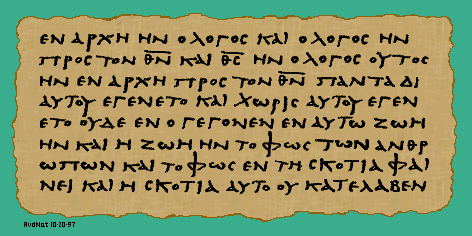
The Greek New Testament runs about 138,000 words, consisting of about 5,400 different words. Some 500 of these words appear at least 25 times while approximately 3,200 appear three or fewer times. | John I: 1-5 |
| Basic prayers
| Εἰς τὸ ὄνομα τοῦ Πατρὸς, καὶ τοῦ Υίοῦ, καὶ τοῦ Ἁγίου Πνεύματος. Ἀμήν.
Πάτερ ἡμῶν ὁ ἐν τοῖς οὐρανοῖς˙ ἁγιασθήτω τὸ ὄνομα σου˙ ἐλθέτω ἡ βασιλεία σου˙ γενηθήτω τὸ θέλημά σου, ὡς ἐν οὐρανῷ καὶ ἐπὶ τῆς γῆς˙ τὸν ἄρτον ἡμῶν τὸν ἐπιούσιον δὸς ἡμῖν σήμερον˙ καὶ ἄφες ἡμῖν τὰ ὀφειλήματα ἡμῶν,
ὡς καὶ ἡμεῖς ἀφίεμεν
τοῖς ὀφειλέταις ἡμῶν˙ καὶ μὴ εἰσενέγκῃς ἡμᾶς εἰς πειρασμόν, ἀλλὰ ῥῦσαι ἡμᾶς ἀπὸ τοῦ πονηροῦ.
Χαῖρε, Μαριάμ, κεχαριτωμένη, ὁ Κύριος μετὰ σοῦ. Eὐλογημένη σὺ ἐν γυναιξίν καὶ εὐλογημένος ὁ καρπὸς τῆς κοιλίας σου, Ἰησοῦς. Ἁγία Μαριάμ, μήτηρ Θεοῦ, ἤδη καὶ ἐπὶ τὴν ὥραν τοῦ θανάτου ἡμῶν. Ἀμήν.
Ἡ δόξα τῷ Πατρὶ καὶ τῷ Ὑιῷ καὶ τῷ Ἁγίῳ Πνεύματι. Καθὼς ἦν ἐν ἀρχῃ καὶ ἐστὶν ἤδη καὶ ἒσται διὰ παντὸς εἰς τοὺς αἰῶνας τῶν αἰώνων. Ἀμήν.
|
| Niceno / Constantino-politan Creed
| Πιστεύομεν εἰς ἕνα Θεὸν Πατέρα παντοκράτορα ποιητὴν οὐρανοῦ καὶ γῆς ὁρατῶν τε πάντων καὶ ἀοράτων·
καὶ εἰς ἕνα Κύριον Ἰησοῦν Χριστὸν τὸν υἱὸν τοῦ Θεοῦ τὸν Μονογενῆ, τὸν ἐκ τοῦ Πατρὸς γεννηθέντα πρὸ πάντων τῶν αἰώνων, Φῶς ἐκ Φωτός, Θεὸν ἀληθινὸν ἐκ Θεοῦ ἀληθινοῦ, γεννηθέντα οὐ ποιηθέντα, ὁμοούσιον τῷ Πατρί, δι' οὗ τὰ πάντα ἐγένετο·
τὸν δι' ἡμᾶς τοὺς ἀνθρώπους καὶ διὰ τὴν ἡμετέραν σωτηρίαν κατελθόντα ἐκ τῶν οὐρανῶν, καὶ σαρκωθέντα ἐκ Πνεύματος Ἁγίου καὶ Μαρίας τῆς παρθένου, καὶ ἐνανθρωπήσαντα, σταυρωθέντα τε ὑπὲρ ἡμῶν ἐπὶ Ποντίου Πιλάτου, καὶ παθόντα, καὶ ταφέντα, καὶ ἀναστάντα τῇ τρίτῃ ἡμέρᾳ κατὰ τὰς γραφὰς, καὶ ἀνελθόντα εἰς τοὺς οὐρανοὺς, καὶ καθεζόμενον ἐν δεξιᾷ τοῦ Πατρὸς, καὶ πάλιν ἐρχόμενον μετὰ δόξης κρῖναι ζῶντας καὶ νεκρούς, οὗ τῆς βασιλείας οὐκ ἔσται τέλος·
καὶ εἰς τὸ Πνεῦμα τὸ Ἅγιον, τὸ Κύριον καὶ Ζωοποιόν, τὸ ἐκ τοῦ Πατρὸς ἐκπορευόμενον, τὸ σὺν Πατρὶ καὶ Υἱῷ συμπροσκυνούμενον καὶ συνδοξαζόμενον, τὸ λαλῆσαν διὰ τῶν προφητῶν·
εἰς μίαν ἁγίαν καθολικὴν καὶ ἀποστολικὴν ἐκκλησίαν· ὁμολογοῦμεν ἓν βάπτισμα εἰς ἄφεσιν ἁμαρτιῶν· προσδοκῶμεν ἀνάστασιν νεκρῶν, καὶ ζωὴν τοῦ μέλλοντος αἰῶνος. ἀμήν.
|
|
|
Logging into course.
Go to latinperdiem.com. Find Login/Register at upper right. Enter your info. Click goes to "Unlock the Classics" page. Scroll to bottom right, find Information for Students and, under that, My Courses. Click goes to "Profile" page. Find The Moss Method for Greek: Module I. Click goes to "The Moss Method for Greek: Module I" page. Scroll down to Course Content, click desired lesson.
Later, after you are registered, you can simply login at LPD and go directly to your Profile page.
|

|
Propaedeutics
Lesson 1. Greek Quick Sheets |
These "Greek Quick Sheets" are going to be very useful, but not till later. Right now, Noe is simply modeling their pronunciation, so do NOT think you have to learn these yet.
From here on out, download, print, and store in Greek binder, everything Noe suggests downloading.
TIME 01:40 to 02:35, Noe models the definite article. THIS is well worth starting to memorize, but for now focus on the sounds as you can't read many of the letters yet.
|
|
Lesson 2. Alphabet
|
Download Noe's alphabet recording and then open it from your device with a media player, and set it to repeat as long as you want. We will practice the alphabet alot (Greek catch, anyone?), so do it all the time, recitation and writing both uppercase (majuscule) and lowercase (miniscule).
First assignment!, btw, it needs to be submitted to Noe before you can open Lesson 3.
|
|
Lesson 3. Syllabification
|
• Syllabification.
• Πάτερ ἡμῶν
|
|
Lesson 4.
The Moss Reader
|
• Course mechanics.
• εἶναι : existential, copulative
• First declension, alpha noun.
| |||||||||||||||||||||||||||||||||||||||||||||||||||||||||||||||||||||
|
Lesson 5
Reading I
|
• Primary active endings : -ω, -εις, -ει, -ομεν, -ετε, -ουσἱ(ν).
• spiritus: lenis ≠ asper
• ictus: acute + circumflex (porsonic) + grave
|
|
Lesson 6
Reading II
|
• Dative of the possessor; moveable ν. ; parataxis
• Great concords (subject-verb, substantive-adjective)
• Epicene
• First, Second declension
• Second declension, omicron noun.
|
|
Lesson 7
Reading III
|
• Participial endings, present, active |
|
Lesson 8
IV
|
|
|
Lesson 9
V
|
|
|
Lesson 10
VI
|
|
| |
. |
. |

|
|
. |
. |
. |
. |
|
| |||||||||||||||||||||||||||||||||||||||||||||||||||||||||||||||||||||||||||||
|
| |||||||||||||||||||||||||||||||||||||||||||||||||||||||||||||||||||||||||||||
| Nouns
Watch for accent mark variations in actual words. |
| ||||||||||||||||||||||||||||||||||||||||||||||||||||||||||||||||||||||||||||||||||||||||||||||||||||||||||||||||||||||||||||||||||||||||||||||||||||||||||||||||||||||||||||||||||||||||||||||||||||||||||||||||||||||||||||||||||||||||||||||||||||||||||||||||||||||||||||||||||||||||||||||||||||||||||||||||
| Personal pronouns |
| ||||||||||||||||||||||||||||||||||||||||||||||||||||||||||||||||||||||||||||||||||||||||||||||||||||||||||||||||||||||||||||||||||||||||||||||||||||||||
| Adjectives
Watch for accent mark variations in actual words.
| First & Second declension
Third declension
| |||||||||||||||||||||||||||||||||||||||||||||||||||||||||||||||||||||||||||||||||||||||||||||||||||||||||||||||||||||||||||||||||||||||||||||||||||||||||||||||
| Attributive
• adjective noun • the adjective noun • noun the adjective • the noun the adjective
| Predicative
• the noun adjective • adjective the noun
| Substantive
• (the) adjective |
|
| Numbers (declined) | One (m) | One (f) | One (n) | Dual (m, f, n) | Three (m, f) | Three (n) | Four (m, f) | Four (n) |
| εἷς ἑνός ἑνί ἕνα | μία μιᾶς μιᾷ μίαν | ἕν ἑνός ἑνί ἕν | δύο δυοῖν δυοῖν δύο | τρεῖς τριῶν τρισί τρεῖς | τρία τριῶν τρισί τρία | τέτταρες τεττάρων τέτταρσι τέτταρας | τέτταρα τεττάρων τέτταρσι τέτταρα |
| Numbers (not declined) |
|
πέντε | ἕξ |
ἑπτά |
ὀκτώ |
ἐννέα |
δέκα |
ἕνδεκα |
δώδεκα |
|
|
| ||||||||||||||||||||||||||||||||||||||||||||||||||||||||||||||||||||||||||||||||||||||||||||||||||||||||||||||||||||||||||||||||||||||||||||||||||||||||
| Prepositions | The Nominative never takes a preposition in Greek. Prepositions are often pre-fixed to verbs, sometimes with spelling/accent changes. |
|
Genitive only |
Dative only |
Accusative only |
|
| ἀντί • in place of, instead of
ἀπό • from
ἄχρι(ς) • up to, as far as
ἐκ, ἐξ • out of, by, after
ἕνεκα • for the sake of
ἔμπροσθεν • before, in front of
ἐνώπιον • before, in sight/presence of
μέχρι • up until
πλήν • except
πρό • before, in front of
| ἐν • in, among
σύν • with | ἀνά • up
εἰς • into, against, to
πρός • toward, to, with
ὡς • to (a person)
|
|
|
|
|
| Verbs | See "The Greek Verb System", a 22" x 14" color-coded chart, suitable for framing or laminating, available from Dallas Theological Seminary Book Room, 3909 Swiss Avenue, Dallas, TX 75204.
|
| (esse) indicative mood
|
| ||||||||||||||||||||||||||||||||||||||||||||||||||||||||||||||||||||||||||||
| | • Qui putat minorem fructum gloriae ex Graecis versibus capi quam ex Latinis, errat, quod Graecae litterae leguntur in omnibus fere gentibus sed Latinae litterae suis finibus continentur. Cicero.
• Ad meam utilitatem semper cum Graecis Latina coniunxi neque id in philosophia solum, sed etiam in dicendi exercitatione feci, idem tibi censeo faciendum, ut par sis in utriusque orationis facultate. Cicero.
| |

Staging
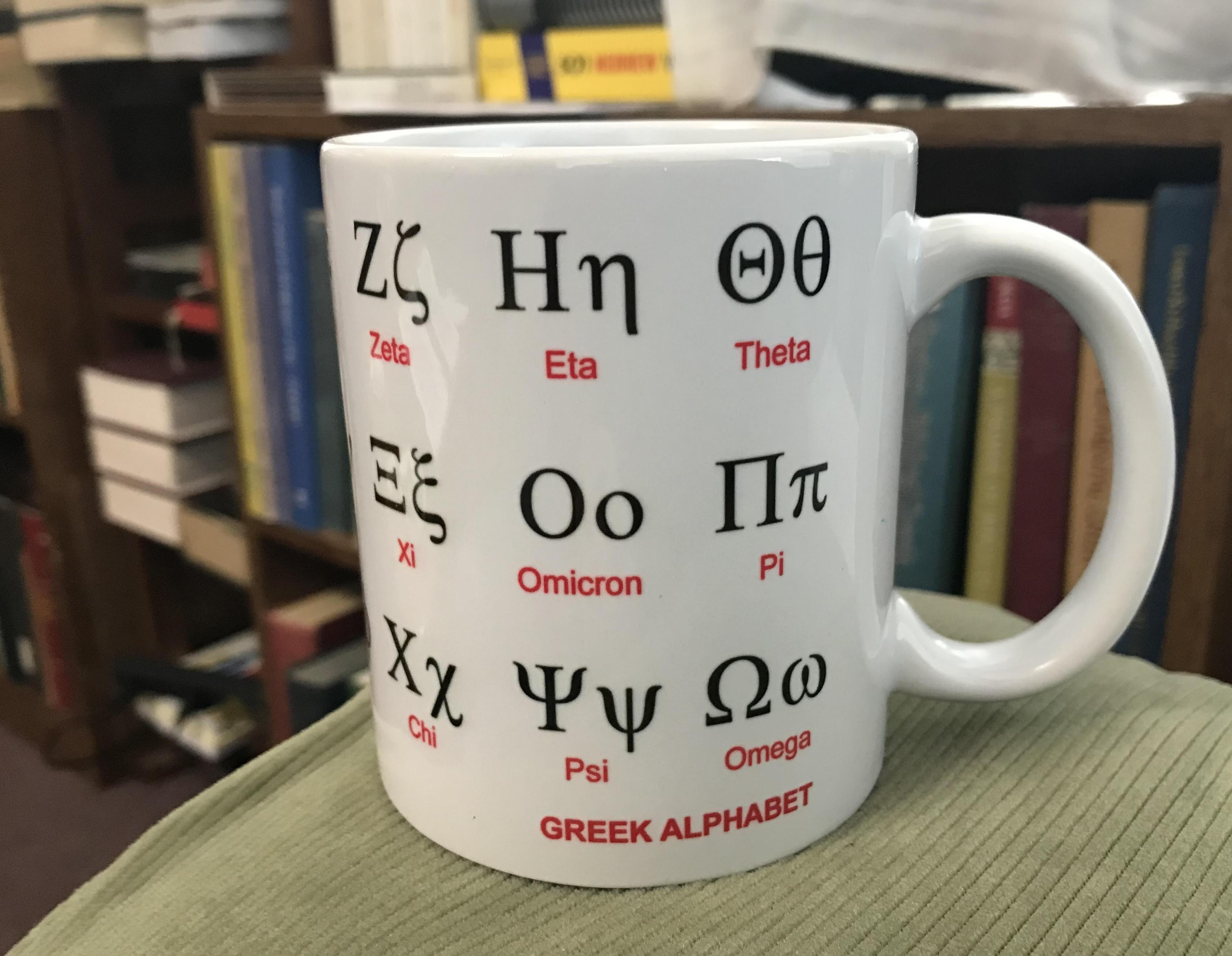
| Koine Greek letters with diacriticals
|
|
| staging |
|
| Templates |
| ||||||||||||||||||||||||||||||||||||||||||||||||||||||||||||||||||||||||||||||||||||||
|
|
| |||||||||||
|
|
| ||||||||||||||||||||||||||||||||||||||||||||||||||||||||||||||||||||||||||||
| Verb |
| |||||||||||||||||||||||||||||||||||||||||||||||||||||||||||||||||
| Grammars & Dictionaries
A wag once cracked that whenever ten Greek teachers gather in a room the first thing they do is to sit down and write eleven Greek grammars. | There is a plethora of materials available for students of Greek. In the end, personal preferences should prevail. Among the materials available, though, the following basic resources are worth considering.
N. Clayton Croy, A Primer of Biblical Greek. Assumes no knowledge of Latin, offers more direct address of grammar, plenty of sample sentences.
Jim Found, Basic Greek In 30 Minutes a Day. Perhaps the most rudimentary of the grammars suggested, this book is ideal for a solo learner.
Donald Mastronarde, Introduction to Attic Greek. An excellent beginning text for those wishing to gain a better understanding of the great classical authors.
R. W. Moore, Comparative Greek and Latin Syntax. For more advanced students, but contains many very illuminative observations on similarities and differences in the classical versions of these two languages.
William Mounce, Basics of Biblical Greek. Assumes no knowledge of Latin, and little of English grammar. Spends a bit too much time giving biblical incentives to (Protestant) students to study Scriptural Greek, and at times winds through some obscure etymologies, but for all that, a well-designed and executed text. Designed for use with a workbook and later a more advanced reader.
Herbert Smyth, Greek Grammar [1920], rev. G. Messing (Harvard, 1956) 784 pp. Probably the classic on Classical in English.
L. A. Wilding, Greek for Beginners. Assumes some knowledge of Latin, and spends way too much time on noun trivia, but for all that, a decent, brief, into to Classical Greek.
Langenscheidt's Pocket Greek Dictionary: Classical Greek-English. Besides an impressive listing of Attic words, this dictionary does contain all the vocabulary needed to read the New Testament in Greek.
|
| Canticle of Simeon (Luke II: 29-32) | Νῦν ἀπολύεις τὸν δοῦλόν σου, δέσποτα, Nunc dimittis servum tuum, Domine,
κατὰ τὸ ῥῆμά σου ἐν εἰρήνῃ· secundum verbum tuum in pace.
ὅτι εἶδον οἱ ὀφθαλμοί μου τὸ σωτήριόν σου, quia viderunt oculi mei salutare tuum,
ὃ ἡτοίμασας κατὰ πρόσωπον πάντων τῶν λαῶν, quod parasti ante faciem omnium populorum,
φῶς εἰς αποκάλυψιν ἐθνῶν καὶ δόξαν λαοῦ σου Ἰσραήλ. lumen ad revelationem gentium et gloriam plebis tuæ Israel.
|
Staging