|
Tamarack Christian Latin: Main Page Hac in schola omnes sumus condiscipuli. / In this school we are all students. |
22 oct 2026 |
|
Links |
TCL Main Page ▫ QA, Basics, Overviews ▫ Supplements ▫ Collins ▫ Progressus Latine ▫ Mostly Medieval ▫ Practice. |
|
Overview
|
Latin is the common language of the Catholic Church and the most important language in the Western tradition. Over many decades I have helped a wide variety of persons, from young children to senior citizens, with or without previous Latin study, to advance in their understanding and use of Latin, including:
• students in a seated classroom; • independent learners (adults and home-schoolers); • others seeking focused tutoring a/o homework help. |
|
|
Classroom students |
St. Thomas Classical School: 10th grade |
St. Thomas Classical School: 8th grade |
|
Independent learners |
D'na S. Wednesdays, as arranged, topics here. Quintus. Thursdays, 12:45 to 2:45, topics here. Briscius et al. Quiescunt pro tempore, topics here. |
No openings left this term. |
|
Other tutoring |
E'a. Thursdays, 3:45 to 4:45, topics here. Clara. Quiescit pro tempore, topics here. |
No openings left this term. |
|
|
Instructing students in seated classrooms |
|
NON EST HIC ALIVD NISI DOMVS DEI ET PORTA CÆLI |
GRADUS DECIMUS |
|
Read us first! |
• A primer for Latin students and their parents, here. • Why Latin is not like any other course, here. |
X |
|
Class meets |
Monday 12:05 to 12:50 |
Wednesday 12:05 to 12:50 |
Friday 12:05 to 12:50 |
Not all items treated every term. Other topics may be added in accord with opportunity. |
|
Course topics
St. Thomas 10th grade
Some stressed antepenults are marked for student use.
St. Thomas 10th grade
St. Thomas 10th grade
St. Thomas 10th grade
St. Thomas 10th grade
St. Thomas 10th grade
St. Thomas
10th grade
St. Thomas
10th grade
St. Thomas
10th grade
St. Thomas
10th grade
St. Thomas
10th grade
St. Thomas
10th grade
St. Thomas
10th grade
St. Thomas
10th grade
|
|
|
Distributa |
• A primer for students a/o parents • Benedic, Domine (card) • TCL, Nouns, endings 1-5. • TCL, cht, verbs, reg endings cxt • TCL, cht, verbs, principal parts |
• First thoughts toward learning Latin • Students' friends • Nunc dimittis (card) • TCL, cht verbs, reg endings txc • TCL, Prayer, Magnificat. |
• Quattuor preces • TCL, Noun basics • TCL, Preposition basics • TCL, Irregular verbs |
|
Fasciae |
• infinitives 1-4. 26-09-29. • dies hebdomadis. 26-10-02. |
• nouns 1-5. 26-09-27. |
• imperatives 1-4. 26-09-29. |
|
Course
mechanics |
• Tests and quizzes are cumulative and draw on materials presented or discussed in class. Tests are announced in advance; quizzes and dictations are not. Exams receive a base score; students can receive half credit on incorrect answers by returning them, corrected, at the beginning of the next class period. In contrast to other classes at St. Thomas, students must neatly print all submissions.
• The most effective Latin classes are highly interactive; I expect and regularly track student participation. Good classroom demeanor (aka, conduct) directly contributes to one's personal growth and creates the space necessary for others to learn. Behavior that interrupts my presentation or that distracts others is always docked and, if repeated, is referred to school administration.
• This course makes almost no use of electronic resources for instruction; that said, however, many very good Latin learning resources are available on-line, some of which I list here or post on my general Latin instructional pages. Parents should feel free to refer their children to these sites as they see fit.
• All materials for this course are supplied by St. Thomas Classical School or Dr. Peters. Books frequently used by students will be Collins Primer of Ecclesiastical Latin, info here, and any printed dictionary, typically, Cassell's or Collins. |
|
NON EST HIC ALIVD NISI DOMVS DEI ET PORTA CÆLI |
GRADUS OCTAVUS |
|
Read us first! |
• A primer for Latin students and their parents, here. • Why Latin is not like any other course, here. |
VIII |
|
Class meets |
Monday 12:50 to 1:35 |
Wednesday 2:20 to 3:05 |
Friday 12:50 to 1:35 |
Not all items treated every term. Other topics may be added in accord with opportunity. |
|
Course topics
St. Thomas 8th grade
Some stressed antepenults are marked for student use.
St. Thomas 8th grade
St. Thomas 8th grade
St. Thomas 8th grade
St. Thomas 8th grade
St. Thomas 8th grade
St. Thomas 8th grade
St. Thomas 8th grade
St. Thomas 8th grade
St. Thomas 8th grade
St. Thomas 8th grade
|
|
|
Distributa |
• A primer for students ... • Benedic (card) • TCL, Verbs, 2, present. • TCL, Nouns, endings 1-5.
|
• First thoughts toward ... • Students' friends MAS. • Students' friends 260928. |
• Quattuor preces • TCL, Verbs, 1, present • Prac, verbs, sen, 1. 260928. • TCL, Verbs, Indic. 261021. |
|
Fasciae |
• TCL, fascia, dies hebdomadis. 26-10-02. |
|
Course
mechanics |
• Tests and quizzes are cumulative and draw on materials presented or discussed in class. Tests are announced in advance; quizzes and dictations are not. Exams receive a base score; students can receive half credit on incorrect answers by returning them, corrected, at the beginning of the next class period. In contrast to other classes at St. Thomas, students must neatly print all submissions.
• The most effective Latin classes are highly interactive; I expect and regularly track student participation. Good classroom demeanor (aka, conduct) directly contributes to one's personal growth and creates the space necessary for others to learn. Behavior that interrupts my presentation or that distracts others is always docked and, if repeated, is referred to school administration.
• This course makes almost no use of electronic resources for instruction; that said, however, many very good Latin learning resources are available on-line, some of which I list here or post on my general Latin instructional pages. Parents should feel free to refer their children to these sites as they see fit.
• All materials for this course are supplied by St. Thomas Classical School or Dr. Peters. Books frequently used by students will be Collins Primer of Ecclesiastical Latin, info here, and any printed dictionary, typically, Cassell's or Collins. |
|
Direct instruction of independent learners (usually adult learners and home-school students) |
|
Read us first! |
• A primer for Latin students and their parents, here.• Latin is not like any other course, here. |
|
| Using any mutually agreed upon Latin learning system, and starting at any point in the year, independent learners meet with me face-to-face about once per week, usually at our home in Saline MI, for instruction. Collins' Primer of Ecclesiastical Latin (info here) is a good textbook for independent learners but approaches are also fine. More advanced learners may work from a textbook, or not, as they wish.
|
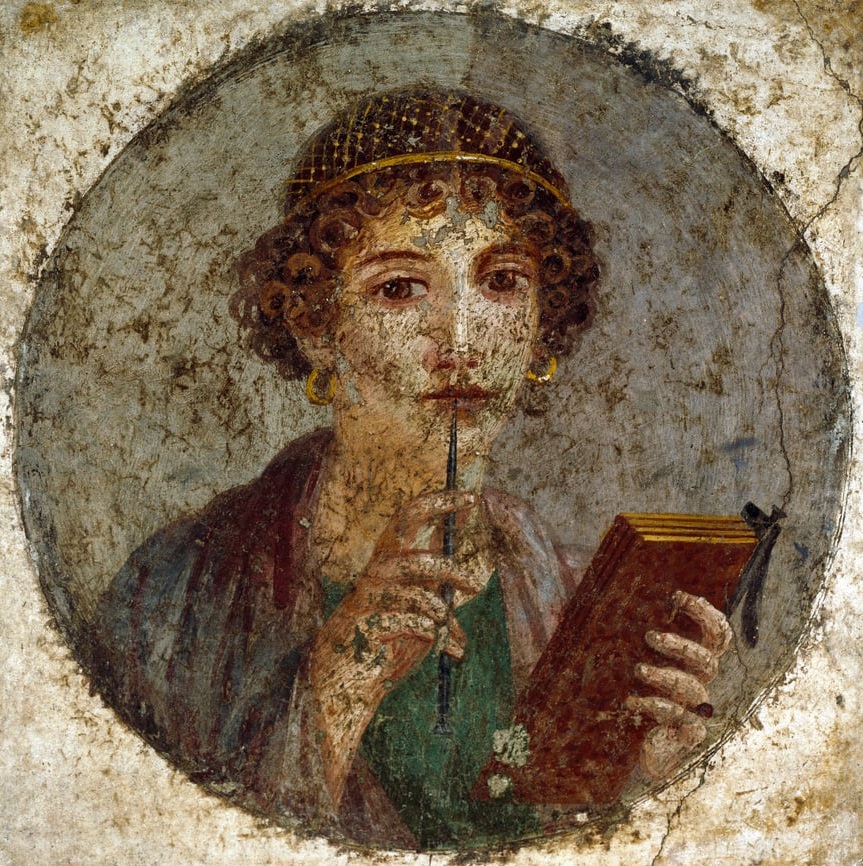
• Quintus.
| Quintus & al. |
|

• Domina S.
|
Progressus Latine. More information on reading and using this chart, here.
|
|
Distributa |
• A primer for students a/o parents • Benedic, Domine (card) • TCL, Nouns, endings 1-5. • TCL, cht, verbs, reg endings cxt • TCL, cht, verbs, principal parts |
• First thoughts toward learning Latin • Students' friends • Nunc dimittis (card) • TCL, cht verbs, reg endings txc • TCL, Prayer, Magnificat. |
• Quattuor preces • TCL, Noun basics • TCL, Preposition basics • TCL, Irregular verbs |
• Briscius.
|
Read us first! |
• A primer for Latin students and their parents, here.• Latin is not like any other course, here. |
|
Progressus Latine. More information on reading and using this chart, here.
|
• Clara.
|
Clara.
|
• Latin Readings. MML. a Kempis. Cicero. Aquinas. |
|
|
Tutoring/homework help for students in schools or educational co-ops |
|
For students in schools and coops. Homework a/o study help is offered along the same lines as for Independent Learners, above, (e.g., start and stop when students/parents wish, meeting about once per week, etc.). We generally follow whatever textbook has been assigned to a student. If I spot topics that need addressing along the way we will address them.
|
• E'a.
|
E'a.
|
Progressus Latine. 2026 - 2027.
• Posse, here. Festina lente!
• Personal Pronouns: ego, tu, is – ea – id. See also Latintutorial ˃ here.
• Gerundives. • Festina lente! • Purpose clauses and the subjunctive.
2026 - 2026.• A primer for Latin students a/o their parents, here.• Latin is not like any other course, here.• Imperative mood, vocative case, here.• Participles, here.
| ||||||||||||||||||||||||||||||||||||||||||||||||||||||||||||||||||
|
Other Information |
|
|
How is Latin different from, say, Spanish or French? While English, Spanish, and French are different languages they are essentially the same kind of language (fascinating explanation of analytic languages omitted). Latin, in contrast, is not just a different language, it is also a different kind of language, one that expresses ideas not just in different words (as do Spanish or French) but in fundamentally different ways (fascinating explanation of synthetic languages omitted). As students come to see the linguistic differences between Latin and English they start to realize that there are many ways to express human thoughts and that the wonderful language(s) we grew up with are not the only ways that ideas can be expressed well and people can communicate easily.
Are there two kinds of Latin? Yes, but
the differences between so-called "Church Latin" and "Classical Latin"
are usually exaggerated when it comes to grammar, syntax, and
vocabulary.
Can I learn Latin on my own? Probably
not, and especially not if you don't already know a language such a
koine Greek. In three-plus decades of watching and working with Latin students of
every sort, I have yet to meet anyone who, knowing only an "analytic"
language such as English or French, actually learned a "synthetic"
language such as Latin from a textbook. Many have tried, and failed, and
walked away — not from their futile methodology, but from Latin
itself. And that's a pity. Most people can learn Latin if they use a
workable approach, but setting off into the wilderness with only a textbook as a guide is not a workable approach. Even those
who know a Romance language like Spanish, and who thus have a head start
in terms of Latin vocabulary, still must learn Latin grammar &
syntax, both of which differ markedly from English and Spanish.
Thus, one almost always needs a tutor or a teacher in the initial phases
of Latin learning.
Does memorization play a role in learning Latin today?
Unquestionably YES! Notwithstanding that Latin is a language and so
could be acquired by immersion, true immersion environments for Latin
are nearly nonexistent today. This lack of Latin immersion opportunities
is ameliorated, however, by combining the memorization of Latin
vocabulary and forms with such live usage opportunities as do exist.
How young is too young to start Latin? Because Latin is a language it is never too early to begin learning
it but obviously the techniques used must be suitable to the student's
age. I find that younger children are able to learn considerable Latin
if it is presented indirectly (e. g., in songs, by games, through
prayers) while junior high school aged children, and certainly high-schoolers
and beyond, benefit more by direct study.
|
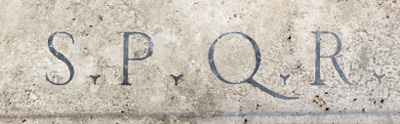 What
differences do exist largely come down to pronunciation and 'accents'.
The pronunciation system that I and nearly all Catholic institutions use
is "Christian" or "Italianate" or "Ecclesiastical" Latin. That used by
most secular educational institutions is "Classical" or "Restored"
Latin. Both
pronunciation systems have good arguments in their favor and good
Latinists can move between both. See, e. g.,
What
differences do exist largely come down to pronunciation and 'accents'.
The pronunciation system that I and nearly all Catholic institutions use
is "Christian" or "Italianate" or "Ecclesiastical" Latin. That used by
most secular educational institutions is "Classical" or "Restored"
Latin. Both
pronunciation systems have good arguments in their favor and good
Latinists can move between both. See, e. g., 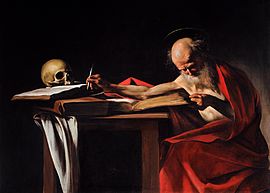 Who
is the patron saint of Latinists?
Who
is the patron saint of Latinists? | Students and Learners may obtain special awards for their work. With the exception of Republic Grammar Award, which must be obtained first, awards may be sought in any order. Recitations must be smooth and accurate (not fastidious, of course, but not sloppy or done in fits and starts).
|

| Latin is not the way ancient Romans spoke English, it's the way ancient Romans spoke. Grasp that and one has the essence of the thing. |
staging, users may disregard materials below.