CanonLaw.info


Canon Law
  Books
  Articles/Reviews
  Speaking/Media
  Canonistics
  Other
Liturgy
Catholic Issues
Personal

Edward Peters

This website is best

viewed 1152 x 864


+

Updated

15 May 2008


When I work on a project requiring the use of canonical citations, I simply leave this page open, and copy and paste as needed. Font used here is Times New Roman 12 pt.


1. There is no longer a need to list the city or cities of publication. Such information is obsolete in an electronic age.


2. In one's first citation to works other than monographs, it is a good idea to indicate the complete pagination range, and then cite to the specific page(s) being used.


3. With some reluctance, I suggest that whenever more than two persons are listed as the authors or editors of works, I simply cite the first such, followed by et al. (et alii). That suffices to identify the work and avoids the problem of having to decide whether and how to cite what can sometimes be very long lists of collaborators.


5. If the language of the text being cited is not the same language as the title, indicate that.


Canon Law * Canonical Citations


The entries on this page are designed for "bibliographic use", that is, they represent a form that can be directly inserted into a bibliography, and they contain the footnote form as well.


For the ratio of a common system of canonical citation, see Toward a Uniform System of Canonical Citation

* Edmund Cardinal Szoka Chair, Sacred Heart Major Seminary, Detroit, Michigan; J. C. L., J. C. D., The Catholic University of America, 1988, 1991; J. D., University of Missouri at Columbia, 1982. For the full citation of works cited more than once herein, see the Directory at the end of this article.


Canonical reference works (Indexes, Dictionaries, Encyclopedias, etc.)


Important canonical reference works have appeared under both decretal and codified law. These works are listed alphabetically by bibliographic entry (which in turn might be the name of the author or the title of the work). A few highly specialized reference works are listed topically (e.g., Peters, Tabulae congruentiae or Berger, Encyclopedic Dictionary of Roman Law) and a few general reference works that are of some canonical value (e.g. Fink, New Dictionary of Sacramental Worship) are listed separately.


DDC • R. Naz, ed., Dictionnaire de Droit Canonique, in 7 vols. (Librarie Letouzey et Ané, 1935-1965).


Sample: A. Biers, “Accusatio”, DDC I: 151-155.

Notes: This work is so fundamental to canonical research that the initials DDC should be reserved for it. Although the DDC appeared over three decades, there is no need to reiterate the year of publication for each individual volume; it suffices to recall that they were published in the decades immediately proceeding the Second Vatican Council. When citing an article from the DDC, state the abbreviated name of the author, the title of the entry, and the volume (in Roman style) and column number(s).


DMC • P. Palazzini, ed., Dictionarium Morale et Canonicum, in 4 vols. (Officium Libri Catholici, 1962-1968).


Sample: P. Palazzini, “Crimen”, DMC I: 991-994.


Notes: This work is not as well known as it should be; the initials DMC should deserve to be reserved for it. The DMC appeared over just six years and there is no need to reiterate the year of publication for each individual volume; it suffices to recall that they were published about the time of the Second Vatican Council and reflect, for the most part, pre-Conciliar canonistics. A large number of the entries were written by the editor, Pietro Palazzini. When citing an article from the DMC, state the abbreviated name of the author, the title of the entry, and the volume and column number(s).


DTC  


Ferraris, Prompta Lucius Ferraris ( c. 1763), Prompta Biblioteca canonica, juridica, moralis, theologica [1746], in 7 vols., rev. ed., (Typis Abbatiae Montis Casini, 1844-1847). Note: See Ius Decretalium * Ferraris' Prompta Bibliotheca.

Prompta Biblioteca


FontesP. Gasparri & J. Serédi, eds., Codicis Iuris Canonici Fontes, in 9 vols., (Typis Polyglottis Vaticanis, 1923-1949). See also Pio-Benedictine Footnotes and Fontes.


Laver, IndexActurus Laver, Index Verborum Codicis Iuris Canonici (Typis Polyglottis Vaticanis, 1941) 936 pp.


Morrisey, PronouncementsFrancis Morrisey, Papal and Curial Pronouncements: their canonical significance in light of the Code of Canon Law [1992], 2nd ed. rev. by M. Thériault, (St. Paul Univeristy, 1995) 46 pp.


Ochoa, IndexXaverius Ochoa, Index verborum ac locutionum Codicis iuris canonici, 2nd ed., (Commentarium pro Religiosis, 1985) 471 pp=?.


Taunton, Cyclopaedia • Ethelred Taunton (1857-1907), The Law of the Church: A Cylopaedia of Canon Law for English-Speaking Countries (Herder, 1906) 652 pp. Note: Taunton's Cyclopaedia is available on-line at Google Book Search.


Trudel, Dictionary • P. Trudel (Sulpician, =), A Dictionary of Canon Law (Herder, 1919) 242 pp.


Johanno-Pauline Code, Fundamental citations


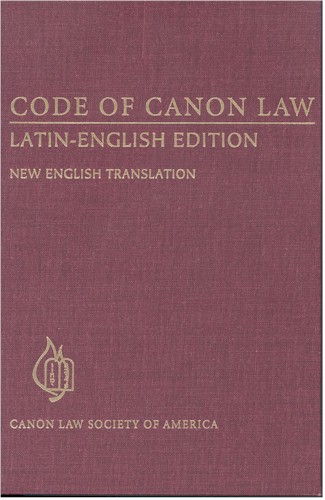
1983 CIC • Codex Iuris Canonici auctoritate Ioannis Pauli PP. II promulgatus, Acta Apostolicae Sedis 75/2 (1983) 1-320; English trans., Canon Law Society of America, Code of Canon Law, Latin-English Edition, New English Translation (Canon Law Society of America, 1999).


Notes: The 1983 Code is a sui generis document which is reflected in a slightly different citation form. First, the citation does not begin with an "author" because there is no author (there is instead a "Legislator", whose name appears in the main title). Second, the Code was not promulgated as a book or a volume, although many monographic editions of the Code exist now, so the title must not use a font that implies a monograph. Rather, the Code is a res and is identified by plain font. The translations, on the other hand, were published in monographs, and the font so reflects.


CLSA Revised Translation of

the Johanno-Pauline Code

1983 CIC • Codex Iuris Canonici auctoritate Ioannis Pauli PP. II promulgatus, Acta Apostolicae Sedis 75/2 (1983) 1-320; English trans., Canon Law Society of America, Code of Canon Law, Latin-English Edition (Canon Law Society of America, 1983). Note: This translation is obsolete.


1983 CIC • Codex Iuris Canonici auctoritate Ioannis Pauli PP. II promulgatus, Acta Apostolicae Sedis 75/2 (1983) 1-320; English trans., Canon Law Society of Great Britain and Ireland, The Code of Canon Law in English Translation (Collins/Eerdmans, 1983). See also, CLSGB&I, Index to the Code of Canon Law (Collins, 1984).


1983 CIC • Codex Iuris Canonici auctoritate Ioannis Pauli PP. II promulgatus, Acta Apostolicae Sedis 75/2 (1983) 1-320; Italian trans., P. Rossano and R. Farina, eds., Codice di Diritto Canonico: Testo Ufficiale e Versione Italiana, 2nd ed., (Unione Editori Cattolici Italiani, 1984).

GB&I trans.


Pontificia Commissio Codici Iuris Canonici Authentice Interpretando [herein Commissio], Codex Iuris Canonici, Fontium Annotatione et Indice Analytico-Alphabetico Auctus, (Libreria Editrice Vaticana, 1989).


Pontificia Commissio Codicis Iuris Canonici Recognoscendo, Promulgation and Official Presentation of the Code of Canon Law, Vatican trans., (Vatican Polyglot Press, 1983).


Communicationes Pontificia Commissio Codici Iuris Canonici Recognoscendo (1969-1983); Pontificia Commissio ad Codicem Iuris Canonici Authentice Interpretandum ([mens. VI] 1984); Pontificia Commissio Codicis Iuris Canonici Authentice Interpretando ([mens. XII] 1984); Pontificia Commissio Codici Iuris Canonici Authentice Interpretando (1985-1988); Pontificium Consilium de Legum Textibus Interpretandis (1989-1998); Pontificium Consilium de Legum Textibus (1999 to date). Notes: The dicastery charged with responsibility for legislative texts in has undergone a distressing number name changes; there is little purpose served by retracing them in footnotes. Communicationes is so well-known in canonical circles that there is no need to identify it further. The name of this journal should never be abbreviated as it would be hopelessly confused with the abbreviation for "commentary". Note that the year materials were published in Communicationes is often not the year in which they were originally produced; that can be confusing.


Legislative history of the Johanno-Pauline Code


Peters, IncrementaEdward Peters, Incrementa in Progressu 1983 Codicis Iuris Canonici (Wilson & Lafleur, 2005) 1549 pp. Reviews in English by = . See also Thomas Green, The Jurist =.


Peters, Tabulae • Edward Peters, Tabulae congruentiae inter Codicem iuris canonici et versiones anteriores canonum, with a multilingual introduction (Wilson & Lafleur, 2000) 198 pp. Reviews in English by G. Stuart, The Jurist 62 (2002) 212-214 and P. Barber, Ecclesiastical Law Journal 7 (July 2004) 489.


See generally Principles guiding the revision of canon law.

Incrementa in Progressu


d'Ostilio, Storia F. d’Ostilio, La Storia del nuovo Codice di diritto canonico: Revisione, promulgazione, presentazione (Libreria Editrice Vaticana, 1983).


Principia Pontificia Commissio Codici Iuris Canonici Recognoscendo, “Principia quae Codicis iuris canonici recognitionem dirigantCommunicationes 1 (1969) 77-85; English trans., Canon Law Society of America, Code of Canon Law, Latin-English Edition, New English Translation, (Canon Law Society of America, 1999) xxxvi-xxxvii. See also

Richard Cunningham, “The Principles Guiding the Revision of the Code of Canon Law,” The Jurist 30 (1970) 447-455.


1980 Schema Pontificia Commissio Codici Iuris Canonici Recognoscendo, Schema Codicis iuris canonici iuxta animadversiones S.R.E. Cardinalium, Episcoporum Conferentiarum, Dicasteriorum Curiae Romanae, universitatem facultatumque ecclesiascaticarum necnon Superiorum Institutorum vitae consecratae recognitum (Libreria Editrice Vaticana, 1980).


Plenaria Pontificium Consilium de Legum Textibus Interpretandis, Congregatio Plenaria, diebus 20-29 Octobris 1981 habita, (Typis Polyglottis Vaticanis, 1991).


Relatio or Relatio Complectens Pontificia Commissio Codici Iuris Canonici Recognoscendo, Relatio complectens synthesim animdaversionum ab Em.mis atque Exc.mis Patribus commissionis ad novissimum schema codicis iuris canonici exhibitarum, cum responsionibus a secretaria et consultoribus datis, (Typis Polyglottis Vaticanis, 1981) and largely available in Communicationes 14-16 (1982-1984). Note: Either footnote citation form, Relatio or Relatio Complectens, works here.


1982 Schema Pontificia Commissio Codici Iuris Canonici Recognoscendo, Codex iuris canonici: Schema novissimum iuxta placita Patrum Commissionis emendatum atque Summo Pontifici praesentatum (Typis Polyglottis Vaticanis, 1982).


Some important post-promulgation legislation and instructions


For the law on beatification and canonization procedures, see Current law on beatifications and canonizations.


PB • John Paul II, ap. con. Pastor Bonus (28 June 1988), Acta Apostolicae Sedis 80 (1988) 841-930; English trans., Canon Law Society of America, Code of Canon Law, Latin-English Edition, New English Translation (Canon Law Society of America, 1999) 679-751. For an overview of Pastor Bonus, see, e.g. =


Ex Corde • John Paul II, ap. con. Ex corde Ecclesiae, Acta Apostolicae Sedis


DC • Pontifical Council for Legislative Texts, instr. Dignitas connubii (8 February 2005), Apollinaris 78 (2005) 65-136; English trans., Klaus Lüdicke and Ronny Jenkins, Dignitas Connubii: Norms and Commentary (Canon Law Society of America, 2006) 556 pp.


Ad tuendam • John Paul II, Ad tuendam fidem, Acta Apostolicae Sedis


Pan-textual commentaries on Johanno-Pauline law


Pan-textual commentaries follow a common ratio: canon-by-canon presentation of (usually) every canon (sometimes with the Latin text, sometimes not), followed by private commentary (usually prepared by members of a single canonical society or faculty) at greater or lesser length. Each entry is specifically identifiable, though not always easily. When citing pan-textual commentaries, identify the specific author by abbreviated name, but not the canon number commented upon unless necessary for clarity (it will usually be clear from context what canon was under discussion.) Pan-textual commentaries are usually the first place to which one turns, after the law itself of course, for guidance on a canonical question. The following list is presented in reverse chronological order of publication. See also Major Single-Volume Commentaries on the 1983 Code.


Exegetical Comm.• A. Marzoa, et al., eds., Exegetical Commentary on the Code of Canon Law, in 5 vols. bound as 8, (Wilson & Lafleur, 2004), based on the Comentario Exegético al Código de Derecho Canónico (University of Navarra, 1996/2002). English reviews include: = and E. Peters, The Jurist 67 (2007) 541-542.

Exegetical Commentary


Code Annot. 2nd • E. Caparros, et al., eds., Code of Canon Law Annotated, 2nd ed., (Wilson & Lafleur, 2004) = pp. Note: The designation of "2nd edition" may be omitted from the footnote text is it is clear from context.


Code Annot. • E. Caparros, et al., eds., Code of Canon Law Annotated (Wilson & Lafleur, 1993) 1631 pp.


Code Annotated

Revised Edition


CLSA New Comm. • J. Beal, et al., eds., New Commentary on the Code of Canon Law, (Paulist Press, 2000) 1952 pp. English reviews in = and =. Note: This is not simply a revised edition of the 1985 CLSA commentary, and the footnote citation style should not imply otherwise by the use of numerics such as "CLSA Comm2".

CLSA New Comm


GB&I Comm. • G. Sheehy, et al., eds., Canon Law: Letter and Spirit (Liturgical Press, 1995) 1060 pp. Note: "Letter and Spirit" is a catchy title, but this work represents the genius the Canon Law Society of Great Britain and Ireland, and the footnote citation entry should make that clear.


Valencia Comm. • A. Benlloch Poveda, rev. ed., Código de Derecho Canónico Edición bilingüe, fuentes y commentarios de todos los cánones [1993], (Edicep, 1994) 822 pp.

GB&I Comm


CLSA Commentary (1985)

CLSA Comm. • J. Coriden, et al., eds., The Code of Canon Law: A Text and Commentary (Paulist Press, 1985) 1152 pp.


Commento • P. Pinto, ed., Commento al Codicie di Diritto Canonico (Urbaniana, 1985) =.


Salamanca Comm. • L. de Echeverria, ed., Código de Derecho Canónico Edición bilingüe comentada, (Biblioteca de Autores Christianos, 1985) 949 pp.


Paralieu, Guide Roger Paralieu, Guide Practique du Code de Droit Canonique: Notes Pastorales (Tardy, 1985) =.


Topical commentaries on Johanno-Pauline law, General


Woestman, Orders William Woestman, The Sacrament of Orders and the Clerical State: A Commentary on the Code of Canon Law [=], 2nd ed., (St. Paul University, 2001) =.


Canonization William Woestman, ed., Canonization: theology, history, process (St. Paul University, 2002) 383 pp. Note: Be sure to cite the author specific to each section.


Topical commentaries on Johanno-Pauline law, Sanctions


Borras, Sanctions Alphonse Borras, Les Sanctions dans L'Église (Tardy, 1990) 236 pp.


Calabrese, Penale Antonio Calabrese, Diritto Penale Canonico (Milan: Edizioni Paoline, 1990) =.


Topical commentaries on Johanno-Pauline law, Marriage


McAreavey, Marriage • John McAreavey, The Canon Law of Marriage and the Family (Four Courts, 1997) 254 pp.


Örsy, Marriage • Ladislas Örsy, Marriage in Canon Law (Glazier, 1986) 328 pp.


Sources, official and semi-official


1917 CIC • Codex Iuris Canonici, Pii X Pontificis Maximi iussu digestus Benedicti Papae XV auctoritate promulgatus, Acta Apostolicae Sedis 9/2 (1917) 3-521; English trans., Edward Peters, The 1917 or Pio-Benedictine Code of Canon Law in English Translation with Extensive Scholarly Apparatus (Ignatius Press, 2001) 777 pp. Reviews of Peters' translation by P. Barber, Ecclesiastical Law Journal 7 (July 2004) 487-489 and R. Kennedy, Fellowship of Catholic Scholars Quarterly (Spring 2002) 36-38.


Notes: The 1917 Code is a sui generis document which is reflected in a slightly different citation form. First, the citation does not begin with an "author" because there is no author (there is instead a "Legislator", whose name appears in the main title). Second, the Code was not promulgated as a book or a volume, although many monographic editions of the Code exist now, so the title must not use a font that implies a monograph. Rather, the Code is a res and is identified by plain font. The translations, on the other hand, were published in monographs, and the font so reflects.

Peters' translation of

the Pio-Benedictine Code


1917 CIC • Codex Iuris Canonici, Pii X Pontificis Maximi iussu digestus Benedicti Papae XV auctoritate promulgatus, Acta Apostolicae Sedis 9/2 (1917) 3-521; Spanish trans., L. Domínguez, et al., Código de Derecho Canónico y Legislación Complementaria: Texto bilingüe y comentado por professors de la Pontificia Universidad de Salamanca, 3rd ed., (Biblioteca de Autores Cristianos, 1949).


1917 CIC • Codex Iuris Canonici, Pii X Pontificis Maximi iussu digestus Benedicti Papae XV auctoritate promulgatus, Acta Apostolicae Sedis 9/2 (1917) 3-521; Spanish trans., aa.vv., Comentarios al Código de Derecho Canónico con el texto legal latino y castellano, in 4 vols., (Biblioteca de Autores Cristianos, 1963-1964).


Pan-textual commentaries on Pio-Benedictine law


The great majority of pantextual Pio-Benedictine commentaries were written by individual scholars, sometimes by pairs of scholars treated as a single author, e.g., Abbo-Hannan or Vermeersch-Creusen. Most works (pace the Spanish) do not contain the 1917 Code itself. Many of these works underwent incessant, and sometimes trivial, revisions that make their citation today a cumbersome affair. Indeed, many "sets" of these multi-volume works actually consist of various volumes from different editions. Mitigating the confusion, though, is the fact that some works were divided up into "paragraphs" or "sections" (the textmarker term was never clear) and usually these numbers remained consistent from edition to edition even when pagination and commentary changed. If such numbers are offered, cite them as well as the page number and edition for the benefit of researchers who must use different editions of the work than you are citing. Note that some of these commentaries (e.g., Ojetti or Toso) were not completed and that others were bound in more volumes than they were written in (e.g. Blat or Wernz-Vidal). Finally, because most of these works bore similar, often identical titles, they are usually known today by the names of their authors, as in, "Have you looked in Abbo-Hannan?" See also Guide to Multi-Lingual Commentaries on the 1917 Code and North American Canon Law Doctoral Dissertations.


L. Domínguez, et al., Código de Derecho Canónico y Legislación Complementaria: Texto bilingüe y comentado por professors de la Pontificia Universidad de Salamanca [=], 3rd ed., (Biblioteca de Autores Cristianos, 1949).=


aa.vv., Comentarios al Código de Derecho Canónico con el texto legal latino y castellano, in 4 vols., (Biblioteca de Autores Cristianos, 1963-1964).


Abbo-Hannan, Sacred Canons • John Abbo and Jerome Hannan, The Sacred Canons: A Concise Presentation of the Current Disciplinary Norms of the Church, in 2 vols. (Herder, 1952). Note: Discussion of Book IV, and even more so V, is quite abbreviated.


Dom Augustine, Commentary • Dom Augustine (Charles Bachofen, Benedictine, =), A Commentary on the New Code of Canon Law, in 8 vols. (Herder, 1918-1922). On the authority of Dom Augustine, see Lawrence Wrenn, "Charles Augustine, O.S.B., excepts from a journal", The Jurist 45 (1985) 297-320. Note: The honorific "Dom" is important for avoiding the jarring references to "Augustine". One could simply refer to the author as Bachofen.


Beste, IntroductioUdalricus Beste (Benedictine =), Introductio in Codicem [1938], 5th ed., (M. D'Auria Pontificius, 1961).


Blat, CommentariumAlbertus Blat (=), Commentarium Textus Codicis Iuris Canonici, in 5 vols., (various publishers, 1921-1922).


Bouscaren-Ellis, Commentary • Lincoln Bouscaren (Jesuit, † 1971) and Adam Ellis (Jesuit =), Canon Law: A Text and Commentary [1946], 4th ed. by F. Korth, (Bruce, 1966) 1011 pp.


Ferreres, Institutiones Ioanne Ferreres (1861-1936), Institutiones Canonicae iuxta novissimum Codicem … iuxtaque praescripta Hispanae disciplinae et Americae Latinae, in 2 vols., 2nd ed., (Eugenius Subirana, 1920).


Jone, Commentarium Heriberto Jone, Commentarium in Codicem Iuris Canonici, in 3 vols., (Officina Libraria F. Schönigh, 1950-1955).


Mothon, InstitutionsJoseph Mothon, Institutions Canoniques, in 3 vols., (Descleé, 1924).


Dominicus Prümmer (1866-1931), Manuale Iuris Ecclesiastici [1909], 2nd ed., (Herder, 1920).


J.-B. Raus, Institutiones Canonicae in forma compendii (Emmanuelis Vitte, 1923).


Regatillo, Institutiones • Eduardo Regatillo (Jesuit, 1882-1975), Institutiones Iuris Canonici [=], in 2 vols., 6th ed., (Sal Terrae, 1961).


Fernando della Rocca, Manual of Canon Law, Thatcher trans., (Bruce, 1958).


Sipos, Enchirdion • Stephanus Sipos (1875-1949), Enchiridion Iuris Canonici [=], 6th ed. rev. by L. Gálos, (Orbis Catholicus-Herder, 1954) 913 pp.


Woywod, Practical Comm. • Stanislaus Woywod, A Practical Commentary on the Code of Canon Law [1925], in 2 vols., rev. by C. Smith (Wagner/Herder, 1957).


Commentaries on Pio-Benedictine marriage law


Bánk, Connubia • Joseph Bánk, Connubia Canonica (Herder, 1959).


Chelodi, Matrimoniale • Ioannis Chelodi (=), Ius Matrimoniale iuxta Codicem Iuris Canonici [=], 3rd ed., (Libreria Moderna Editrice, 1921) 219 pp.


Gasparri

Gasparri, De Matrimonio Petrus Gasparri (1852-1934), Tractatus Canonicus de Matrimonio [1891] in 2 vols., 9th ed., (Typis Polyglottis Vaticanis, 1932). On the immense authority of Gasparri, see, e.g., =.


Note: While this work obviously originated under decretal law, it was widely regarded as the premier commentary on codified matrimonial law.


Nau, Marriage • Louis Nau, Manual on the Marriage Laws of the Code of Canon Law (Pustet, 1933) 254 pp.


Petrovits, Matrimony Joseph Petrovits, The New Church Law on Matrimony, (McVey, 1921) 458 pp.


Ramstein, Pastor • Matthew Ramstein (Conventual, =), The Pastor and Marriage Cases [1936], 2nd ed., (Benziger, 1938) 252 pp.


Topical commentaries on Pio-Benedictine law


F. Cimetier, Pour étudier le Code de Droit Canonique, 3rd ed., (Libraire Lecoffre, 1927). =


R. Naz, ed., Traité de Droit Canonique, in 4 vols., rev. ed, (Letouzey et Ané, 1954). =


Ayrinhac

Ayrinhac, Matrimonial • Henry Ayrinhac (Sulpician, 1867-1931), Matrimonial Legislation in the New Code of Canon Law [=], rev. by P. Lydon in 1932, (Benziger, 1946) 397 pp.


Ayrinhac, Sacraments • Henry Ayrinhac (Sulpician,1867-1931), Legislation on the Sacraments in the New Code of Canon Law (Longmans/Green, 1928).


Ayrinhac, Penal Henry Ayrinhac (Sulpician,1867-1931), Penal Legislation in the New Code of Canon Law [1920], rev. by P. Lydon, (Benziger, 1944).


Ayrinhac, Administrative • Henry Ayrinhac (Sulpician, 1867-1931), Administrative Legislation in the New Code of Canon Law (Longmans, 1930).


Cappello, De Sacramentis Felix Cappello (Jesuit, 1879-1962), Tractatus canonico-moralis de sacramentis iuxta Codicem juris canonici [=], in 5 vols., 7° ed., (Marietti, 1962).


Ciprotti, Osservazioni • Pio Ciprotti (=), Osservazioni sul Testo de “Codicis Iuris Canonici” (Typis Polyglottis Vaticanis, 1944).


Mahoney, ProblemsE. J. Mahoney, Priests’ Problems, edited by L. McReavey, (Burns & Oates, 1958) 468 pp. Earlier versions of most replies can be found be in The Clergy Review, 1945-1954.


Marquardt, Loss • J. Marquardt, The Loss of Right to Accuse a Marriage: a treatise on the final clause of c. 1971 § 1, 1°, (Officium Libri Catholici, 1951) 125 pp.


Matthew Ramstein, A Manual of Canon Law (Terminal Printing, 1948).


Regatillo, Sacramentarium • Eduardo Regatillo (Jesuit, 1882-1975), Ius sacramentarium [1945] , 4th ed. (Sal Terrae, 1964).


Stitt, De Promotore • Archibald Stitt (1898-1980), De Promotore iustitiae eisuque munere in curia dioecesana, (Editione Scientifica Internazionale, 1939).


Conway, Problems • William Conway, Problems in Canon Law: Classified Replies to Practical Questions (Newman, 1956) 345 pp. Earlier versions of most replies can be found be in The Irish Ecclesiastical Record, 1943-1956.


Ius Decretalium


See generally Quinque Libri Decretalium and Ius Novissimum.


Sources and references


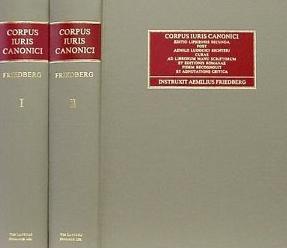
A. Friedberg, ed., Corpus Iuris Canonici editio Lipsiensis secunda post Aemilii Ludouci Richteri, in 2 vols., (Lawbook Exchange, 2000).


QLD A. Friedberg, ed., Corpus Iuris Canonici editio Lipsiensis secunda post Aemilii Ludouci Richteri, Pars Secunda, Decretalium Collectiones, Decretales D. Gregorii P. IX Compilatio (Lawbook Exchange, 2000) 1-928 known commonly as the Quinque Libri Decretalium.

Exasperated by the intricacies of medieval

legal citation, Luther finally threw the

Corpus Iuris Canonici into a fire.


in Sexto A. Friedberg, ed., Corpus Iuris Canonici, Pars Secunda, Decretalium Collectiones (Lawbook Exchange, 2000) 929-1124, known commonly as the Liber Sextus.


Clem. • A. Friedberg, ed., Corpus Iuris Canonici editio Lipsiensis secunda post Aemilii Ludouci Richteri, Pars Secunda: Decretalium Collectiones, Clementis Papae V Constitutiones suae integretati restitutus, (Lawbook Exchange, 2000) 1125-1200.


A. Friedberg, ed., Corpus Iuris Canonici editio Lipsiensis secunda post Aemilii Ludouci Richteri, Pars Secunda: Decretalium Collectiones, Extravagantes tum viginti D. Ioannis Papae XXII tum communes suae integretati restitutus (Lawbook Exchange, 2000) 1201-1236.


A. Friedberg, ed., Corpus Iuris Canonici editio Lipsiensis secunda post Aemilii Ludouci Richteri, Pars Secunda: Decretalium Collectiones, Extravagantes Decretales quae a diversis Romanis pontificibus post sextum emanverunt, (Lawbook Exchange, 2000) 1237-1312.


Ochoa-Diez, Indicies • X. Ochoa & A. Diez, Indicies Titulorum et Legum Corporis Iuris Civilis (Commentarium pro Religiosis, 1965).


Decretalists


de Angelis, Praelectiones Philippus de Angelis (= 1824-1881), Praelectiones Iuris Canonici, in 5 vols. (Romae: Ex Typoghraphia della Pace, 1877-1891).


Corvinus, Jus Canonicum Arnoldus Corvinus à Beldern ( c. 1608), Jus Canonicum per aphorismos strictim explicatum [1643], (Elzevirium, 1651).


Craisson, ElementaD. Craisson, Elementa Juris Canonici ad usum Galliae Seminariorum [1866], 3rd ed., (Jouby et Roger, 1873).


Engel, CollegiumLudovico Engel (Benedictine, 1674), Collegium Universi Juris Canonici [1671-1674], 7th ed., (Venetiis: Apud Joseph Bettinelli, 1733) 527 pp. On the authority of Engel see, e.g., G. Lepointe, “Engel ou Engl (Hanns-Ludwig)”, DDC V: 342-343.


Engel, Manuale • Ludovico Engel (Benedictine, † 1674), Manuale Parochorum de plerisque functionibus et obligationibus [1661], (Venetiis: Apud Joseph Bettinelli, 1733) 108 pp. On the authority of Engel see, e.g., G. Lepointe, “Engel ou Engl (Hanns-Ludwig)”, DDC V: 342-343.

Engel, Collegium Universi Juris Canonici


Fagnanus, Jus Canonicum • Prospero Fagnanus (1588-1678), Jus Canonicum sive Commentaria in [Quinque Libros] Decretalium cum disceptatione Grangiis [1661], nova editio, aliis prioribus multo correctior, cum amplissimo rerum & verborum indice accuratissimo, 5 volumes bound as three (Coloniae Allobrogum, Sumptibus Fratrum de Tournes, 1759). On the immense authority of Fagnanus, see, e.g., = Bertola DDC V: 807-809; = Ortolan, DTC V/2: 2067-2069; and = Willke in NCE V: 790.


Note: See also Ius Decretalium * Prospero Fagnanus.


Fagnanus


Gottofredo, SummaGottofredo da Trano (=), Summa perutilis et valde necessaria domini Goffredi de Trano super titulis decretalium nouissime cum Repertorio et numeris principalium et emergentium questionum [1245] (Lugduni: in edibus Magistri Ioannis moytin alias decambray, 1519); facsimile reprint, Berlin: Scientia Verlag, 1992, 533 pp. On the authority of Gottofredo, see R. Naz, “Geoffroy de Trani ou de Trano”, DDC V: 952.


Henricus, Summa AuraeHenricus de Segusio (c. 1200-1271), Summa (Aurea), una cum summariis et adnotationibus Nicolai Superantii [c. 1250], (Neudruck der Ausgabe, Lyon 1537, facsimile reprint, Scientia Aalen, 1962). On the immense authority of Henry of Susa, see, e.g. =.


Huth, Jus CanonicumAdamo Huth (1696-1771), Jus Canonicum ad Libros V Decretalium Gregorii IX Explicatum et per Quaestiones ac Responsa in methodum brevem et claram redactum [1731], 2nd ed., (Wolfe, 1732). On the authority of Huth, see e.g., =.


Laurentius, Institutiones[Joseph] Laurentius (=), Institutiones Iuris Ecclesiastici quas in usum scholarum, 2nd ed., (Herder, 1908).


Lega, De Delictis Michael Lega (1860-1935), Praelectiones in Textum Iuris Canonici, De Delictis et Poenis [=], in 2 vols., 2nd ed., (Ex Typographia Pontificii in Instituto Pii X, 1910). On the authority of Lega, see e.g., =.


Martin, Roman Curia Michael Martin, The Roman Curia (Benziger, 1913).

Lega


Pirhing, Jus CanonicumEnricus Pirhing (Jesuit, 1606-1679), Jus Canonicum nova methodo explicatum, in 4 vols., (Joannis Caspari Bencard, 1674-1678). On the immense authority of Pirhing, see e.g. R. Naz, “Pirhing (Enric)” DDC VI: 1504 (1957).


PirhingianaAnon., Synopsis Pirhingiana seu SS. Canonum Doctrina ex fusioribus quinque libris Henrici Pirhing, 9th ed., (Romae: Typis S. Congregationis de Propaganda Fide, 1849) 808 pp.


Reiffenstuel, Jus Canonicum Anacleto Reiffenstuel (Capuchin, 1641-1703), Jus Canonicum Universum complectens Tractatum de Regulis Juris [=], in 6 vols., rev. by Bolard/Pelletier (Ludivicum Vivès, 1864-1869).On the immense authority of Reiffenstuel, see e.g. R. Naz, “Reiffenstuel (Anaclet)”, DDC VII: 547-548 (1965).


Sanchez, DisputationumThoma Sanchez, Disputationum de S[ancto] Matrimonii Sacramento, in 2 vols., (Venetiis: Apud Ioannem Guerilium, 1613).


Santi, PraelectionesFranciscus Santi ( 1885), Praelectiones Juris Canonici quas juxta ordinem Decretalium Gregoriii IX (=), in 3 vols., 4th ed., (Regensburg: Pustet, 1905).


Schmier, Iurisprudentia Francisco Schmier (1680-1728), Iurisprudentia canonico-civilis seu ius canonicum universum iuxta V. libros Decretalium. nova & facili Methodo explanatum...in tres tomos distinctum et quatuor voluminibus distributum, [1716], in 5 volumes bound as two (Avenione: Sumptibus Petri Lombard, 1738). On the authority of Schmier, see e.g., =.


Schmalzgrueber, Ius Ecclesiasticum Franz Schmalzgrueber (Jesuit, 1663-1735), Ius Ecclesiasticum Universum, in 13 vols. [c. 1719], rev. ed., (Romae: Typographia Rev. Cam. Apostolicae, 1844). On the immense authority of Schmalzgrueber, see, e.g., A. Van Hove, Prolegomena, 2nd ed., (Dessain, 1945) 538; R. Naz, “Schmalzgrueber, (François)”, DDC VII: 788; and D. Bonner, “Schmalzgrueber, Franz”, NCE, 2nd ed., XII: 741.


Smith, CompendiumSebastian Bach Smith (=), Compendium Juris Canonici ad usum cleri et seminariorum hujus regionis accomodatum [=] 4th ed., (Benziger, 1890).


Schmier, Iurisprudentia


Tilloy, TraitéAnselme Tilloy (=), Traité Théorique et Pratique de Droit Canonique, in 2 vols., (Savète, 1895).


Vallensis, paratitlaAndreae Vallensis (vulgo Del Vaulx, 1569-1636), Paratitla sive summaria et methodica explicatio Decretalium D.Gregorii Papae IX. Opus novum, Scholae ac Foro, & Decretis Concilii Tridenti [1630] , rev. ed., (Lovanii: Bernardini Masii, 1667) 623 pp.


Wernz, Ius Decretalium Francisco Wernz (Jesuit, 1842-1914), Ius Decretalium ad Usum Praelectionum in Scholis Textus Canonici sive Iurias Decretalium, 2nd ed., in 6 vols., (Prati, 1905-1913). On the immense authority of Wernz, “ultimus Decretalistarum”, see e. g. R. Naz, “Wernz, François-Xavier”, DDC VII: 1636-1638, and D. Oesterle, “In piam Francisci Wernz S. I. memoriam”, Gregorianum 24 (1943) 9-22.


Gratian and the Decretists


A. Friedberg, ed., Corpus Iuris Canonici editio Lipsiensis secunda post Aemilii Ludouci Richteri, Pars Prior: Decretum Magistri Gratiani, (Law Book Exchange, 2000), known as the Concordia discordantium canonum. For an orientation to the vast field of Gratian studies, see e.g. =. On the actual drafting of the Concordia, Anders Winroth, The Making of Gratian's Decretum (Cambridge, 2000) is essential reading.


Yale's gorgeous copy of Gratian's Concordia shows the basic

text in center columns surrounded by the Glossa Ordinaria


Paucapalea, Summa J. von Schulte, ed., Die Summa des Paucapalea über das Decretum Gratiani (Emil Roth, 1890). On the importance of Paucapalea, see e.g. =.


Rolandus, Summa F. Thaner, ed., Die Summa Magistri Rolandi nachmals Papstes Alexander III (Wagner’Schen, 1874). On the importance of Rolandus, see e.g. =.


Rufinus, Summa H. Singer, ed., Rufinus von Bologna (Magister Rufinus) Summa Decretorum (Ferdinand Schöningh, 1963).On the importance of Rufinus, see e.g. =.


Stephanus, Summa J. von Schulte, ed., Die Summa des Stephanus Tornacensis über das Decretum Gratiani (Emil Roth, 1891). On the importance of Stephanus, see e.g. =.


Summa Parisiensis T. McLaughlin, ed., The Summa Parisiensis on the Decretum Gratiani (Pontifical Institute of Mediaeval Studies, 1952). On the importance of the Summa Parisiensis, see e.g. =.


A. Friedberg, ed., Quinque compilationes antiquae: nec non collectio canonum lipsiensis, (Tauchnitz, 1882). On the importance of the Quinque Compilationes Antiquae, see e.g. =.


Robert, PoenitentialisFrancis Firth, ed., Robert of Flamborough, Liber Poenitentialis, a Critical Edition with Introduction and Notes (Pontifical Institute of Medieval Studies, 1971). On the importance of Robert's Liber Poenitentialis, see e.g. =.


Papiensis E. Laspeyers, ed., Bernardi Papiensis Faventini Episcopi Summa Decretalium, (Akademische Druck U. Verlagsanstalt, 1956 reprint of 1860 edition). On the importance of Papiensis, see e.g. =.


Eastern Canon Law


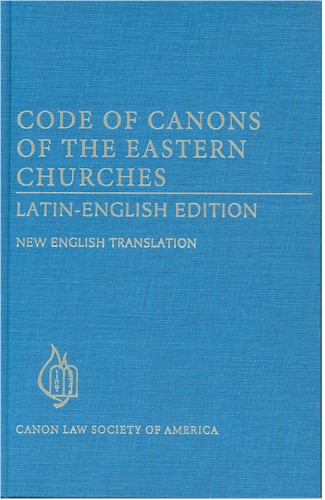
CCEO • Codex Canonum Ecclesiarum Orientalium auctoritate Ioannis Pauli PP. II promulgatus, Acta Apostolicae Sedis, 82 (1990) 1033-1363; English trans., Code of Canons of the Eastern Churches, Latin-English Edition, New English Translation (Canon Law Society of America, 1992).


Pospishil, MarriageVictor Pospishil, Eastern Catholic Marriage Law (Saint Maron Publications, 1991).


The Eastern Code of Canon Law (1990)


Codificatio


Iuris Canonici Orientalis


I-IV


Privately produced bindings of the four pre-Conciliar installments of Eastern Canon Law are sometimes found under the title Codificatio Iuris Canonici Orientalis I-IV, but these have no official authority and are purely exercises in convenience.


 CA • Pius XII, m. p. Crebrae allatae [on marriage law] (22 February 1949), Acta Apostolicae Sedis 41 (1949) 89-119.


 SNPius XII, m. p. Sollicitudinem Nostram [on procedural law] (6 January 1950), Acta Apostolicae Sedis 42 (1950) 5-120.


 PALPius XII, m. p. Postquam Apostolicis Litteris [religious, temporal goods, terms] (9 February 1952), Acta Apostolicae Sedis 44 (1952) 65-152.


 CSPius XII, m. p. Cleri sanctitati [law of persons] (2 June 1957) Acta Apostolicae Sedis 49 (1957) 433-603.


Galtier, Mariage • F. Galtier (Jesuit, =), Le Mariage: Discipline Orientale et Discipline Occidentale [et] La Réforme du 2 Mai 1949, (Université St Joseph de Beyrouth, 1950) 456 pp.


The Roman Rota


Tribunal Apostolicum Sacrae Romanae Rotae, Decisiones seu Sententiae Selectae (Typis Polyglottis Vaticanis).


Notes: The citation form for Rotal cases is unusual. Cite first the name of the ponens and date of decision (e.g., coram Caestri, 16 July 1943), then the decision number (use Roman numbers), then the volume and pagination range. Thereafter cite ponens, textmarker, volume and page. Not all Rotal cases decided in a given year are published. A year of publication for each volume is usually given, but avoid citing it to reduce confusion between the year of decision and the year of publication.


Holböck, TractatusCarolus Holböck, Tractatus de Jurisprudentia Sacrae Romanae Rotae juxta decisiones quae hoc sacrum tribunal edidit ab anno 1909 usque ad annum 1946 et publicavit in voluminibus i-xxxviii (Styria, 1957).


Woestman, Allocutions • William Woestman, ed., Papal Allocutions to the Roman Rota 1939-1994 (St. Paul University, 1994).


Introductions, Text-books, and Popular Treatments


Coriden, Introduction • James Coriden (sac. 1932-), An Introduction to Canon Law (Paulist, 1991) 232 pp.


Foster, Annulment  • Michael Foster (sac. =) Annulment: The Wedding that Was (Paulist, 1999) 205 pp. Reviews: E. Peters, Theological Studies 60 (1999) 797.


Peters, AnnulmentsEdward Peters (lay, 1957- ), Annulments and the Catholic Church (Ascension Press, 2004) 195 pp.


Peters, Excommunication Edward Peters (lay, 1957-), Excommunication and the Catholic Church (Ascension, 2006) 64 pp.


General Doctrine and Theology


CCC • =; English trans., Catechism of the Catholic Church, 2nd ed., (Libreria Editrice Vaticana, 2000) 904 pp.


Gasparri, Catechismus • Pietro Gasparri, Catechismus Catholicus, 6° ed., (Typis Polyglottis Vaticanis, 1931) 486 pp.


Hardon, Catechism • John Hardon, The Catholic Catechism (Doubleday, 1975) 623 pp.


Hervé, Manuale J. M. Hervé, Manuale Theologiae Dogmaticae [1924], in 4 vols., 19th ed., (Newman, 1943).


Ott, Fundamentals • Ludwig Ott, Fundamentals of Catholic Dogma [1952], English version edited by J. Bastible (Herder, 1957) 523 pp.


Lawler, Teaching • R. Lawler, et al., eds., The Teaching of Christ: a Catholic Catechism for Adults (Our Sunday Visitor, 1976).


Smith, Teaching • G. Smith, ed., The Teaching of the Catholic Church, in 2 vols., (Macmillan, 1955). Note: Be sure to cite specific authors for each section.


Moral Theology


DMT F. Roberti (1889-1977) & P. Palazzini (1912-2000), eds., Dictionary of Moral Theology [1957], Yannone trans., (Newman Press, 1962).


Aertnys, Theo. Moralis Joseph Aertnys († 1918), Theologia Moralis secundum doctrinam S. Alfonsi de Ligorio, in 2 vols., 11° ed, rev. by = Damen, (Marietti, 1928).


D'Annibale, Summula • Iosepho D'Annibale (1815-1892), Summula Theologiae Moralis, in 3 vols., 4° ed., (Propaganda Fide, 1896-1897).


aa.vv., Casus conscientiae de mandato olim eminentissimi S.R.E. cardinalis Prosperi Lambertini bononiae archiepiscopi etc., deinde sanctissimi D.N. Papae Benedicti XIV. propositi ac resoluti [1752-1782], in 5 vols., rev. ed., (Dessain, 1853).


aa.vv., The Casuist: A Collection of Cases in Moral and Pastoral Theology (Wagner, 1906-1912).


Bohr, Tradition David Bohr, Catholic Moral Tradition [1989], rev. ed., (Our Sunday Visitor, 1999) 368 pp.


Connell, OutlinesFrancis Connell, Outlines of Moral Theology [1958], 2nd ed., (Bruce, 1964).


Davis, Theology • Henry Davis (Jesuit =), Moral and Pastoral Theology [1934], in 4 vols., (Sheed and Ward, 1938).


Ford-Kelly, Contemporary • John Ford & Gerald Kelly, Contemporary Moral Theology, in 2 vols., (Newman, 1958-1963).


Genicot-Salsmans, Institutiones • Eduardus Genicot (1839-1914) & Ioseph Salsmans, Institutiones Theologiae Moralis, in 2 vols., 17° ed. (Uitgeverij, 1951).


Genicot-Salsmans, Casus • Eduardus Genicot (1839-1914) & Ioseph Salsmans, Casus Conscientiae propositi et soluti, 8° ed., (Uitgeverij, 1947).


Grisez, Way Germain Grisez, The Way of the Lord Jesus, in 3 vols., (Franciscan Press, 1983-1997).


Haring, Law Bernard Haring, The Law of Christ [1959], in 3 vols., Kaiser trans. of 7th German ed., 5th ed., (Newman, 1966).


Jone, Moral Heribert Jone (Capuchin, 1885-1967), Moral Theology [1929], 8° ed., Adelman trans., (Newman, 1948).


Lehmkul, Casus • Augustino Lehmkuhl (1834-1917), Casus Conscientiae ad usum confessariorum [1901], in 2 vols., 3rd ed., (Herder, 1908).


Merkelbach, Summa Dominicus Benedictus Merkelbach (1871-1942), Summa Theologiae Moralis [1930], in 3 vols., (Desclée, 1949).


McHugh-Callan, Course John McHugh & Charles Callan, Moral Theology: a Complete Course, in 2 vols., (Wagner, 1929).


Noldin, SummaH= Noldin (1838-1922), Summa Theologiae Moralis [1903], in 3 vols., 33° ed., rev. by A. Schmitt, (Feliciani Rauch, 1960).


Prümmer, Manuale Dominicus Prümmer (Dominican, 1866-1931), Manuale Theologiae Moralis [1914], in 3 vols., 10° ed., (Herder, 1946).


Prümmer, Handbook Dominicus Prümmer (Dominican, 1866-1931), Handbook of Moral Theology [1921], 5° ed., Shelton trans., (Mercier, 1956) 493 pp.


Gury, Compendium • Joannes Gury (1801-1866), Compendium Theologiae Moralis, in 2 vols., rev. ed., (Lugdini: Briday, 1874).


Gury, Compendium • Joannes Gury (1801-1866), Compendium Theologiae Moralis, in 2 vols., 5° ed., rev. by Ferreres, (Eugenius Pontificius, 1910).


Slater, Manual • Thomas Slater, A Manual of Moral Theology for English-Speaking Countries, in 2 vols., 3rd ed., (Benziger, 1908).


Slater, Questions • Thomas Slater, Questions of Moral Theology (Benziger, 1915).


Vermeersch, Principia Arthurus Vermeersch (Jesuit, 1858-1936), Theologiae Moralis: Principia, Responsa, Consilia [1922], in 3 vols., 4° ed., (Gregorianum, 1947).


Sacraments


Bro, Spirituality • Bernard Bro, The Spirituality of the Sacraments: Doctrine and Practice for Today [1967], Dubois trans., (Sheed & Ward, 1968).


Cappello, De Sacramentis Felix Cappello (Jesuit, 1879-1962), Tractatus canonico-moralis de sacramentis iuxta Codicem juris canonici, in 5 vols., 7° ed., (Marietti, 1962).


Fink, DictionaryP. Fink, ed., The New Dictionary of Sacramental Worship (Liturgical Press, 1990).


Halligan, AdministrationNicholas Halligan, The administration of the sacraments (Alba House, 1963) 585 pp.


Halligan, CelebrationNicholas Halligan, The Sacraments and their Celebration (Alba House, 1986).


Leeming, Principles • Bernard Leeming, Principles of Sacramental Theology [1956], rev. ed. (Longans/Westminister, 1963) 720 pp.


Piault, Sacrament Bernard Piault, What is a sacrament?, trans. A. Manson, (Hawthorn Books, 1963)


Regatillo, Sacramentarium • Eduardo Regatillo (Jesuit, 1882-1975), Ius sacramentarium [1945] , 4th ed. (Sal Terrae, 1964).


History of Canon Law


See generally Suggested Readings in the History of Canon Law.


Stickler, Historia • Alphonsus Stickler (Salesian, 1910-2007), Historia Iuris Canonici Juris Latini, Historia Fontium (Augustae Taurinorum, 1950) =. Note: Titled as if it were the first volume of a projected three-volume work, the other two volumes were never written, so the numeric "1" may be, and should be for clarity's sake, omitted from the title.


Van de Wiel, HistoryConstant Van de Wiel, History of Canon Law (Peeters, 1991) =.


Van Hove, Prolegomena • Alphonsus Van Hove (1872-1947), Prolegomena ad Codicem iuris canonici [1928], 2nd ed., (Dessain, 1945) 671 pp.


Winroth, Making

Winroth, Gratian • Anders Winroth, The Making of Gratian's Decretum (Cambridge, 2000). Reviews in =.


Roman Law


Digest • T. Mommsen, et al., The Digest of Justinian, Latin-English text in 4 vols., (University of Pennsylvania, 1985).


Berger, Dictionary • Adolphe Berger, Encyclopedic Dictionary of Roman Law (American Philosophical Society, 1954).


Borkowski, Textbook • Andrew Borkowski, Textbook on Roman Law (Blackstone, =).


Buckland, Textbook • W. Buckland, A Textbook of Roman Law from Augustus to Justinian (Cambridge,=).


Jolowicz, Introduction • Herbert Jolowicz, Historical Introduction to the Study of Roman Law (Cambridge, =)


Nichols, Introduction • Barry Nicholas, An Introduction to Roman Law (Oxford Clarendon, 1962).


Schultz, ClassicalFritz Schultz, Classical Roman Law (Oxford Clarendon, 1951/1954).


Deaf issues


Lane, HistoryHarlan Lane, When the Mind Hears: a History of the Deaf [1984] (Vintage Books, 1989).


Schein-Stewart, LanguageJerome Schein and David Stewart, Language in Motion: exploring the nature of sign (Gallaudet University,1995).


Valli, Linguistics • C. Valli, et al., Linguistics of American Sign Language: An Introduction [1992], 4° ed., (Gallaudet University, 2005)


Lidell, Sign • Scott Liddell, Grammar, Gesture, and Meaning in American Sign Language (Cambridge, 2003)


Miscellaneous Books and Articles


Fuhrman, Witness • Mark Fuhrman, Silent Witness: The Untold Story of Terri’s Schiavo’s Death (William Morrow, 2005).


Norman Doe, “Canonical doctrines of judicial precedent: a comparative study,” The Jurist 54 (1994) 205-215.


Peters, "Denial"Edward Peters, “Denial of the Eucharist to pro-abortion politicians”, Homiletic & Pastoral Review (October 1990) 28-32, 48-49.


Edward Peters, “A canonical aspect of the Terri Schiavo case”, This Rock (January 2004) 16-19.


--, “General Introduction” to Edward Peters, Incrementa in Progressu 1983 Codicis Iuris Canonici: A Legislative History of the 1983 Code of Canon Law (Wilson & Lafleur, 2005) xi-xxiii.


Rice, Questions • Charles Rice, 50 Questions on the Natural Law (Ignatius Press, 1993).


Dictionaries & References

Other


Official and Quasi Official Sources


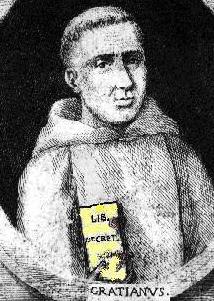
 "Official sources" are those published by authority of the Holy See (or other competent ecclesiastical authority), while "quasi-official sources" is my term for materials that, while complied and published privately, contained very little commentary, and consist instead almost entirely of materials derived from official sources, providing thereby a service to the Church in rather the same spirit of Gratian (fl. 1120-1140). Recent examples would be Canon Law Digest and my Incrementa.


Aznar, Salamanca Comm. • F. Aznar, commentary on 1983 CIC 1090, in L. de Echeverria, ed., Código de Derecho Canónico Edición bilingüe comentada, (Biblioteca de Autores Christianos, 1985) 526-527.


Wernz-Vidal, Ius Canonicum • Franciscus Wernz and Petrus Vidal, Ius Canonicum, in 7 vols., (Gregoriana, various years), tom. V, Ius Matrimoniale [1924], 2nd ed., (1928).


Authentic Interpretation


See 1983 CIC 16, olim 1917 CIC 17, and CCEO 1498.


Sartori, Enchiridion • Cosmas Sartori (Franciscan =), Enchiridion Canonicum seu Sanctae Sedis Responsiones post Editum Codicem I. C. Datae, 10th ed., rev. by B. Belluco, (Antonianum, 1961) 455 pp.


Regatillo, Interpretatio • Eduardo Regatillo (Jesuit, 1882-1975), Interpretatio et Iurisprudentia Codicis Iuris Canonici [1928], 3rd ed., (Sal Terrae, 1953) 719 pp.


Woywod, Decisions • Stanislaus Woywod, Canonical Decisions of the Holy See (Wagner, 1933).

Note: Eclipsed by Regatillo and even more so by Sartori.


Wrenn, Interpretations, • Lawrence Wrenn, Authentic Interpretations on the 1983 Code, (Canon Law Society of America, 1993) 68 pp.


Canon Law Digest

Canon Law Digest in 10 vols., (various publishers and years) [herein CLD]


Cite volume and page. Year of publication is irrelevant. Editors: Vol. 1-3, Bouscaren; vol. 4-6, Bouscaren & O'Connor; vol. 7-10, O'Connor. Series continued by CLSA for 1983 Code. Jesuits.


Cance

Adrien Cance (Sulpician =), Le Code de Droit Canonique, in 4 vols., (Gabalda, various editions and years) [herein, Cance, Code]

Cite textmarker, volume, and page, indicate edition (at least 18). Sulpician.


Cappello, Summa Iuris

Felix Cappello (Jesuit, 1879-1962), Summa Iuris Canonici, in 3 vols., (Gregorianae) [herein Cappello, Summa]

Cite to = p


Coronata, Compendium

Mattheus Conte a Coronata (Capuchin =), Compendium Iuris Canonci ad usum scholarum, in 3 vols., (Marietti) [herein Coronata, Compendium]

Ci


Coronata, Institutiones

Mattheus Conte a Coronata (Capuchin =), Institutiones Iuris Canonici, in 5 vols., (Marietti) [herein Coronata, Institutiones]

=


aa.vv., Comentarios al Código de Derecho Canónico con el texto legal latino y castellano, in 4 vols., (Biblioteca de Autores Cristianos, 1963-1964) [herein, Salamanca Comm]

Identify the specific author of the passage being used, cite to page number, and note edition (at least six). This commentary also contains a complete translation of the 1917 Code and Latin original.


Vermeersch-Creusen

A. Vermeersch (Jesuit, 1858-1936) & J. Creusen (Jesuit =), Epitome Iuris Canonici cum commentariis, in 3 vols., (Dessain) [herein Vermeersch-Creusen]

=


Cappello, Sacramentis

Felix Cappello (Jesuit, 1879-1962), Tractatus Canonico-Moralis de Sacramentis, in 5 vols., (Marietti, various years)

=


Josephus Noval OP, 18 JP (1938) 85-89 1861-1938

Arcturus Vermeersch SJ , Jus Pontificium 17 (1937) 106-108. Ephemeridum Directio

[Benedictus Ojetti SJ] 1862-1932, 12 JP (1932) 181-183.

In memoriam A: 1867-1931, Pru: 1866-1931 11 JP (1931) 119-121.


6. Free notes


History of the codification of the 1917 Code

Pietro Cardinal Gasparri (1852-1934), architect of the Pio-Benedictine Code, outlined the history of the codification process in his Prefatio [ad Codicis Iuris Canonici editionem], available in all monograph printings of the 1917 Code, English trans., Preface [to the 1917 Code]in Edward Peters, The 1917 Pio-Benedictine Code of Canon Law in English Translation with Extensive Scholarly Resources (Ignatius Press, 2001) 1-19, esp. 10-19. See also A. Stickler, De efformatione Codicis iuris canonici, in Alphonse Stickler, Historia Iuris Canonic Latini (Taurinorum, 1950) 376-384. In his remarks, Stickler drew on Cdl. Gasparri’s informal but fascinating reminisces offered in his “Storia della Codificazione del diritto canonico per la Chiesa latina”, Acta Congressus Juridici Internationalis Romae [1934], 5 vols., (Pont. Instituti Utriusque Iuris, 1935-1937) IV: 1-10. See also Stephan Kuttner, Il Codice di diritto canonica nella storia, Apollinaris 40 (1967) 9-27, esp. 9-17, and Constant Van de Wiel, History of Canon Law (Peeters/Eerdmans, 1991) 165-174.


Pope John's Announcement of the Council and the Code

Less than three months into his pontificate, Pope John XXIII (reigned 1958-1963) announced his intention to hold a synod for the Diocese of Rome, convoke an Ecumencial Council, and reform the Pio-Benedictine Code of Canon Law. See John XXIII, soll. alloc. Questa festiva (25 January 1959), Acta Apostolicae Sedis 51 (1959) 65-69, esp. 68-69. This tripartite plan was reiterated a few months later in John XXIII, enc. Ad Petri cathedram (29 June 1959), Acta Apostolicae Sedis 51 (1959) 497-531, at 498, English trans., To the Chair of Peter”, The Pope Speaks 5 (1959) 359-383, at 359. While the Second Vatican Council and the reform of canon law were momentous events in the life of the Church occasioning vast bibliographies, the Synod of the Diocese of Rome (held in January 1960), had virtually no influence on either the ecumenical council or the revision of canon law, and today is all but forgotten. Synodal acts and norms were published in Prima Romana Synodus A.D. MDCCCCLX (Typis Polyglottis Vaticanis, 1960). See generally John Abbo, The Roman Synod, The Jurist 21 (1961) 170-203.


Formal presentation of the Code

The formal presentation of the revised Code of Canon Law occurred on February 3, 1983, eight days after its promulgation. Three addresses in Italian were delivered by Abp. Castillo Lara, Cdl. Agostino Casaroli, and Pope John Paul II. See Communicationes 15 (1983) 27-35, 36-41, and 9-16 respectively, or Francesco d’Ostilio, La Storia del nuovo Codice di diritto canonico: Revisione, promulgazione, presentazione (Libreria Editrice Vaticana, 1983) 79-103, wherein addresses are published in the order of their delivery, English trans., in Pontificia Commissio Codici Iuris Canonici Recognoscendo, Promulgation and Official Presentation of the Code of Canon Law (Vatican Polyglott Press, no year given), as follows: Discourse of the Pro-President Archbishop Rosalio Castillo Lara, sdb, (pp. 13-23); Discourse of Cardinal Agostino Casaroli, Secretary of State, (pp. 24-29); and Discourse of His Holiness John Paul II”, (pp. 31-39) [hereafter, Discourses, respectively].


Only Latin text is binding in canon law

Only the Latin text of the Johanno-Pauline Code of Canon Law has legal force. See A. Casaroli, Secretarius Status, Normae: De Latino textu Codicis Iuris Canonici tuendo eodemque alias in linguas convertendo (28 January 1983), n. 1, in L’Osservatore Romano 29.I.1983, at 1, or Communicationes 15 (1983) 41, English trans., Norms for the protection and translation of the revised Code of canon law”, CLD 10: 5-6, at 5.


Current law on beatifications and canonizations

In contrast to the Pio-Benedictine Code which treated beatification and canonization procedures extensively (see 1917 CIC 1999-2141), the Johanno-Pauline Code contains but a single norm in this area: 1983 CIC 1403. § 1. Causae canonizationis Servorum Dei reguntur peculiari lege pontificia. § 2. Iisdem causis applicantur praeterea praescripta huius Codicis, quoties in eadem lege ad ius universale remissio fit vel de normis agitur quae, ex ipsa rei natura, easdem quoque causas afficiunt. English trans., § 1. Special pontifical law governs the causes of canonization of the servants of God. § 2. The prescripts of this Code, however, apply to these causes whenever the special pontifical law refers to the universal law, or norms are involved which also affect these causes by the very nature of the matter. The pontifical law referenced above is found in John Paul II, ap. con. Divinus perfectionis Magister (25 January 1983), Acta Apostolicae Sedis 75 (1983) 349-355, English trans., “The Divine Teacher of perfection” CLD 10: 266-273, and is supplemented by Congregation for the Causes of Saints, Normae servandae in inquisitionibus ab episcopis faciendis in causis sanctorum (7 February 1983), Acta Apostolicae Sedis 75 (1983) 396-403, English trans., “Norms to be observed in inquiries made by bishops in the causes of saints” CLD 10: 273-281, and Congregation for the Causes of Saints, Decretum Generale de servorum Dei causis, quarum iudicium in praesens apud Sacram Congegationem pendet (7 February 1983), Acta Apostolicae Sedis 75 (1983) 403-404, English trans., “General decree on the causes of the servants of God whose judgment is presently pending at the sacred congregation” CLD 10: 281-282. All three documents in Latin-English may be found in Canon Law Society of America, Code of Canon Law, Latin-English Edition, New English Translation, (Canon Law Society of America, 1999) 659-677. Important discussions of modern law and practice in this area include: William Woestman, Canonization: theology, history, process (St. Paul University, 2002) 383 pp; Kenneth Woodward, Making Saints: how the Catholic Church determines who becomes a saint, who doesn’t, and why (Touchstone, 1996) =; Fabian Veraja, Le Cause di canonizzazione dei santi: commenti alla legislazione e guida pratica. (Libreria Editrice Vaticana, 1992); and T. Zubek, “New legislation about the canonization of the servants of God” The Jurist 43 (1983) 361-375. For commentary on Pio-Benedictine law, see Damian Blaher, The Ordinary Processes in Causes of Beatification and Canonization, Canon Law Studies No. 268, (Catholic University of America, 1949).


Principles guiding the revision of canon law

In the course of discussing several topics, the first Synod of Bishops (October 1967) developed ten Guiding Principles intended to inform the activities of the various coetus charged with drafting the revised Code of Canon Law. See Pontificia Commissio Codici Iuris Canonici Recognoscendo, Principia quae Codicis iuris canonici recognitionem dirigantCommunicationes 1 (1969) 77-85, English trans., Canon Law Society of America, Code of Canon Law, Latin-English Edition, New English Translation, (Canon Law Society of America, 1999) xxxvi-xxxvii. See also Relatio circa ‘Principia quae Codicis iuris canonici recognitionem dirigant’Communicationes 1 (1969) 86-91; “Responsiones ad animadversiones circa Principia quae Codicis iuris canonici recognitionem dirigant’Communicationes 1 (1969) 92-98; and “Manifestatio sententiae” Communicationes 1(1969) 99-100 (indicating strong support overall for the ten principles). Among scholarly studies of the guiding principles, see Richard Cunningham, “The Principles guiding the revision of the Code of canon law,” The Jurist 30 (1970) 447-455 (essentially a paraphrase of the ten principles); and John Alesandro, “Law and renewal: a canon lawyer’s analysis of the revised Code”, Canon Law Society of America Proceedings 44 (1982) 001-040.


Eastern Canon Law

The Eastern Catholic Churches share a common Code, namely, Codex Canonum Ecclesiarum Orientalium auctoritate Ioannis Pauli PP. II promulgatus, Acta Apostolicae Sedis, 82 (1990) 1033-1363, English. trans., Canon Law Society of America, Code of Canons of the Eastern Churches, Latin-English Edition (Canon Law Society of America, 1992). This Code replaces the (incomplete) canon law that had been in effect for Eastern Catholics, as promulgated by Pope Pius XII in a series of four motu proprios: m. p. Crebrae allatae (22 February 1949), Acta Apostolicae Sedis 41 (1949) 89-119 (marriage law); m. p. Sollicitudinem Nostram, (6 January 1950), Acta Apostolicae Sedis 42 (1950) 5-120 (on procedural law); m. p. Postquam Apostolicis Litteris (9 February 1952), Acta Apostolicae Sedis 44 (1952) 65-152 (religious, temporal goods, technical terms); and m. p. Cleri sanctitati (2 June 1957), Acta Apostolicae Sedis 49 (1957) 433-603 (law of persons). Some private bindings of the four documents, known unofficially as the Codificatio Iuris Canonici Orientalis, I-IV, are occasionally found. The fontes edition of the Eastern Code is: Pontificium Consilium de Legum Textibus Interpretandis, Codex Canonum Ecclesiarum Orientalium auctoritate Ioannis Pauli PP. II promulgatus, Fontium Annotatione Auctus (Libreria Editrice Vaticana, 1995).


End of the Index

The major stages in the abolition of the “Index of Forbidden Books” can be traced in the following documents: Paul VI, m.p. Integrae servandae (7 December 1965), Acta Apostolicae Sedis 57 (1965) 952-955, English trans., (dispositive parts only) CLD 6: 358-359, renaming and redefining the competence of the Congregation for the Doctrine of the Faith; Congregation for the Doctrine of the Faith, notif. Post litteras apostolicas (14 June 1966), Acta Apostolicae Sedis 58 (1966) 455, English trans., CLD 6: 814-815, confirming the revocation of the “Index of Forbidden Books”; and Congregation for the Doctrine of the Faith, decr. Post editam (15 November 1966), Acta Apostolicae Sedis 58 (1966) 1186, English trans., CLD 6: 817-818, abrogating 1917 CIC 1399 and 2318.


Remission of penalty upon abrogation of penal law

1983 CIC 1313. § 1. Si post delictum commissum lex mutetur, applicanda est lex reo favorabilior. § 2. Quod si lex posterior tollat legem vel saltem poenam, haec statim cessat. English trans., § 1. If a law is changed after a delict has been committed, the law more favorable to the accused is to be applied. § 2. If a later law abolishes a law or at least the penalty, the penalty immediately ceases. For examples of this occurring, see Congregation for Bishops, private reply to NCCB petition dated May 4, 1977 (22 October 1977), CLD 8:1213-1214 or Origins 7 (1977-1978 56=, 354= , lifting the excommunication of those who, contrary to legislation of the Third Plenary Council of Baltimore, attempted civil marriage after divorce; and Congregation for the Doctrine of the Faith, decr. Post editam (15 November 1966), Acta Apostolicae Sedis 58 (1966) 1186, English trans., CLD 6: 817-818, abrogating 1917 CIC 1399 and 2318 (basically, the “Index of Forbidden Books”) and immediately absolving those who might have incurred censures there under.


Major post-conciliar liturgical instructions

The five major instructions issued for the proper implementation of Sacrosanctum Concilium are: Sacra Congregatio Rituum, Instructio ad Constitutionem de Sacra Liturgia recte exsequendam Inter Oecumenici (26 September. 1964), Acta Apostolicae Sedis 56 (1964) 877-900; id., Instructio altera…Tres abhinc annos (4 May 1967), Acta Apostolicae Sedis 59 (1967) 442-448; Sacra Congregatio pro Cultu Divino, Instructio tertia…Liturgicae instaurationes (5 September 1970), Acta Apostolicae Sedis 62 (1970) 692-704; Congregatio de Cultu Divino et Disciplina Sacramentorum, Instructio quarta…Variaetates legitimae (24 January 1994), Acta Apostolicae Sedis 87 (1995) 288-314; and id., Instructio quinta…Liturgiam authenticam (28 March 1991), Acta Apostolicae Sedis 93 (2001) 685-726.


Reorganization of penalties under Pius IX

Pope Pius IX effected a major reorganization of latae sententiae penalties in 1869. See Pius IX, con. Apostolica Sedis moderationi (12 October 1869), Acta Sanctae Sedis 5 (1869) 287-312; also in P. Gasparri & J. Serédi, Codicis Iuris Canonici Fontes, in 9 vols., (Typis Polyglottis Vaticanis, 1923-1949) III: 24-31.


Other, unclassified


The standard commentary on the Decretals of Gregory, known as the Glossa Ordinaria, was composed by Bernard of Parma († 1266) and revised by Johannes Andreas (c. 1270-1348). See generally P. Ourliac, “Bernard de Parme ou de Botone”, DDC II: 781-782. All quotations from the Glossa Ordinaria used here are taken from the dECRETALES D[omini] pape Gregorij noni acurata diligentia nouissime, (Impressas Uenetijs: Sūma cū diligētia i[n] edib[us] Luce Antonij de Giōta florentini, 1514).


On the partes decisae, see R. Naz, “Partes Decisae”, Dictionnaire de Droit Canonique VI (1957) 1248, or more generally P. Torquebiau, “Corpus Iuris Canonici … II. Les Dècrètals de Grégoire IX”, Dictionnaire de Droit Canonique IV (1949): 627-632, at 632.


“Impunitas incuriae soboles, insolentiae mater, radix impudentiae, transgressionum nutrix.” S. Bernardi Abbatis Clarae-Vallensis, De consideratione Libri Quinque ad Eugenium Terium, Libert III, caput V, in Migne, Patrologia Latina 182: 771.


“Hard cases make bad law.” Northern Securities Co. v. United States, 193 U.S. 197, 400-401 (1904), Holmes, J., dissenting.


Paul VI, m. p. Sacrum diaconatus ordinem (18 June 1967), Acta Apostolicae Sedis 59 (1967) 697-704. English trans., CLD 6: 577-584. Pope Paul VI, m. p. Ad pascendum (15 August 1972), Acta Apostolicae Sedis 64 (1972) 534-540 supplemented these norms. An English translation is available at CLD 7: 695-698.


John Paul II, allocutio “Saluto molto cordialemente”, 20 March 2004, Acta Apostolicae Sedis 94 (2004) 485-489 and Insegnamenti di Giovanni Paolo II (Libreria Editrice Vaticana (2004), vol. XXVII/1: 344-349, English trans., “Caring for persons in a ‘vegetative state’”, The Pope Speaks 49 (2004) 264-267 and Ethics & Medics 29/6 (June 2004) 1-2.


----------------


Text and translations of the Pio-Benedictine Code [1917 CIC] from Codex Iuris Canonici Pii X Pontificis Maximi iussu digestus Benedicti Papae XV auctoritate promulgatus, published in Acta Apostolicae Sedis 9/2 (1917) 11-521, as corrected and amended; English translations from Edward Peters, The 1917 Pio-Benedictine Code of Canon Law in English Translation with Extensive Scholarly Apparatus (Ignatius Press, 2001). Text and translations of the Johanno-Pauline Code [1983 CIC] from Codex Iuris Canonici auctoritate Ioannis Pauli PP. II promulgatus, published in Acta Apostolicae Sedis 75/2 (1983) 1-320, as corrected and amended; English translations from Canon Law Society of America, Code of Canon Law, Latin-English Edition, New English Translation (Canon Law Society of America, 1999). Text and translations of the Eastern Code of Canon Law [CCEO] from Codex Canonum Ecclesiarum Orientalium auctoritate Ioannis Pauli PP. II promulgatus, published in Acta Apostolicae Sedis, 82 (1990) 1033-1363, as corrected and amended; English translations from Canon Law Society of America, Code of Canons of the Eastern Churches, Latin-English Edition (Canon Law Society of America, 1992).


The Second Vatican Council


Sacrosanctum Oecumenicum Concilium Vaticanum II, Constitutio de Sacra Liturgia Sacrosanctum Concilium (4 dec. 1963), published in Acta Apostolicae Sedis 56 (1964) 97-138, or id., Constitutiones, Decreta, Declarationes (Typis Polyglottis Vaticanis, 1966) 3-69; English translations in A. Flannery, ed., Vatican Council II: The Conciliar and Post-Conciliar Documents (Catholic Book Publishing, 1975) 1-37.


Sacrosanctum Oecumenicum Concilium Vaticanum II,


, published in Acta Apostolicae Sedis ,


or id., Constitutiones, Decreta, Declarationes (Typis Polyglottis Vaticanis, 1966) ;


English translations in A. Flannery, ed., Vatican Council II: The Conciliar and Post-Conciliar Documents (Catholic Book Publishing, 1975)


Maroto (1875-1937)


schaff 1879-1946


Heinrich Rommen, The Natural Law [1936], trans. by T. Hanley (Herder, 1949)

Pope Pius XII, encyclical letter Mystici Corporis (29 June 1943), AAS 35 (1943) 193-248

Second Vatican Council, pastoral constitution Gaudium et spes (7 December 1965) AAS 58 (1966) 1025-1120

John Paul II, encyclical letter Evangelium vitae (25 March 1995), AAS 87 (1995) 401-522

Sacra Congregatio pro Doctrina Fidei, Declaratio, “De abortu procurato”, 18 Nov. 1974, AAS 66 (1974) 730-747


North American Canon Law Doctoral Dissertations.


Top || Home || Canon Law || Liturgy & Sacraments || Catholic Issues || Personal