24 jan 2020
Research links
Related
Ius Decretalium
Master page, here.
Corpus Iuris
Canonci, here.
Canonical & Roman
Legal History, here.
| To work for the proper implementation of canon law is to play an extraordinarily constructive role in continuing the redemptive mission of Christ. Pope John Paul II |
|
24 jan 2020 | | | | | Research links
| Related
Ius Decretalium Master page, here.
Corpus Iuris Canonci, here.
Canonical & Roman Legal History, here. |
| Overview
| Resource Page on Ius Decretalium
This page presents the basic structure of the St. Raymond of Peñafort's Quinque Libri Decretalium, or "Liber Extra", as promulgated by Pope Gregory IX in 1234.
|
| Background | Users of this page should be generally familiar with the materials presented on the Master Page on the Corpus Iuris Canonici, here, and specifically familiar with the Master Page on the Ius Decretalium (1234-1918), here.
Over time the QLD were supplemented by two authoritative documents, the Liber Sextus (1298) of Pope Boniface VIII (abbreviated “in VI°”, referring to its being the “sixth” book outside of Gregory's five) and the Clementinae (1317) of Pope John XXII (abbreviated “in Clem.”, after the pope who tried to promulgate them before Pope John XXII had rightly to correct them). These authentic collections followed the plan of the QLD but, being shorter, left the QLD intact in many places. Still later authors complied short lists of papal decretals that were “wandering around outside” of even these authentic collections, namely, the Extravagantes Johannis XXII (~1326) and the Extravagantes Communes (1500), both of which follow the QLD order and are generally held to complete the Corpus Iuris Canonici.
To read more about the QLD and its fascinating progeny, see, e.g.:
The structure of the QLD is as follows:
|
|
|
| ||||||||||||||||||||||||||||||||||||||||||||||||||||||||||||||||||||||||||||||||||||||||||||||||||||||||||||||||||||||||||||||||||||||||||||||||||||||||||||||||||||||||||||||||||||||||||||||||||||||||||||||||||||||||||||||||||||||||||||||||||||||||||||||||||||||||||||||||||||||||||||||||||||||||||||||||||||
|
|
|
|
|
|
| Summaries
| Book 1, Title 1, The High Trinity and the Catholic faith
• QLD 1.1.1. Innocent III in Lateran IV. The Trinity and its operations; faith and articles of faith; ecclesiastical sacraments.
• QLD 1.1.2. Innocent III in Lateran IV. Father, Son, and Holy Spirit, by a true union, and not in a collective or something similar, are one essence, that is, one substance or nature; this substance is not generating, or generated, or proceeding, because its acts are not attributed to the substance but to the persons; nor by this does the Trinity result in a quaternity; those holding the contrary are censured as heretics unless they withdraw from error and submit themselves to correction by the Apostolic See. Nb: sacro concilio approbante
Book 1, Title 2, Constitutions
Notes: (1) The word "constitution" here has the more general meaning of "law" or "provision" and not the notion of a 'founding' or 'chief' document. (2) The word "canon" sometimes means law and sometimes means 'members of a religious institute'.
• QLD 1.2.1. Council of Meaux. The statutes of canon law bind all who are ruled by their norms whether in pronouncing or deciding judgments.
• QLD 1.2.2. Gregory in the Register. A constitution looks to the future not to the past.
• QLD 1.2.3. Augustine. The power of establishing and changing law belongs entirely to the Vicar of Christ; what is established for one connected thing is extended to another connected thing.
• QLD 1.2.4. Augustine. Everything prohibited by law is a sin as is everything that follows from it.
• QLD 1.2.5. Jerome. Constitutions of decrees are to be preferred to individual opinions.
• QLD 1.2.6. Innocent III. The constitution of a college has no force to harm others or their well-being absent reasonable cause. Or thus: without reasonable cause the majority of a chapter cannot remove a custom by which private benefits are supported.
• QLD 1.2.7. Innocent III. The constitution of laity do not bind the church or her goods.
• QLD 1.2.8. Innocent III. A dignity [conferred on] a church by a statue of the chapter confirmed by the pope is not considered recalled unless by a contrary statutory act is is revoked. [=?]
• QLD 1.2.9. Innocent III. Notwithstanding a fixed number of canons, even if confirmed by the pope, provision should be made for those received from any remaining fruits especially if they were voluntarily received by the canons.
• QLD 1.2.10. Innocent III. A general statue of laity prejudicial to the church or ecclesiastical persons or to their goods is not extended; nor is a special [one] even if it is for their convenience and favor. This is what is understood.
• QLD 1.2.11. Innocent III. Penalties applied simply for contumacy are understood, in case of of doubt, to be temporary and not perpetual.
• QLD 1.2.12. Honorius III. Canons cannot without cause restrict the number of canons that is prebends.
• QLD 1.2.13. Gregory IX. A constitution regards the future and not the past unless the past is addressed therein.
Book I, Title 3, Rescripts
• QLD 1.3.1. Alexander III. A special rescript blocks a general privilege obtained by common law even if no mention of it is made. This is according to the more common understanding.
• QLD 1.3.2. Alexander III. In an apostolic rescript there is understood the clause "if the request is supported by turth". And, if a rescript prohibits recognition of a case, it is suspected to be false.
• QLD 1.3.3. Alexander III. If, in a second rescript requested by an adversary, there is no mention of the first, the first has force and not the second. And if the first was sought by common consent of the parties, the second has not force against the other party if this was not disclosed.
• QLD 1.3.4. Alexander III. If a pope orders in a rescript an inquiry to be made about two alternatives, for a certain effect to arise it suffices that one be proved. [=?]
• QLD 1.3.5. Alexander III. He to whom a rescript of the pope is directed must appear before him or present reasonable cause as to why he is not able to appear.
• QLD 1.3.6. Alexander III. Cistercians are privileged and cannot be convoked by rescript of the pope unless mention of their order is made therein.
• QLD 1.3.7. Alexander III. If, with the see being vacant, it is written to the chapter, as one holding the place of the acting bishop, that he should confer a prebend on another, if he has not yet been created a bishop by the execution of the mandate, and the conferral of prebends pertains to him, he is bound to perform. This is according to the commonly approved reading. [=?]
• QLD 1.3.8. Lucius III. A rescript sought in regard to benefices is without force if the dignity of the one requesting is withheld.
• QLD 1.3.9. Lucius III. A second rescript sought against an adversary has force, even though it made no mention of the first, if the first one so requesting made no use of it from blame or negligence.
• QLD 1.3.10. Lucius III. Rescripts have no force through which unspecified judges are given or future negotiations are committed.
• QLD 1.3.11. Lucius III. Bad Latinity vitiates a rescript of the pope. Johannes Andreas says this and the Abbot agrees.
• QLD 1.3.12. Clement III. Against a second rescript there cannot be opposed the tacurnity of the first requester by appeal, there having been no mention of his appeal. Johannes Andreas says this and the Sicilian Abbot agrees.
• QLD 1.3.13. Celestine III. A rescript by which there are written many things with the clause 'But if not all, and so on', is understood to apply to impotence of fact not law.
|
| User notes | There might be editions of works that pre-date or post-date those cited herein. Reviews and Notes are grey-highlighted, on-line biographical information is underlined blue-linked, and matters in green highlights are of special interest. Yellow highlights are cautions for users while the markers "=", "≠", and "≈" are placeholders for use by webmaster. |
| Abbreviations on this page might include: | AAS CCC CLD CLSA Comm. | Acta Apostolicae Sedis (1909 et seq.) Catechism of the Catholic Church (1997) Canon Law Digest (beginning 1933) Canon Law Society of America Commentary (≠ Communicationes) | DDC DMC NCE NCE2 QLD | Dictionnaire de Droit Canonique (1935-1965) Dictionarium Morale et Canonicum (1962-1968) New Catholic Encyclopedia (1967) New Catholic Encyclopedia, 2° ed. (2003) Quinque Libri Decretalium (1234) |
| | Materials on this website represent the opinions of Dr. Edward Peters and are offered in accord with Canon 212 § 3. This website undergoes continual refinement and development. No warranty of completeness or correctness is made. Dr. Peters' views are not necessarily shared by others in the field nor are they intended as canonical or civil advice.
CanonLaw.info Homepage & Site Directory / Help support CanonLaw.info / Original Materials © Edward N. Peters | |
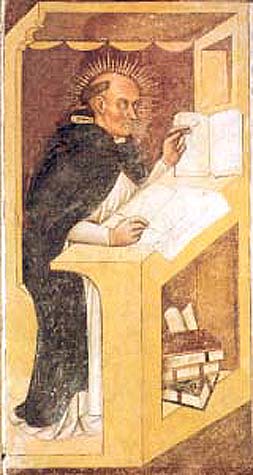 Following a still older reckoning of canonical topics, the five books (Iudex, Iudicium, Clerus, Connubia/Sponsalia, Crimen, that is, Judge, Trial, Cleric, Marriage, Crime) of the Quinque Libri Dectretalium were in turn divided into 185 titles, each consisting of one or more chapters, themselves numbering some 1,871 in all.