Dr. Edward Peters

CanonLaw.info

Tamarack Christian Latin: Q&A, Overviews, and Basics

Hac in schola omnes sumus condiscipuli. / In this school we are all students.

1 oct  2026


Links

 TCL Main Page • QA, Basics, Overviews • Supplements • Collins • Progressus Latine • Mostly Medieval • Prac.


Overview

Notes on materials presented to those studying Latin with Dr. Peters.


Page Links


WWLatin

 • Primer for students and parents, below.

 • First thoughts toward learning Latin, here.

 • Kinds of words (parts of speech), here.

 • Notes on sentences, here.

 • Pronoun basics, here.

 • Participle basics, here.

 • Adverb basics, here.

 • Conjunction basics, here.

 • Vocative case and imperative mood, here.

 • Key irregular verbs, here.

 • Practice Latin every day, here.

 • Noun basics, here.

 • Vocative case, here.

 • Adjective basics, here.

 • Verb basics, here.

 • Imperative mood, here.

 • Preposition basics, here.

 • Interjection basics, here.

 • Roman numerals, here.

 • Pedagogic vocabulary, here.


Resource

Links


Top


Top


Top


Top

The internet hosts many websites offering Latin learning assistance but, like everything on the net, such sites vary widely in terms of their accuracy, clarity, and quality. Some Latin sites strive to be comprehensive in scope, others are more topic-oriented; some are geared to use with certain textbooks, others are free-standing; some are accessible at no cost, others require a fee; some use predominately text-based resources, others offer live-voice instruction compatible with Youtube or similar platforms; finally, while most sites are oriented to student needs, a few are aimed at teachers.


In brief, Latin learning sites fall into three groups: those seldom worth checking; those that do some things effectively but that remain too inconsistent or idiosyncratic for me to recommend them as a whole; and, finally, a few that are consistently excellent.


With no claim that the following sites are only ones deserving inclusion here, and with no guarantee that these sites a/o their hosts are infallible, I think the following Latin learning sites richly reward consultation in the course of one's studies. I say this because I use these sites frequently and always benefit by doing so.


In no particular order:

 

  LATINTUTORIAL. Directed by Mr. Ben Johnson, a high Latin teacher based in Maine USA. Features 90+ short topical explanations of specific topics in Latin grammar, with special treatments parsing Latin poetry and the Aeneid. Most materials free. Models Classical pronunciation. LatinTutorial Homepage. • herein, Latintutorial ˃.

 

  LATINPERDIEM. Directed by Dr. David Noe, a degreed classicist in Michigan USA with extensive college and on-line teaching experience. Features over 1000 free, short parsing exercises in Classical and Medieval Latin and offers reasonable fee-based on-line courses in Latin and Greek. Models Classical pronunciation. LPD Homepage. • LatinperDiem ˃.

 

  LUKERANIERI. An American Army helicopter-flying polyglot with mastery of, among other things, spoken Latin and ancient Greek, Ranieri has at least two websites treating Latin, ScorpioMartianus and polyMATHY. Many materials free, subscription options for other things. Generally models Classical pronunciation. Ranieri Homepage. • herein, LukeRanieri >.

 

  DAILYDOSELATIN. Presented by Dr. Tyler Flatt of Boyce College in Kentucky USA, offers free, two or three minute, parsing of sequential passages in the Vulgate. Models Classical pronunciation. Frequent helpful notes on underlying Greek in relevant phrases. Daily Dose of Latin Homepage. • herein, DailyDoseLatin >.


  DICKENSON COLLEGE. As part of its wider Latin classics offerings Dickenson College in Pennsylvania (USA) has posted Allen & Greenough's justly famous Latin grammar. DCC Grammar Homepage. • see Dickenson >.

 

  TAMARACK CHRISTIAN LATIN. Directed by yours truly, Edward Peters, a canon lawyer by profession and amateur linguist with several decades of Latin teaching, private tutoring, and home-schooling experience. All materials free. Uses Ecclesiastical pronunciation. TCL Homepage. • herein, Tamarack ˃.



For All Students

& Parents


A primer for students and/or parents of students learning Latin with Dr. Peters


Latin is not an ancient code, it is not a mystical tongue, and it is not an elite subject taught by elite programs to make themselves look more elite. Instead, Latin is a language. Like any language, Latin is a source of boundless fascination in itself but, because it is Latin, it is of special value to those who study it today, especially to Christians of the West.


Top

The general structure of a language is called its "grammar". Latin grammar consists of three key elements: vocabulary, morphology, and syntax. Because Latin is a "synthetic" language while English is "analytic", these three elements of Latin grammar operate very differently from their English counterparts. 


Briefly, most Latin vocabulary rests on 'bases' that convey only the basic concept represented in a word; Latin morphology then focuses on the functional endings attached to bases in order to form specific words; Latin syntax, finally, is the arrangement of words into meaningful phrases and sentences.


I approach the three elements of Latin grammar as follows:


 I never taught anyone

Latin but I have helped

many people learn it.


Top


Top


Top

 Vocabulary. The crucial fact that most Latin words contain two parts (a conceptual base and a functional ending) must be explained, and re-explained, and then re-explained again, to students who come to it from languages such as English (whose words generally have only one part). But, while the use of these two parts is continually reinforced in class, the actual acquisition of Latin vocabulary remains the learner's responsibility. Instruction time is too valuable to keep repeating, say, alacriter means 'happily' and equitatum means 'of the cavalry', often enough for one to learn these words solely in class. I offer numerous suggestions about how to learn Latin vocabulary but, knowledge is its own reward, and the advantages of knowing "what the words mean" quickly becomes obvious to learners.


 Morphology. Morphology, especially the information-packed endings of Latin words so famously summarized in odd charts and clever ditties, is, frankly, the tedious side of Latin study and it receives the bulk of instruction time. Yet morphology is to Latin what a Tools & Materials class is to instruction in skilled trades — crucial to know if not terribly exciting or useful by itself. I share many ways to learn Latin morphology efficiently but, make no mistake, in the 1,500 years since Latin ceased being spoken in the home, anyone who ever learned Latin well learned Latin morphology.


 Syntax. Compared to English, Latin syntax is much simpler (at least up until the point where syntax ripens into rhetoric) and it poses few challenges for learners. The special aspects of Latin syntax are readily explainable to students who have acquired a sufficient foundation in Latin vocabulary and morphology.


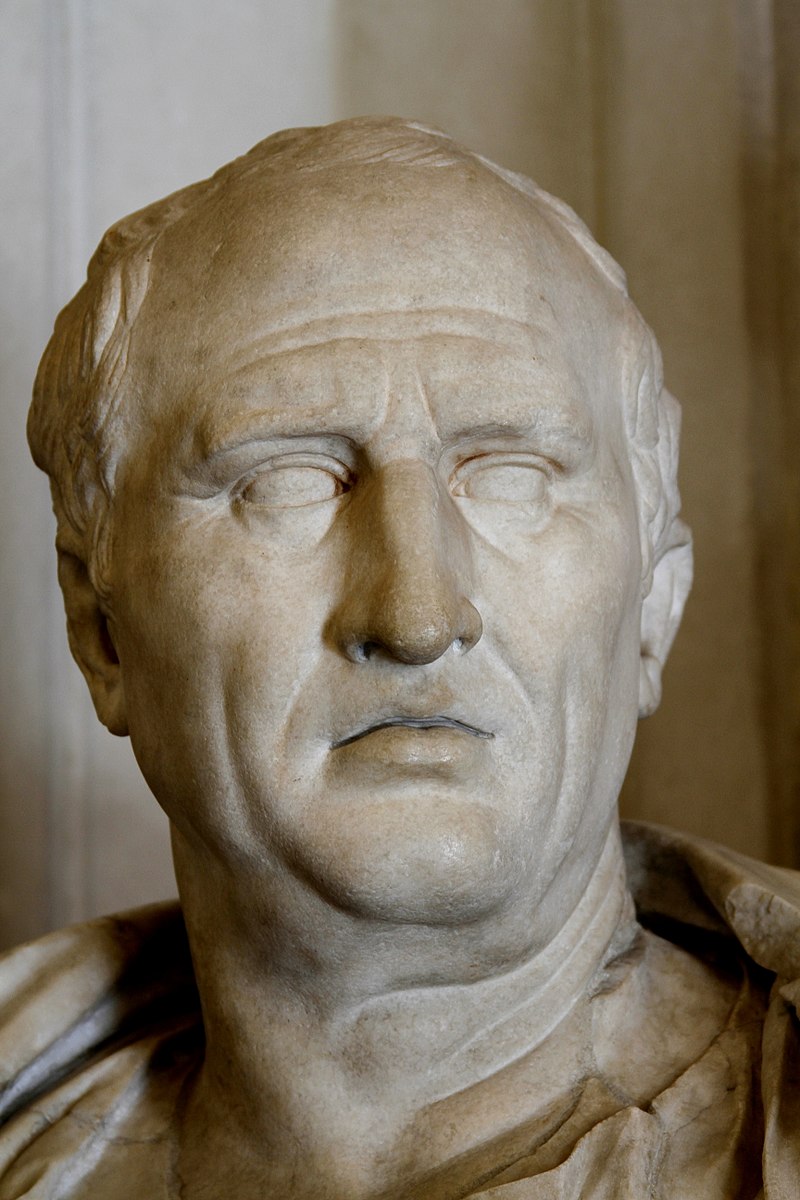
A final thought: Anyone who understands English has more than enough brain power to understand Latin. Latin is actually easier than English and (unlike English!) it almost always follows its own rules. English-speakers often complain that Latin is hard to learn but, be assured, Cicero himself, the greatest Latinist in history, would have found English, the language we use effortlessly, to be a maddening mess (which it is). Ergo, procedamus in pace!


For All Students

& Parents


Top


Practice Latin every day !


Foreign language study in general, but especially the study of Latin, differs from every other subject in school in that language study, especially that of Latin, demands daily practice. Without practice every day success will not be achieved.


That said, however, "study Latin every day" does not mean "study Latin all day". Frequency of daily exposure to Latin is more important than is length of daily exposure. Several short bursts of Latin study every day are generally better than one long stretch. Each student must develop his or her own daily routine for study and then commit to it. Specific suggestions are available, of course, but do not put off making daily Latin study a priority.


Bonus point: Anyone who makes the effort to learn Latin cannot help but to learn quite a bit about English, too. You'll see. :)


 Try using an hourglass; when it runs out,

recite once whatever

you are memorizing.


First thoughts toward learning Latin


Question

Answer


 1. What is Latin?

Latin is a language.


 2. What is a language?

A language is a way to communicate human thoughts.


 3. How do languages communicate thoughts?

Languages communicate thoughts by (a) forming words and (b) arranging them in certain ways. Latin and English each form and arrange words very effectively but they do so very differently.


The general study of a language is called "grammar"; the study of word formation is called "morphology"; and the study of word arrangement is called "syntax".


Top


 4. How do Latin and English form their words?


A B C D E F G

H I (J) K L M N O P

Q R S T (U) V

W X (Y & Z)


Latin and English use the same sounds to form words and nearly the same alphabets to spell them.


But, whereas most English words convey only the concept represented by the word (and little, usually nothing, about how the word actually functions in a given phrase or sentence, i.e., as a subject, object, person marker, etc.), most Latin words convey not only the concept represented by the word but also, by varying their spelling in predictable ways, the grammatical function the words serve in a given phrase or sentence.


 • On Latin word spelling changes, see Tamarack ˃ here. On pronouncing Latin vowels, see Latintutorial ˃ here. On pronouncing Latin consonants, see Latintutorial ˃ here.


Top


 5. Why is the arrangement of words so important in English but much less so in Latin?


Because most English words convey only the concept represented by the word, the arrangement of words in English phrases or sentences is crucial for determining their function and ultimately what is being communicated. Compare: 'the dog bit the man' vs 'the man bit the dog' vs 'the the bit man dog'.


But, because most Latin words convey both a concept and a grammatical function, the arrangement of Latin words into phrases and sentences can be, and is, much more varied. "Canis momordit virum" and "Virum momordit canis" and "Virum canis momordit" all mean "The dog bit the man".


 • On the differences between Latin and English in word order, see Tamarack ˃ here, and Latintutorial ˃ here.


Top


 6. How do languages actually achieve the communication of thoughts?

Once words have been correctly formed and arranged they still need to be (a) expressed and (b) perceived in order to achieve communication. Most languages, including Latin and English, are expressed by speaking and are perceived by hearing. Some, but by no means all, of these 'oral-audial' languages have a written form that can be read silently or aloud (as you are doing now in English). A few languages, e.g., American Sign Language, are expressed on the hands and are perceived by the eyes. These 'manual-visual' languages do not have a written form but they are nevertheless true languages.


Top


Top


Top


 7. Where does Latin figure in the family of languages?


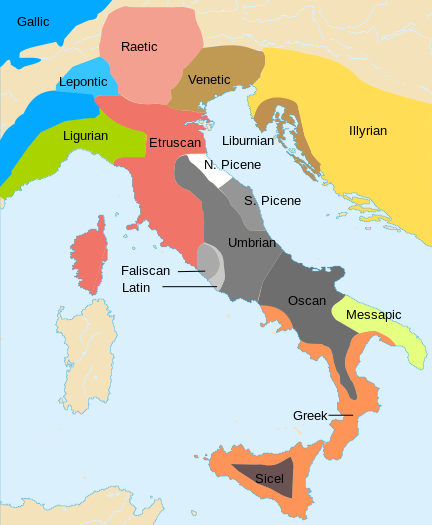
Latin belongs to the Italic branch of the Indo-European Language family. (English belongs to the West Germanic branch of that same family). Latin began to emerge over 2,500 years ago along the Tiber River near modern-day Rome. Passing through many phases (notably Old Latin, Classical, Late Latin, and Medieval), Latin eventually gave rise to the modern Romance languages of today (Italian, Spanish, etc.) and contributed much vocabulary to many other languages.


 • See Latintutorial ˃ here; and LukeRanieri ˃ here and here.


 8. Why is Latin called a "dead language"?


English is called a "living" language and Latin a "dead" but neither term indicates the worth of the language or its sophistication.


The term "living" in regard to language simply means that the grammar, morphology, and syntax of that language are undergoing changes due to widespread active usage, while the designation "dead" means only that the forms of the language have become fixed and stable. Living languages are typically acquired in daily life (usually from parents to children) while dead languages must be learned by formal study (typically from teacher to student). The vast majority of languages ever used are now dead but fortunately many of them, such as Latin, can still be studied, learned, used, and enjoyed.


Languages of Late Iron Age Italy (750 b.c.)


 9. Can one learn to speak a dead language?


Certainly, but not without serious work and guidance. Learning a second language is always a challenge and Latin's 'synthetic' grammar poses special issues for learners coming from 'analytic' language backgrounds such as English. Still, learning to speak (as in, converse, not merely recite) Latin is a great aid to acquiring Latin more deeply. Plus, it is fun! The occasional need for modern vocabulary words is addressed by what is known as "Neo-Latin". Note: speaking Latin does not make Latin a "living" language (fortunately), but it sure makes it a "live" one.


Kinds of words (aka, Parts of Speech)


Question

Answer


 1. How many kinds of words are there?

There are eight kind of words, or 'parts of speech', in both Latin and English: Nouns, Adjectives, Pronouns, Verbs, Adverbs, Prepositions, Conjunctions, and Interjections.


Top


 2. What does each kind of word do?

 Verbs are words that designate action or state of being.

 Adverbs are words that modify verbs or other adverbs.

 Nouns are words designating things, persons, places, etc.

 Pronouns are words that take the place of nouns.

 Adjectives are words that modify nouns.

 Prepositions are words that coordinate relations between certain words, especially substantives.

 Conjunctions are words that unite words or phrases or that distinguish between them.

 Interjections are words that convey emotions.


 3. What are the two main parts of most Latin words?

Most Latin words, especially nouns, adjectives, verbs, and adverbs, have two parts, a base (usually a 'root' or 'stem') that conveys the basic notion of word and an ending that conveys the function of the word in the phrase or sentence. Most English words, in contrast, have only one 'part', a crucial difference that takes time to appreciate • On the two parts of most Latin words, see Tamarack ˃ here.


Top


Notes on sentences


 1. Notion. In both Latin and English a sentence expresses a complete thought and consists of a "subject" (basically, an actor) and a "verb" (basically, an action). In the vast majority of English sentences the subject must be expressly stated (e.g., 'Laura thinks' or 'She thinks'). In contrast, because Latin can rely on the finite form of the verb to imply the subject, complete Latin sentences frequently do not contain an express subject (e.g., 'Laura cogitat' or simply 'Cogitat').


 2. Types. In both Latin and English there are four kinds of sentences: declarative (stating what is or is not the situation), interrogative (asking questions), imperative (giving directives or commands), and exclamatory (expressing surprise or emotion).


 3. Subject-verb agreement. In both Latin and English the subject of a sentence must, with rare exceptions, "agree with" its verb in number and person. Thus, Laura cogitat but Laura et Maria cogitant.


Top


Top


Top


Top

 Peters, TCL, Verb basics. 26-09-30.


 1. Notion. Verbs are words that indicate actions (e.g., to sing, to pray, to walk, to want, to eat) or a state of being (to be).


 2. Mood. Latin verbs come in four "moods" (indicative, subjunctive, imperative, and infinitive*) that indicate the 'perspective' of the speaker toward that verb. English verbs have mood but their parallels to Latin moods are weak.


 3. Conjugation. Most Latin verbs are termed "regular" because they belong to one of four "conjugations", i.e., to 'families' of verbs whose members are formed in the same way. "Irregular" verbs (e.g., esse, velle), are fewer but important and must be learned individually. • Selected regular verbs, see Tamarack ˃ here. • Selected irregular verbs, see Tamarack ˃ =.


 4. Number. Latin verbs, like English verbs, come in two "numbers" (singular and plural) depending on whether one subject is acting or two or more subjects are acting.


 5. Person. Most Latin verbs, like most English verbs, come in three "persons", i.e., first person (I or we), second person (you or y'all), and third person (he, she, it, or they). A very few verbs do not come in three persons and are usually "impersonal" verbs.


 6. Voice. Many Latin verbs, like many English verbs, come in two "voices", an active voice (wherein the subject of the verb does the action, as in "I eat the pizza") and a passive voice (wherein the subject of the verb receives the action, as in "The pizza is eaten by me"). Some verbs, notably intransitive verbs, can only appear in the active voice. • See Latintutorial ˃ here.


 7. Tense. The time in which a verb take place is called its "tense". Most Latin verbs in the indicative mood come in six tenses (pluperfect, perfect, imperfect, present, future, future perfect). Three of these tenses (imperfect, present, and future) are called the "present tenses" because their base is identified from the first principal part of the verb, and three (pluperfect, perfect, and future perfect) are called the "perfect tenses" because their base is identified from the third principal part of the verb.


 8. Lexical form. The dictionary entry (lexical form) of a Latin verb consists of up to four "principal parts" listed thus:


laudo,

laudare,

laudavi,

laudatus, -a, -um

present active indicative

first person singular

present active infinitive

perfect active indicative

first person singular

perfect passive participle

I praise

to praise

I praised

(having been) praised

use to find the present 'base'


use to find the perfect 'base'


xxxxxxxxxxxxxxxxxxxxxxxxxx

xxxxxxxxxxxxxxxxxxxxxxxxxxx

xxxxxxxxxxxxxxxxxxxxxxxxxx

xxxxxxxxxxxxxxxxxxxxxxxxxx


 Once the principal parts of a given verb are identified anyone who knows the paradigms of the four conjugations can form any regular verb in Latin.


 Quick chart for regular conjugation indicative verbs:


I -are

II -ere

III -ere

IV -ire

Present

-o

-eo

-o

-io

-io

Imperfect

-abam

-ebam

-ebam

-iebam

-iebam

Future

-abo

-ebo

-am

-iam

-iam

xxxxxxxxxxxxxxxxx

xxxxxxxxxxxxxxxxx

xxxxxxxxxxxxxxxxx

xxxxxxxxxxxxxxxxx

xxxxxxxxxxxxxxxxx

xxxxxxxxxxxxxxxxx

Perfect

-i

-i

-i

-i

-i

Plu-Perfect

-eram

-eram

-eram

-eram

-eram

Future Perfect

-ero

-ero

-ero

-ero

-ero


 9. Finite Form. In contrast to English verbs, the "finite form" of a Latin verb always connotes a subject. "Carolus and Robertus ambulant" means "Charles and Robert walk", but even the finite form "ambulant" by itself is a complete Latin sentence meaning "They walk". • See Latintutorial ˃ here. See also TCL, Notes on sentences 1, here.


 Pro Tip ☼ Appreciate how very regular are the three perfect tenses in Latin, even among the 'irregular' verbs.


Top


Top


Top


Top


Top


Top


Top


Top


Top


Top

Peters, TCL, Verbs, Imperative mood. 26-09-30.


 1. The imperative mood of the verb expresses commands. Do not assume that the imperative mood necessarily connotes harshness or authoritarianism. The English "Come in, take your coat off, and make yourself comfortable" demonstrates three 'friendly' verbs, even though all are in the imperative mood. The imperative mood is also often used to seek God's help (Deus, salva nos!) or the saints' intercession (Maria, ora pro nobis peccatoribus). • See Latintutorial ˃ here.


 2. The imperative mood is used in two voices (active and passive) and in the present or (very rarely) the future tense. As in English, the Latin imperative is much more common the second person (both singular and plural) but it can appear in a third person sense. A very few verbs (e.g., posse) do not have an imperative form. A few imperatives (such as esse, ducere, and ire) are irregular.


 3. The singular, active, present imperative (the most common form used in Latin or English) is easily found: simply drop the "-re" from the (active) infinitive form of the verb. Thus, the infinitive "laudare" yields the imperative "lauda", "monere" yields "mone", and so on. For three verbs (dicere, ducere, facere) even the remaining stem vowel "e" is dropped resulting in "dic, duc, fac" as imperatives. Similarly, "ferre" yields "fer" in the imperative.


 4. The plural, active, present imperative is also easily found: simply add "-te" to the singular imperative form, so "lauda" becomes "laudate", "mone" becomes "monete", and so on. Or, if you prefer: simply change the -re of the infinitive to a -te. In third conjugation verbs, however, the singular imperative changes its stem vowel from "e" to "i" before adding the "-te", thus, e.g., the singular "cape" becomes not 'capete' but rather "capite".


 5. The singular, passive, present imperative is identical with the present, active infinitive form, so the word "laudare" can be the infinitive (to praise), but it could also be the passive imperative (be praised); to form the plural, passive, present imperative, simply take the plural active imperative, drop the "-te" and add "-mini", as follows:


Infinitive

Singular active Plural active Singular passive Plural passive

 I. laudare

 lauda

 laudate

 laudare

 laudamini

 II. monere

 mone

 monete

 monere

 monemini

 III-o. scribere

 scribe

 scribite

 scribere

 scribimini

 III-io. accipere

 accipe

 accipite

 accipere

 accipimini

 IV. audire

 audi

 audite

 audire

 audimini

xxxxxxxxxxxxxxxxxxxxxx xxxxxxxxxxxxxxxxxxxxxx xxxxxxxxxxxxxxxxxxxxxx xxxxxxxxxxxxxxxxxxxxxx xxxxxxxxxxxxxxxxxxxxxx


 6. Other ways to be express commands make use of the future indicative and the subjunctive.


 7.Excellent practice working with imperatives is available in Cato's Distichs, wiki here.


Ex Catone admonitiones ad discipulorum usum

Itaque Deo supplica.

Parentes ama.

Cognatos cole.

Magistrum metue.

Datum serva.

Fora para.

Cum bonis ambula.

Antequam voceris, ne accesseris.

Mundus esto.

Saluta libenter.

Maiori concede.

Minori parce.

Rem tuam custodi.

Verecundiam serva.

Diligentiam adhibe.

Libros lege.

Quae legeris, memento.

Familiam cura.

Blandus esto.

Irascere ob rem noli.

Neminem riseris.

Mutuum da.

Liberos erudi.

Pati legem, quam ipse tuleris.

Pauca in convivio loquere.

Illud stude agere quod iustum est.

Libenter amorem ferto.

Minime iudica.

Consultus esto.


Cui des, videto.

In iudicio adesto.

Ad praetorium stato.

Convivare raro.

Quod satis est, dormi.

Iusiurandum serva.

Vino tempera.

Pugna pro patria.

Nihil temere credideris.

Tute consule.

Meretricem fuge.

Litteras disce.

Nihil mentire.

Bono benefacito.

Maledicus ne esto.

Existimationem retine.

Aequum iudica.

Parentem patienter vince.

Beneficii accepti esto memor.

Miserum noli ridere.

Virtute utere.

Iracundiam temporale rege.

Trocho lude.

Aleam fuge.

Nihil arbitrii virium feceris.

Minorem non contempseris.

Alienum noli concupisci.

Coniugem ama.


Ego sum Dominus Deus tuus.


1. Non habebis deos alios coram me;

2. Non assumes Nomen Domini Dei tui in vanum.

3. Memento ut dies festos sanctifices;

4. Honora patrem tuum et matrem tuam;

5. Non occides;

6. Non moechaberis;

7. Non furtum facies;

8. Non loqueris contra proximum tuum falsum testimonium;

9. Non desiderabis uxorem eius;

10. Non concupisces eius bona.


Top


Top

 Peters, TCL, Adverb basics. 26-09-30.


 1. Notion. Adverbs are words that "modify" (give more information about) verbs or other adverbs, e.g., 'to sing well', 'serve poorly', 'spoke gently', 'acting roughly', 'run very quickly', 'acting less happily'. • See Latintutorial ˃ here.


 2. Degree. Adverbs in Latin and English come in three "degrees", namely positive, comparative, and superlative.


Examples of adverbs in English and Latin:


positive degree

comparative degree

superlative degree

Julie sings sweetly.

The angels sing more sweetly.

The mother of God sings most sweetly.

Julia cantat suaviter.

Angeli cantant suavius.

Mater Dei cantat suavissime.

xxxxxxxxxxxxxxxxxxxxxxxxxxxxx

xxxxxxxxxxxxxxxxxxxxxxxxxxxxx

xxxxxxxxxxxxxxxxxxxxxxxxxxxxxxxxxxxxxxxxxxxxxxxxxxxxxxxxxx


 3. Types. Most Latin adverbs are "regular" (because they follow the rules) but a few important adverbs are "irregular" and must be learned separately. Regular Latin adverbs fall into two groups, those derived from Group I-II adjectives and those derived from Group III adjectives. Adverbs are sometimes organized into kinds, e.g., "adverbs of time" and "adverbs of manner", but regardless, they are all still adverbs and work the same way.


 Pro Tip ☼ Learn (positive) adverbs in pairs (e.g., lente & cito) or short series (heri, hodie, & cras). They are easier to remember and use when acquired in comparison with each other.


Top


Top


Top

 Peters, TCL, Noun basics. 26-09-30.


 1. Notion. Nouns are words that identify things, persons, places, etc., e.g., God, man, heaven, garden, apple, faith, love.


 2. Declension. A "declension" is a family of nouns whose members "decline" (are formed) in the same way. There are five declensions of nouns in Latin (called I, II, III, IV, and V) and nearly all nouns in Latin belong to a specific declension. A very few nouns belong to two declensions and a few belong to none. • See Latintutorial ˃ here. For Charts of Declensions I ‒ V, see Tamarack ˃ here.


 3. Number. Latin and English nouns come in two "numbers" (singular and plural) depending on whether the noun identifies one of some thing or more than one of some thing.


 4. Gender. Nearly all Latin nouns, unlike English nouns, have a grammatical "gender" (masculine, feminine, or neuter) but gender usually has nothing to do with sex (male and female). The grammatical gender of most Latin nouns cannot be guessed and so must be learned. A few Latin nouns have both a masculine and a feminine form, e.g., deus (god) and dea (goddess), or magister (male teacher) and magistra (female teacher). • See Latintutorial ˃ here.


 5. Case. When a Latin noun is used in a phrase or sentence it always appears in a "case" indicating the specific grammatical job that the noun is doing in that phrase or sentence. Latin has five major cases (nominative, genitive, dative, accusative, and ablative) and two minor cases (vocative and locative). Cases can usually be identified by their spelling though a few case endings are identical so context is necessary to identify them accurately. • On Latin's case system, see Tamarack ˃ here, and Latintutorial ˃ here. On Nominative, see Latintutorial ˃ here. Genitive, see Latintutorial ˃ here. Dative, see Latintutorial ˃ here. Accusative, see Latintutorial ˃ here.


 6. Lexical form. The dictionary entry (lexical form) of a Latin noun consists of the nominative and genitive singular forms, e.g., "dominus, domini" or "spes, spei", sometimes abbreviated "dominus, -i" or "spes, -ei". Both the nominative and genitive singular forms are necessary because both are needed to identify exactly which declension the noun belongs to and what its base (found in the genitive case) is. Once the base and the declension of a Latin noun are known anyone who knows the paradigms of the five declensions can form that noun.


 7. Apposition. Nouns that refer to the same thing in a phrase or sentence are in "apposition" to each other and are so indicated by their sharing the same case (and, if possible, the same number and gender). • See Latintutorial ˃ here.


Top


Top

Peters, TCL, Nouns, Vocative case. 26-09-30.


 1. The vocative case (one of the two minor cases in Latin) is used solely to identify a person or thing being addressed in a statement, e.g., "Paul, come with me (Paule, veni mecum)" or "Are you singing, Mary? (Cantasne, Maria?)". See Latintutorial ˃ here. The interjection "O" is often used to further delineate the vocative, "O Lord, hear me!" (O Domine, audi me!) but "O" is also often omitted.


 2. The vocative case is identical to the nominative case unless the name of the person or thing being addressed is a Declension II, masculine, singular noun ending with "-us" in the nominative (e.g., Eduardus, Paulus, Dominus, Quintus) whereupon that "-us" ending changes to "-e" to form the vocative (e.g., Eduarde, Paule, Domine, Quinte) and as in the famous line attributed to Caesar upon his being stabbed by the beloved Brutus, Et tu, Brute?


 3. A very few exceptions to this rule exist, notably: the nominative "Deus" remains "Deus" in the vocative and "Agnus" remains "Agnus"; "Jesus" becomes "Jesu"; "filius" becomes "fili"; "meus" can remain "meus" or it can become "mi".


Top


Top

 Peters, TCL, Pronoun basics. 26-09-30.


 1. Notion. Pronouns are words that take the place of nouns and make language more convenient to use. Consider: "The man greeted the woman, then the man walked with the woman and the man and the woman talked" can be expressed more efficiently "The man shook hands with the woman, then he walked with her and they talked". Because most Latin nouns come in three genders, two numbers, and five cases, Latin pronouns come in three genders, two numbers, and five cases. While patterns exist among Latin pronouns they usually need to be memorized.


 2. English pronouns often change spelling based on their function in a sentence. If "she wants to eat their pizza" makes sense, but "her want to eat they pizza" does not, you see how English pronoun cases work. English pronouns are the last remnants of an extensive case system that, several centuries ago, was prominent in English.


 3. Because finite Latin verbs always carry an implied subject, expressly stating the subject, even with a pronoun, provides emphasis to that subject. For example, the Latin Vulgate has Jesus saying not "Sum via et veritas and vita" (I'm the way, the truth, and the life), but "Ego sum via et veritas and vita" (something closer to "I am the way, the truth, and the life").


 4. Among the most important types of pronouns are:


 Personal Pronouns: ego, tu, is – ea – id. See also Latintutorial ˃ here.


First Person

Second Person


ego

nos

tu

vos


mei

nostri / nostrum

tui

vestri / vestrum

mihi

nobis

tibi

vobis

me

nos

te

vos

me

nobis

te

vobis


Third Person Masculine

Third Person Feminine

Third Person Neuter

is

ei

ea

eae

id

ea

ejus

eorum

ejus

earum

ejus

eorum

ei

eis

ei

eis

ei

eis

eum

eos

eam

eas

id

ea

eo

eis

ea

eis

eo

eis


 Relative pronouns: qui, quae, quod. See also Latintutorial ˃ here and here. Chart showing use of relative pronouns, here.


Masculine

Feminine

Neuter

qui

qui

quae

quae

quod

quae

cuius

quorum

cuius

quarum

cuius

quorum

cui

quibus

cui

quibus

cui

quibus

quem

quos

quam

quas

quod

quae

quo

quibus

qua

quibus

quo

quibus


 Interrogative pronouns: quis?, quis?, quid?


Masculine

Feminine

Neuter

quis?

qui?

quis?

quae?

quid?

quae?

cuius?

quorum?

cuius?

quarum?

cuius?

quorum?

cui?

quibus?

cui?

quibus?

cui?

quibus?

quem?

quos?

quem?

quas?

quid?

quae?

quo?

quibus?

quo?

quibus?

quo?

quibus?


 Near demonstrative pronouns: hic, haec, hoc (this, these).


Masculine

Feminine

Neuter

hic

hi

haec

hae

hoc

haec

huius

horum

huius

harum

huius

horum

huic

his

huic

his

huic

his

hunc

hos

hanc

has

hoc

haec

hoc

his

hac

his

hoc

his


 Far demonstrative pronouns: ille, illa, illud (that, those).


Masculine

Feminine

Neuter

ille

illi

illa

illae

illud

illa

illius

illorum

illius

illarum

illius

illorum

illi

illis

illi

illis

illi

illis

illum

illos

illam

illas

illud

illa

illo

illis

illa

illis

illo

illis


 Far demonstrative pronouns: iste, ista, istud (that of yours, those of yours).


Masculine

Feminine

Neuter

iste

isti

ista

istae

istud

ista

istius

istorum

istius

istarum

vius

istorum

isti

istis

isti

istis

isti

istis

istum

istos

istam

istas

istud

ista

isto

istis

ista

istis

isto

istis


 Intensive pronouns: ipse, ipsa, ipsum (-self, -selves).


Masculine

Feminine

Neuter

ipse

ipsi

ipsa

ipsae

ipsum

ipsa

ipsius

ipsorum

ipsius

ipsarum

ipsius

ipsorum

ipsi

ipsis

ipsi

ipsis

ipsi

ipsis

ipsum

ipsos

ipsam

ipsas

ipsum

ipsa

ipso

ipsis

ipsa

ipsis

ipso

ipsis


 Reflexive pronouns: —, sui, sibi, se (sese), se (sese).


Top


Top

 Peters, TCL, Adjective basics. 26-09-30.


 1. Notion. Adjectives are words that "modify" (give more information about) nouns, e.g., happy, sad, quick, slow, old, tall.


 2. Agreement. Latin adjectives always "agree" with the nouns they modify and, because most Latin nouns come in three genders, two numbers, and five cases, Latin adjectives come in three genders, two numbers, and five cases. Most adjectives are "regular" (because they follow rules) but a few important adjectives are "irregular" and must be learned separately. • See Latintutorial ˃ here.


 3. Groups. Regular Latin adjectives fall into two main groups (called "Group I-II" and "Group III") based on whether their endings use the endings of nouns from the first two declensions or from the third. In many instances the ending of a noun and its adjective will match exactly in spelling but it is required only that a noun and its adjective agree in gender, number, and case even if that means that the endings of the two words will not look alike.


 4. Degree. Adjectives in Latin and English come in three "degrees", namely, positive, comparative, and superlative.


 Examples of adjectives in English and Latin:


positive degree

comparative degree

superlative degree

My father is blessed.

St. Joseph is more blessed.

The Lord Jesus is the most blessed.

Pater meus beatus est.

Sanctus Josephus beatius est.

Dominus Iesus beatissimus est.

xxxxxxxxxxxxxxxxxxxxxxxxxxxxxx

xxxxxxxxxxxxxxxxxxxxxxxxxxxxxx

xxxxxxxxxxxxxxxxxxxxxxxxxxxxxx


 5. Sometimes English and Latin adjectives act as "substantives", that is, as if they were nouns, e.g., "Always seek the good" (Semper bonum pete).


 6. Participles are a special kind of adjective, see "Participle basics", below.


Top

 Peters, TCL, Participle basics. 26-09-30.


 1. In Latin every participle is an adjective but it is a special kind of adjective that is built on a verbal base yet uses a declension ending so as to be able to agree with the noun it is modifying. Participles are more common in Latin than they are in English, see Latintutorial ˃ here. To take an example, in "I fried an egg" the word 'fried' is a verb, but in "I ate a fried egg" the word 'fried' is now an adjective, specifically, a participle. Latin will do the same thing but without the confusion inherent in English participial forms.


 2. Types. There are four kinds of participles in Latin: the perfect passive, the present active, the future passive, and the future active.

 • On Perfect (passive) participles, see Latintutorial ˃ here. The 'ppp' is the fourth principle part of the verb.

 • On Present (active) participles, see Latintutorial ˃ here.

 • On Future active participles, see Latintutorial ˃ here.

 • On Future passive participles (gerundive), see Latintutorial ˃ here.


Top


Top


Top


Top


 Peters, TCL, Preposition basics. 26-09-30.


 1. Notion. Prepositions, taking their name from the fact that in Latin and English they are placed before the words they work with (thus they are 'pre-positioned' before their objects), are words that coordinate certain words with other words in a phrase or sentence, e.g., "in the house", "over the moon", "through the day", "under the law", and so on. • See Latintutorial ˃ here. Basic Latin preposition charts, see Tamarack ˃ here.


 2. Use. Latin prepositions are invariable in spelling and, along with what case they 'take' or 'control', simply need to be learned.


 Nominative: Never takes a preposition.


 Genitive: Never takes a (true) preposition, but ‘causa’, ‘gratia’, and ‘vice(m)’ can act as “improper prepositions” in that they follow their objects and take a genitive.


 Dative: Never takes a preposition in Latin (but often uses one in English!)


 Accusative only:


ad

adversu -s/-m

ante

apud

circa, círciter

circum

cis, citra

clam

contra

erga

usque

ultra

inter

intra ≠ extra

iuxta

ob

penes

per

pone ≈ post

praeter

prope

propter

secundum

(secus)

supra ≠ infra

trans

versus


 Accusative or Ablative:


in

super

sub


 Ablative only:


a, ab, abs

coram ≈ palam

cum ≠ sine

de

e, ex

intus

prae

pro

procul

simul


 Oddballs: subter (acc or rarely abl), tenus (abl or gen, usually post-positive)


 ☼ When translating a prepositional phrase into Latin, treat the preposition first; the case of the noun almost always follows automatically.


Top


Top

 Peters, TCL, Conjunction basics. 26-09-30.


 1. Notion. Conjunctions are words that show how words and phrases are connected to, or disconnected from, other words and phrases. • See Latintutorial ˃ here.


Examples of conjunctions in English and Latin:


Peter and Paul are saints.

Petrus et Paulus sunt sancti.

Peter was a pope but Paul was not a pope.

Petrus erat papa sed Paulus non erat papa.

St Peter or St Paul is a good patron.

S. Petrus vel s. Paulus est bonus patronus.

xxxxxxxxxxxxxxxxxxxxxxxxxxxxxxxxxxxxxxxxxxxxxxxxxxxxxxxx

xxxxxxxxxxxxxxxxxxxxxxxxxxxxxxxxxxxxxxxxxxxxxxxxxxx


 2. Use. Latin interjections are invariable in spelling and simply need to be learned.


 3. Types. Latin classifies conjunctions the same way English does, i.e., as coordinating, correlative, and subordinating, but regardless, they are all still conjunctions and work the same way.


Some Conjunctions

Common: et (-que); ve (-ve).


Correlative: et ... et; vel ... vel; aut ... aut; neque ... neque;


Top

 Peters, TCL, Interjection basics. 26-09-30.


 1. Notion. Latin interjections, like their English counterparts, are small words that convey emotion or attract attention, e.g., 'O', 'Ecce', and 'Eheu'. Occasionally, English and Latin phrases are treated as interjections, such as "pro dolor" ("too bad").


 2. Use. Latin interjections are invariable in spelling and simply need to be learned.


Some Interjections


Positive: Macte! Euge! ≈ Eugape!


Negative: Eheu! Pro(h) dolor! Pro(h) pudor! Heu!


Surprise: Ecce! O! Mehercle!


Top


Top


Top


Top


Top


Top


Top


Peters, TCL, Roman Numerals & Numbers. 26-09-30.


 Latin and English have two kinds of numbers, namely, "cardinal" and "ordinal". Cardinal numbers are used for counting things (one, two, three, etc.). Ordinal numbers are used for ordering things in a series (first, second, third, etc.).


 Cardinal numbers.


 • I. unus, una, unum • II. duo, duae, duo • III. tres, tres, tria


unum

duo

tria

quattuor

quinque

sex

septem

octo

novem

Nihil

I

II

III

IV

V

VI

VII

VIII

IX

X

XI

XII

XIII

XIV

XV

XVI

XVII

XVIII

XIX

XX

XXI

XXII

XXIII

XXIV

XXV

XXVI

XXVII

XXVIII

XXIX

XXX

XXXI

XXXII

XXXIII

XXXIV

XXXV

XXXVI

XXXVII

XXXVIII

XXXIX

XL

XLI

XLII

XLIII

XLIV

XLV

XLVI

XLVII

XLVIII

XLIX

L

LI

LII

LIII

LIV

LV

LVI

LVII

LVIII

LIX

LX

LXI

LXII

LXIII

LXIV

LXV

LXVI

LXVII

LXVIII

LXIX

LXX

LXXI

LXXII

LXXIII

LXXIV

LXXV

LXXVI

LXXVII

LXXVIII

LXXIX

LXXX

LXXXI

LXXXII

LXXXIII

LXXXIV

LXXXV

LXXXVI

LXXXVII

LXXXVIII

LXXXIX

XC

XCI

XCII

XCIII

XCIV

XCV

XCVI

XCVII

XCVIII

XCIX

C


D

M

xxxxxxxxxx

xxxxxxxxx

xxxxxxxxxx

xxxxxxxxxx

xxxxxxxxxx

xxxxxxxxxx

xxxxxxxxxx

xxxxxxxxxx

xxxxxxxxxx

xxxxxxxxxx


 • undecim, duodecim, tredecim, quattuordecim, quindecim, sedecim, septendecim, duodeviginti, undeviginti, viginti


 • decem, viginti, triginta, quadraginta, quinquaginta, sexaginta, septuaginta, octoginta, nonaginta, centum


 • the overbar multiplier (x 1,000), thus, M =1,000,000


 • Unus, una, unum. / Duo, duae, duo. / Tres, tres, tria.


unus


una


unum


unius


unius


unius


uni


uni


uni


unum


unam


unum


uno


una


una


duo


duae


duo


duorum


duarum


duorum


duobus


duabus


duobus


duos / duo


duas


duo


duobus


duabus


duobus


tres


tres


tria


trium


trium


trium


tribus


tribus


tribus


tres


tres


tria


tribus


tribus


tribus


 Ordinal numbers


 • primus, -a, -um; secundus, -a, -um; tertius, -a, -um; quartus, -a, -um; etc.


Peters, TCL, Key Irregular verbs


sum, esse, fui, futurus

 Indicative present tenses:


Imperfect

Present

Future

singular

plural

singular

plural

singular

plural

eram

eramus

sum

sumus

ero

erimus

eras

eratis

es

estis

eris

eritis

erat

erant

est

sunt

erit

erunt

x x x x x x x x x x x x x x x x

x x x x x x x x x x x x x x x x

x x x x x x x x x x x x x x x x

x x x x x x x x x x x x x x x x

x x x x x x x x x x x x x x x x

x x x x x x x x x x x x x x x x

 Indicative perfect tenses are regular.


 Subjunctive tenses:


Pluperfect

Perfect

Imperfect

Present

singular

plural

singular

plural

singular

plural

singular

plural

fuissem

fuissemus

fuerim

fuerimus

essem

essemus

sim

simus

fuisses

fuissetis

fueris

fueritis

esses

essetis

sis

sitis

fuisset

fuissent

fuerit

fuerint

esset

essent

sit

sint

x x x x x x x x x x x x

x x x x x x x x x x x x

x x x x x x x x x x x x

x x x x x x x x x x x x

x x x x x x x x x x x x

x x x x x x x x x x x x

x x x x x x x x x x x

x x x x xx x x x x x x

 Imperatives: Es! & Este! (present) and, more commonly, Esto! & Estote! & Sunto! (future). 


possum, posse, potui, —

 Indicative present tenses:


Imperfect

Present

Future

singular

plural

singular

plural

singular

plural

poteram

poteramus

possum

possumus

potero

 poterimus

poteras

poteratis

potes

potestis

poteris

 poteritis

poterat

poterant

potest

possunt

poterit

 poterunt

x x x x x x x x x x x x x x x x

x x x x x x x x x x x x x x x x

x x x x x x x x x x x x x x x x

x x x x x x x x x x x x x x x x

x x x x x x x x x x x x x x x x

x x x x x x x x x x x x x x x x

 Indicative perfect tenses are regular.


 Subjunctive tenses:


Pluperfect

Perfect

Imperfect

Present

singular

plural

singular

plural

singular

plural

singular

plural

potuissem

potuissemus

potuerim

potuerimus

possem

possemus

possim

possimus

potuisses

potuissetis

potueris

potueritis

posses

possetis

possis

possitis

potuisset

potuissent

potuerit

potuerint

posset

possent

possit

possint

x x x x x x x x x x x x

x x x x x x x x x x x x

x x x x x x x x x x x x

x x x x x x x x x x x x

x x x x x x x x x x x x

x x x x x x x x x x x x

x x x x x x x x x x x

x x x x xx x x x x x x

 Posse has no imperative form.


eo, ire, ii or ivi, itum

 Indicative present tenses:


Imperfect

Present

Future

singular

plural

singular

plural

singular

plural

ibam

ibamus

eo

imus

ibo

ibimus

ibas

ibatis

is

itis

ibis

ibitis

ibat

ibant

it

eunt

ibit

ibunt

x x x x x x x x x x x x x x x x

x x x x x x x x x x x x x x x x

x x x x x x x x x x x x x x x x

x x x x x x x x x x x x x x x x

x x x x x x x x x x x x x x x x

x x x x x x x x x x x x x x x x

 Indicative perfect tenses are regular but can use as third principle part either “ii” or “ivi”.


 Subjunctive tenses:


Pluperfect

Perfect

Imperfect

Present

singular

plural

singular

plural

singular

plural

singular

plural

issem

issemus

ierim

ierimus

irem

iremus

eam

eamus

isses

issetis

ieris

ieritis

ires

iretis

eas

eatis

isset

issent

ierit

ierint

iret

irent

eat

eant

x x x x x x x x x x x x

x x x x x x x x x x x x

x x x x x x x x x x x x

x x x x x x x x x x x x

x x x x x x x x x x x x

x x x x x x x x x x x x

x x x x x x x x x x x

x x x x xx x x x x x x

 Imperative forms: I! & Ite! 


volo, velle, volui, —

 Indicative present tenses:


Imperfect

Present

Future

singular

plural

singular

plural

singular

plural

volebam

volebamus

volo

volumus

volam

volemus

volebas

volebatis

vis

vultis

voles

voletis

volebat

volebant

vult

volunt

volet

volent

x x x x x x x x x x x x x x x x

x x x x x x x x x x x x x x x x

x x x x x x x x x x x x x x x x

x x x x x x x x x x x x x x x x

x x x x x x x x x x x x x x x x

x x x x x x x x x x x x x x x x

 Indicative perfect tenses are regular.


 Subjunctive tenses:


Pluperfect

Perfect

Imperfect

Present

singular

plural

singular

plural

singular

plural

singular

plural

voluissem

voluissemus

voluerim

voluerimus

vellem

vellemus

velim

velimus

voluisses

voluissetis

volueris

volueritis

velles

velletis

velis

velitis

voluisset

voluissent

voluerit

voluerint

vellet

vellent

velit

velint

x x x x x x x x x x x x

x x x x x x x x x x x x

x x x x x x x x x x x x

x x x x x x x x x x x x

x x x x x x x x x x x x

x x x x x x x x x x x x

x x x x x x x x x x x

x x x x xx x x x x x x

 Velle has no ‘positive’ imperative; a ‘negative’ imperative can be formed with “noli/te” + infinitive.


fero, ferre, tuli, latus

 Indicative present tenses:


Imperfect

Present

Future

singular

plural

singular

plural

singular

plural

ferebam

ferebamus

fero

ferimus

feram

feremus

ferebas

ferebatis

fers

fertis

feres

feretis

ferebat

ferebant

fert

ferunt

feret

ferent

x x x x x x x x x x x x x x x x

x x x x x x x x x x x x x x x x

x x x x x x x x x x x x x x x x

x x x x x x x x x x x x x x x x

x x x x x x x x x x x x x x x x

x x x x x x x x x x x x x x x x

 Indicative perfect tenses are regular.


 Subjunctive tenses:


Pluperfect

Perfect

Imperfect

Present

singular

plural

singular

plural

singular

plural

singular

plural

tulissem

tulissemus

tulerim

tulerimus

ferrem

ferremus

feram

feramus

tulisses

tulissetis

tuleris

tuleritis

ferres

ferretis

feras

feratis

tulisset

tulissent

tulerit

tulerint

ferret

ferrent

ferat

ferant

x x x x x x x x x x x x

x x x x x x x x x x x x

x x x x x x x x x x x x

x x x x x x x x x x x x

x x x x x x x x x x x x

x x x x x x x x x x x x

x x x x x x x x x x x

x x x x xx x x x x x x

 Imperatives: Fer! & Ferte!


 Pedagogic

Vocabulary


Top


Top


Top


Top


Top


Top


Top


Top


Top


Top


Top


Top


Top


Top


Top


Top


Top


Top


Top


Top


Top

Peters, TCL, Pedagogic Vocabulary. 26-09-30.


 A 'pedagogic vocabulary' list consists of words encountered in early Latin studies that, beyond being important to know in themselves, lend themselves to frequent use in presenting wider concepts. A pedagogic vocabulary list is not exhaustive of all the words that need to be learned, even in a beginning class, but it is a good place to start.


Verbs, I

Model: amo, amare, amavi, amatus, -a, -um.


Similar: laudo, oro, pugno, ambulo, sono, ceno, canto, cogito, (pre)paro, iuvo, manduco, servo, sto,


Special: do, dare, dedi, datus, -a, -um;


Verbs, II

Model: doceo, docere, docui, doctus, -a, -um.


Similar: moneo, debeo, habeo, valeo, video, deleo, iubeo, faveo, sedeo,


Special: iaceo, iacere, iacui, –; timeo, timere, timui, –;


Verbs, III-o

Model: duco, ducere, duxi, ductus, -a, -um.


Similar: lego, scribo, mitto, gero, intellego, tango,


Special: ago, agere, egi, actum;


Verbs, III-io

Model: capio, capere, cepi, captus, -a, -um.


Similar: accipio, recipio, iacio, pario, rapio,


Special: fugio, fugere, fugi, fugiturus; facio, facere, feci, factum;


Verbs, IV

Model: audio, audire, audivi, auditus, -a, -um.


Similar: venio, finio, cupio, scio,


Special:


Verbs, Irregular

Core: esse, posse, ire, velle, ferre, malle, nolle, tollere,


Verbs, Deponent

I:


II:


III:


IV:


Verbs, Other

• –, coepisse, coepi, coeptum.

• –, meminisse, memini, –.


Nouns, I feminine (masculine)

Model: ecclesi-a, -ae, -ae, -am, -a, / -ae, -arum, -is, -as, -is.


Similar: gloria, tuba, vita, domina, aqua, familia, terra, via, puella, domina,


Masculine: papa, nauta, agricola, propheta, poeta, baptista,


Special: Adam, Adae;


Nouns, II masculine (feminine)

Model: angel-us, -i, -o, -um, -o / -i, -orum, -is, -os, -is.


Similar: dominus, murus,


Special: magister, magistri; liber, libri; puer, pueri,


Feminine: domus, manus, humus,


Nouns, II neuter

Model: templ-um, -i, -o, -um, -o / -a, -orum, -is, -a, -is.


Similar: caelum, documentum, verbum, tectum, aurum,


Special:


Nouns, III masculine & feminine

Model:


Similar:


Special:


Nouns, III neuter

Model:


Similar:


Special:


Nouns, IV masculine (feminine)

Model: coet-us, -us, -ui, -um, u / -us, -uum, -ibus, -us, ibus.


Similar: exercitus, potus, ritus, defectus, planctus, sensus, vultus, conspectus,


Feminine: manus, tribus, idus, nurus


Special: domus


Nouns, IV neuter

Model: gen-u, -us, -u, -u, -u / -ua, -uum, ibus, -ua, -ibus.


Similar: cornu, pecu


Nouns, V feminine (masculine)

Model: sp-es, -ei, -ei, -em, -e / -es, -erum, -ebus, -es, ebus.


Similar: fides, requies, res, progenies,


Special: dies


Adjectives, I-II

Model: bonus, -a, -um ≠ malus, -a, -um.


Similar: magnus ≠ parvus ≈ parvulus


Special: altus,


Adjectives, III


Note: Third declension adjectives fall into three sub-groups, those that have just one nominative singular form across all three genders, those that have two forms (a masculine/feminine form, and a neuter) and those that have three forms across the three genders. The oblique cases are regular.


Model:


Similar:


Adjectives, Irregular


Note:


Model:


Similar:


Prepositions with ACCUSATIVE

Prepositions with ABLATIVE

 • ad; trans;

 • cum ≠ sine; de; a / ab / abs;


Adverbs (contrasting)

 • bene ≠ male; certe ≠ minime; sic ≠ non; lente ≠ cito;


Adverbs (sequencing)

 • heri – hodie – cras – perindie;

 • numquam ‒ raro ‒ interdum ‒ saepe ‒ semper

 • numquam ‒ semel ‒ bis ‒ ter ‒ quater ‒ quinquies ‒ sexie(n)s,

 • minime ‒ partim ‒ omnino

 •

 •

 •


Adverbs (pairing)

 • nunc ▫ tunc; hic ▫ ibi;


Adverbs (other)

 • iterum ▫ statim ▫


Adverbs (interrogative)

 • ubi ▫ quid ▫ quando ▫ quare ≈ cur ▫ quomodo ▫ quam ▫ quis ▫ qui /quae ▫


staging


x x x x x x x x x x x x x x x x x x x x x x x x x x x x x x x x x x x x x x x x x x x x x x x x x x x x x x x x x x x x x x x x x x x x x x x x x x x x x x x x x x x x x x x xx x x x x x x